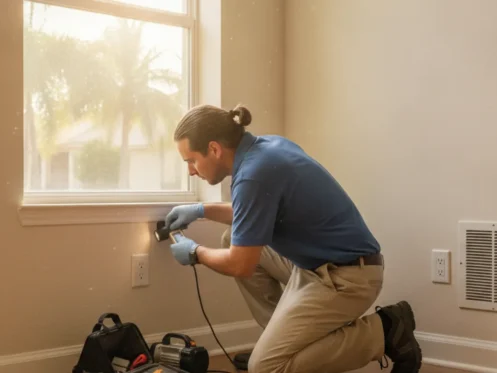
When you know the signs you need a mold inspection, you can address a moisture problem before it becomes a larger property concern. iMold provides 24/7 emergency service across Southwest Florida, along with no-cost visual mold inspections and estimates when appropriate. If you see, smell, or suspect mold after a leak, flood, or persistent humidity issue, a calm, professional evaluation can help clarify the next step.
Schedule a free mold inspection
What are the clearest signs you need a mold inspection?
Mold does not always appear as a large, obvious patch. It may be hidden behind materials, under flooring, around an air-conditioning area, or near a recurring plumbing issue. A single clue does not prove that mold is present. Several clues together, however, are a good reason to arrange an evaluation.
- You see suspicious growth. Spots or patches that appear on walls, ceilings, trim, flooring, furniture, or other materials deserve attention, especially when they are near moisture.
- You notice a persistent musty odor. A damp, earthy smell can point to moisture or microbial growth that is not visible from the room.
- Your property recently had water damage. A roof leak, plumbing leak, appliance overflow, air-conditioning leak, storm water intrusion, or flooding can leave materials damp and create conditions for growth.
- Staining keeps returning. A mark that reappears after cleaning or painting may indicate that the underlying moisture source has not been corrected.
- You find condensation or ongoing dampness. Wet drywall, swollen wood, damp carpet, peeling paint, or condensation around windows and HVAC equipment should not be ignored.
- People notice a change in comfort indoors. If occupants consistently report irritation or discomfort in one area, consider the building conditions as well as personal health advice from a qualified medical professional.
Florida homes and businesses can face frequent moisture challenges because of heavy rain, storms, air-conditioning use, and warm conditions. The important question is not whether every spot is mold. It is whether a moisture condition needs to be identified and corrected.
Could a musty smell be a reason to investigate?
Yes. A musty odor is one of the most useful clues when visible evidence is limited. The smell may be strongest in a closet, room, crawlspace, wall area, cabinet, or near an HVAC system. It may also become more noticeable after rain or when the property has been closed up.
Odor alone cannot identify the type, extent, or source of a problem. Air fresheners and household cleaners may mask it temporarily without resolving the cause. Look for nearby water stains, damp materials, condensation, or recent repairs. Avoid opening walls or removing materials simply to search for a source. A professional can help determine whether an inspection is appropriate and what areas should be evaluated.
For background on visible and odor-related clues, the Florida Department of Healthâs mold guidance explains that indoor mold growth can often be seen or smelled and discusses when homeowners may need to consider testing.
What water damage should prompt a mold inspection?
Any event that leaves building materials wet or repeatedly damp deserves a thoughtful response. That includes a small leak that continued overnight and a major event that affected several rooms. Common examples include:
- A supply line, water heater, washing machine, dishwasher, or refrigerator leak
- A roof or window leak after heavy rain
- Overflow from a sink, tub, toilet, or drain
- Air-conditioning condensation or equipment leakage
- Flooding or storm water entering the property
- Water trapped under flooring, behind cabinets, or inside walls
After water damage, the first priority is safety. If water is near electrical equipment, leave the area and use appropriate professional help. Stop the source when it is safe to do so, document what happened, and contact your insurer if a claim may be involved. Do not rely on the surface appearance of a wall or floor to determine whether everything is dry.
iMoldâs water damage restoration service addresses the related mitigation need, while an evaluation can help identify areas where moisture may remain. The purpose is to connect the visible event with the condition of the property, not to assume that every water incident requires the same scope of work.
Where can mold hide in a Southwest Florida property?
Visible growth often appears where moisture and a usable surface meet. Less visible conditions can occur in places that are difficult to see or reach. During a walkthrough, pay attention to:
- Behind or beside cabinets and appliances
- Under sinks and around plumbing penetrations
- Along baseboards and beneath flooring
- Behind furniture placed against a damp wall
- Around windows, doors, and exterior wall openings
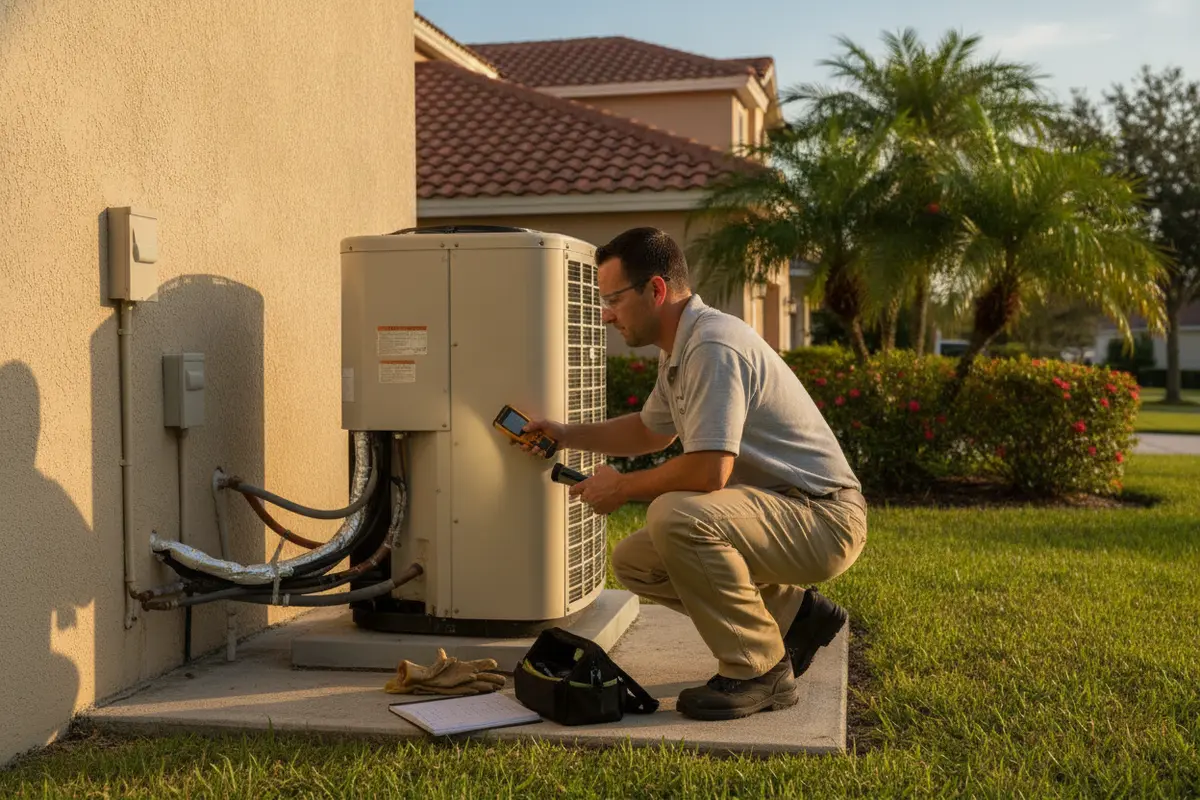
- Near air-conditioning units, ducts, or condensation lines
- In attics, utility areas, and other spaces with a leak history
Do not assume that a dark-colored spot is a particular kind of mold. Color is not a reliable way to identify what is present. Likewise, a clean-looking surface does not prove that moisture has been resolved behind it. A professional inspection focuses on the conditions, location, and likely source.
How do you tell a cleaning issue from a moisture issue?
Some discoloration is dust, dirt, residue, or an old stain. Other discoloration is associated with damp materials or microbial growth. The difference cannot always be determined from a photograph or a quick glance.
Start with the history. Did the area get wet? Does the mark return? Is there a musty odor? Does the surface feel damp, soft, swollen, or damaged? Is there condensation nearby? These questions help establish whether the issue is cosmetic or connected to a building condition.
Do not scrub aggressively, sand, or disturb a suspicious area before you know what you are dealing with. Disturbing affected materials can spread debris and may make the condition harder to assess. For a general comparison of common household residue and suspicious growth, see iMoldâs guide to dust versus mold. The guide is educational; a property-specific evaluation is still needed when moisture or persistent odor is involved.
Do you need an inspection after a leak if you cannot see mold?
Not every leak produces visible mold, but the absence of visible growth does not answer whether materials stayed wet. The need for an inspection depends on factors such as how long the materials were damp, what materials were affected, whether the source was corrected, and whether odor or staining remains.
After a leak, record the date, affected rooms, source of water, and actions taken. Take photographs before moving damaged items when possible. Keep notes about odor, recurring staining, and areas that feel damp. This information can help a restoration professional understand the sequence of events.
When the issue is limited and the source is clear, a professional may explain that monitoring or drying is the next step. When the source is uncertain, damage is hidden, or symptoms in the property continue, an inspection can provide a more informed path forward. You can also review iMoldâs restoration process to understand how assessment, containment, remediation, and restoration can fit together.
What happens during a professional mold inspection?
An inspection should begin with questions and observation, not a rushed conclusion. The professional may ask about the propertyâs age, leaks, repairs, odors, visible staining, and rooms where concerns are strongest. They may examine accessible surfaces, moisture-prone areas, and the relationship between the suspected issue and the building envelope or plumbing.
The inspection may include moisture measurements or other appropriate observations. Testing is not automatically necessary in every situation. When testing is recommended, third-party testing can provide unbiased verification. The right choice depends on the conditions and the question the property owner needs answered.
An inspection is different from remediation. An inspection helps evaluate conditions and define a potential scope. Remediation addresses affected materials and the source of moisture under an appropriate plan. If restoration is needed, the work should be explained in writing so you understand what areas, materials, containment measures, and follow-up checks are included.
iMold is a professionally certified restoration company serving Southwest Florida. Its stated qualifications include IICRC credentials, a State Certified General Contractor (CGC1540205), and a State Certified Mold Remediator (MRSR2170). You can learn more about mold remediation services before deciding what type of help fits your property.
How should you prepare before calling for an inspection?
A little preparation can make the first conversation more useful. You do not need to diagnose the issue before asking for help. Instead, gather the facts you already have.
- Identify the concern. Note the room, odor, stain, visible growth, or moisture condition.
- Describe the timeline. Explain when you first noticed it and whether it followed a leak, storm, repair, or equipment issue.
- Protect people and property. Keep children and pets away from questionable areas, and do not enter unsafe spaces.
- Take clear photographs. Include both close views and wider views that show where the issue is located.
- List prior work. Share information about drying, cleaning, painting, plumbing repairs, or other related work.
- Gather insurance information. If water damage may involve a claim, ask what documentation your carrier requires.
Do not throw away damaged materials or begin demolition before documenting the condition unless immediate safety requires it. Ask what can be safely touched, moved, or cleaned while you wait.
What should you compare when choosing an inspection or restoration company?
A low-pressure, clear explanation is more useful than a dramatic promise. When speaking with a company, ask:
| Question to ask | Why it matters | What a clear answer should include |
|---|---|---|
| What evidence supports the recommendation? | It separates observed conditions from assumptions. | The rooms reviewed, moisture clues, visible conditions, and limitations. |
| What is the suspected moisture source? | Growth can return if the source remains. | The likely source and what should be done to correct or monitor it. |
| Is testing recommended? | Testing should answer a specific question. | Why it is or is not useful, and whether third-party testing is appropriate. |
| What work is included? | Scope affects expectations and documentation. | Areas, materials, containment, cleaning or removal, drying, and follow-up. |
| How will insurance communication be handled? | Clear records can help with a claim. | Written documentation and coordination with your carrier when applicable. |
Ask for written recommendations and a clear estimate. iMold coordinates with insurance carriers, uses Xactimate, and has experience with insurance documentation. Coverage decisions remain with your insurance policy and carrier, so ask your insurer about requirements and limits.
What should you avoid while you investigate?
Well-intended cleanup can sometimes make a property concern harder to understand. Avoid painting over a stain, sealing a damp surface, or placing furniture in front of an odor source before the area is evaluated. Do not mix cleaning chemicals, and do not use a fan to blow air across questionable debris if that could spread it through the room. Follow the product label for any household cleaner you use, and stop if the surface reacts unexpectedly.
Do not enter an attic, utility area, or other restricted space if the floor, ceiling, wiring, or air quality may be unsafe. Keep the area as undisturbed as practical and close doors if that helps limit access. If there is active water, shut off the source only when you can do so safely. Electrical hazards require distance and qualified assistance, not trial-and-error cleanup.
These precautions do not mean you must leave every property or assume the worst. They simply preserve useful information and reduce unnecessary exposure while you decide whether a professional evaluation is appropriate. A restoration company can explain what information is needed before work begins and which urgent steps should come first.
When is a 24/7 call the right next step?
Call for emergency help when active water is entering the property, a major leak has occurred, electrical hazards may be present, sewage or other unsafe conditions are involved, or damage is spreading. If the concern is a musty smell or an old stain without active water, you can still request a no-cost visual mold inspection and estimate to discuss the situation.
For homeowners and businesses in Fort Myers, Cape Coral, Naples, Bonita Springs, and the broader Southwest Florida service area, iMold offers 24/7 emergency availability. See the emergency restoration service page for more information. You can also find local context through the Southwest Florida service areas page.
Frequently Asked Questions
Can I decide that I need an inspection based on smell alone?
Yes. A persistent musty smell is a reasonable reason to ask questions, especially after water damage. Odor does not confirm mold or identify its source, so a professional evaluation may be useful.
Should I test first or schedule an inspection first?
It depends on the property and the question you need answered. An inspection can help identify visible conditions and likely moisture sources. If testing is recommended, third-party testing may provide unbiased verification.
Is every dark spot mold?
No. Dark spots can have several causes, including dirt, residue, stains, or microbial growth. Color alone cannot identify the material. Avoid disturbing a questionable area until you understand the safest next step.
Can a small leak still create a concern?
Yes. A small leak can affect hidden materials if it continues or is not fully dried. The history, duration, materials, and remaining odor or dampness all matter.
What if I am not sure whether my issue is urgent?
Describe the condition, location, and timeline to a restoration professional. If active water or a safety hazard is present, seek emergency help. If the issue is not active, ask about a no-cost visual inspection and estimate.
Contact iMold for a clear next step
When you recognize the signs you need a mold inspection, prompt attention can help you understand the condition of your property and choose a reasonable path toward a dry, safe, and well-documented restoration.