If you have noticed a musty smell, a water stain, or recent water damage, you can book a mold inspection online without diagnosing the problem first. To book a mold inspection online, describe what you see, provide accurate contact and property details, and ask what the visit includes. A clear request helps the next conversation focus on the right concern.
Request a mold inspection appointment
What should you gather before you submit a request?
You do not need a technical report to start. A short description of the property and what prompted your inquiry is enough to help the company follow up. Before opening a form, note:
- The property address and whether it is a home or business.
- Your name and a phone number or email address where you can be reached.
- The rooms or areas where you noticed an odor, stain, dampness, or visible growth.
- When you first noticed the condition and whether it has changed.
- Whether a leak, appliance overflow, roof opening, or other water event occurred.
- Whether water is still entering or materials still feel wet.
- Days or times when someone authorized can provide access.
Keep the description factual. For example: “There is a musty odor near the laundry room. A supply line leaked last week, and the flooring still feels damp.” That conveys location, timing, and a possible moisture source without guessing at the material or its extent. If the source is active, say so clearly and make stopping the water a priority.
If you are a tenant, property manager, or acting for someone else, explain who owns the property and who can approve access or work. Do not submit sensitive personal details that are not needed to arrange a visit. If you have photos, you can mention that and ask whether the company would like to see them through an appropriate channel.
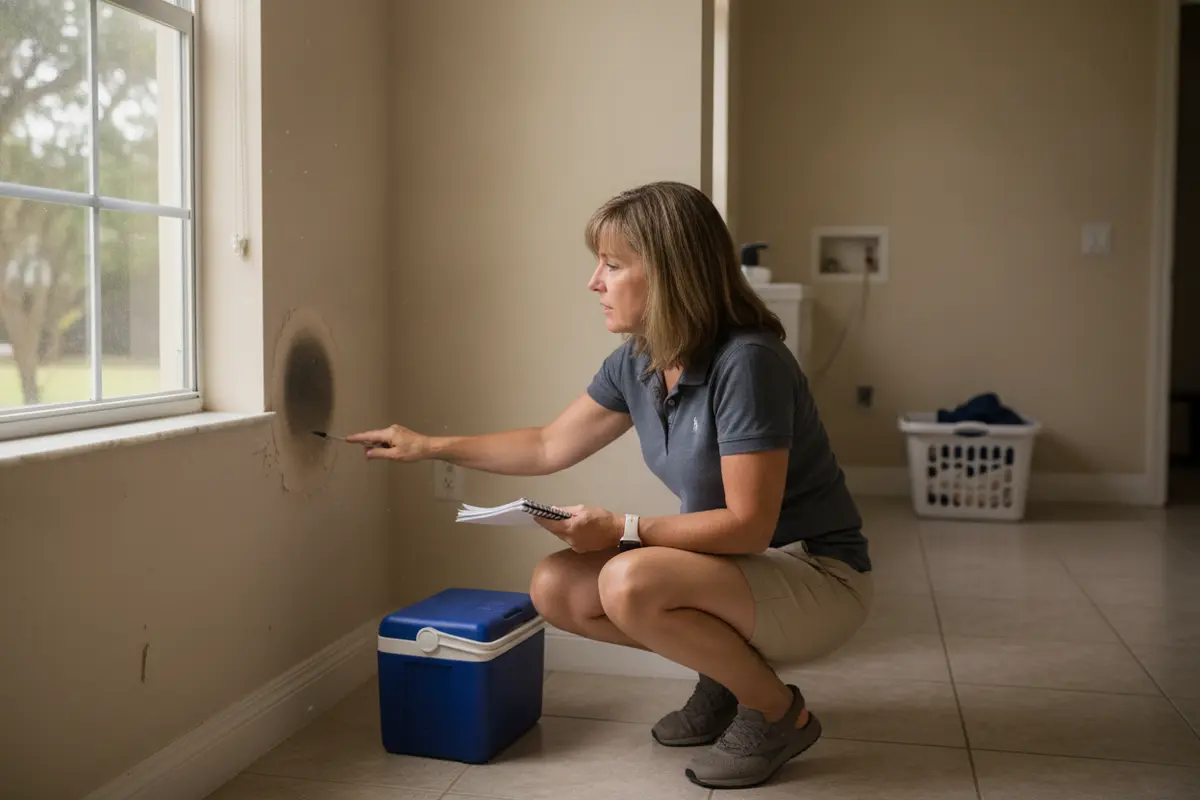
How do you book a mold inspection online?
- Choose a contact route. Use the company’s online contact form or appointment request. For iMold, begin at the contact page.
- Enter property and contact details carefully. Review the address, spelling, and phone or email before submitting so a response can reach you.
- Describe the concern in plain language. Include the room, what you observed, when it began, and any known water event. Avoid trying to identify mold species.
- State what you are asking for. iMold offers a no-cost visual mold inspection and estimate. Tell the team what you hope to understand, then ask whether that visit fits your situation.
- Submit the request and check for a reply. Monitor email, spam folders, and voicemail. An online submission is a request, not proof that a time has been reserved.
- Confirm access and timing. Make sure an authorized person can let the inspector in and point out the areas in question.
If water is actively spreading or there is a property emergency, do not rely only on a routine online request. Use the emergency restoration contact path. For a non-emergency concern, wait for a clear confirmation and contact the company if you do not hear back or if conditions change.
What should you ask before confirming the visit?
The word “inspection” can refer to different activities. iMold describes its first visit as a no-cost visual mold inspection and estimate. Ask what areas will be reviewed, how the findings will be shared, and whether testing is included or would be discussed separately. A visual review is not the same as laboratory analysis, and no single visit should be treated as a guarantee that every hidden condition has been found.
- Is this appointment a visual review, sampling and testing, or both?
- Which rooms or moisture concerns that I mentioned will be included?
- Will I receive notes, an estimate, or recommendations for next steps?
- Should I move any belongings or make particular areas accessible?
- If testing is proposed, what question will the results answer?
- Who collects and analyzes any samples, and how will those results be explained?
Testing is most useful when there is a specific question to answer. Ask what decision depends on the result and what the method cannot determine. The U.S. Environmental Protection Agency explains that tools may help identify dampness and mold, prioritize repair and remediation, and track conditions over time. Those tools support a practical response; they do not replace addressing moisture. Review the EPA’s publications about mold.

What happens after you send the request?
Keep a copy of the information you submitted. A follow-up may confirm the property location, access, appointment timing, and the concern you described. If a new room becomes damp, an odor grows stronger, or another leak occurs, update the company rather than assuming that the original description covers the change.
Use the time before the visit to organize what you know, not to conduct a risky investigation. You can write down dates, take photographs from a safe distance, and make small items accessible if it is safe. Do not open walls, remove building materials, or disturb a suspected area just to prepare for an appointment.
- Record when you first noticed the stain, odor, or dampness.
- Note whether it changes after rain, appliance use, or air-conditioning cycles, if known.
- Keep relevant maintenance notes or leak repair information together.
- Move movable belongings that block access, but do not handle damaged materials unnecessarily.
- Keep children and pets away from active leaks and damaged areas.
- Continue necessary steps to stop an active water source; do not wait for an inspection to address it.
If the concern followed water damage, iMold’s water damage restoration information explains the related service. You can also review the mold remediation service page and the company’s restoration process to prepare questions about what may follow an assessment.
How does a visual visit differ from testing?
A visual inspection focuses on observable conditions and moisture clues. It can help determine what follow-up may be useful, but it does not identify every condition behind a closed wall. Testing collects samples for analysis and addresses a narrower question about the sampled material or air at a particular place and time. A sample does not represent every room or every moment in the property.
| Option | What it may help clarify | What to ask |
|---|---|---|
| Visual inspection | Visible conditions, areas of concern, and possible next steps | Which rooms are covered, and what findings will be provided? |
| Moisture assessment | Whether materials or areas show signs of dampness | Which tools are used, and how are readings interpreted? |
| Third-party testing | A specific question about samples collected from defined locations | Who collects and analyzes samples, and what are the limits? |
| Repair or remediation | Work to address identified conditions and moisture sources | What materials and areas are included, and how is work documented? |
These options are not interchangeable. A visit could lead to a repair recommendation, a discussion about testing, or no further action. iMold uses third-party mold testing for unbiased verification when testing is used. Ask how a recommendation relates to your particular concern rather than assuming that every appointment includes the same steps.
For an overview of the company’s broader service approach, see its restoration services and frequently asked questions. Those pages can help you prepare follow-up questions, but they do not replace confirming the scope of your own appointment.
How can you make the visit more useful?
A little organization can save time and reduce the chance that an important detail is missed. Before the appointment, make a simple room-by-room list. Include the affected area, what you noticed, when you noticed it, and whether you know of a water event. Separate firsthand observations from assumptions. “Paint is bubbling on the north wall” is more useful than “there is mold behind the wall” if no one has opened it.
If several areas are involved, put the most important or most recently changed concern first. For example, a homeowner with a past ceiling stain and a current damp cabinet can tell the inspector about the cabinet at the start, then explain the older stain as background. This helps frame the walkthrough without hiding other relevant details.
Prepare access in a practical way. Unlock the relevant rooms, let household members know when the appointment is scheduled, and secure pets. Do not move heavy appliances or dismantle fixtures unless the company specifically advises it and it is safe. If a room is occupied or access is limited, mention that before the appointment so expectations are clear.
How should you compare inspection providers?
Before choosing a provider, compare the clarity of the proposed visit rather than relying only on the word “inspection.” Ask who will review the concern, what the visit covers, whether testing is separate, and what written information you can expect afterward. You should be able to understand the proposed scope before authorizing additional work.
If testing is proposed, ask why it is relevant and what result could change the next step. If remediation is proposed, ask which areas and materials are covered, how the moisture source will be handled, what preparation is expected, and how the work will be documented. A clear explanation lets you distinguish assessment from repair without needing to know technical terms in advance.
iMold works across mold and water restoration, and its company background and customer reviews are available for your research. Use any provider’s written scope and answers to make an informed choice. Do not feel you must approve additional work simply because you requested an inspection.
What if you rent or manage the property?
Access and approval can be more complicated when the person noticing a concern is not the owner. If you rent, notify the property owner or manager according to your lease or the property’s maintenance process. Share factual details and keep a record of when you reported them. Ask who will arrange access and whether the owner needs to submit or approve the request.
Property managers should identify the person who can authorize an assessment and the person who can meet the inspector. In a business, access may require coordination with a facilities contact or a manager responsible for the affected area. If the property has operating hours, tenants, or customer-facing spaces, mention any access limits when setting the appointment.
Do not assume that submitting a form gives the service provider permission to enter or approve work. Confirm who has authority, how access will be arranged, and who should receive findings. This avoids delays and helps ensure that the people responsible for decisions are included early.
Frequently asked questions
Can I book an inspection if I do not know whether the material is mold?
Yes. Describe what you observe, such as an odor, visible growth, staining, or a past water event. You do not need to identify the material yourself.
Is iMold’s visual mold inspection no-cost?
iMold offers no-cost visual mold inspections and estimates. Confirm what the appointment includes when arranging it, especially if you are asking about laboratory testing or another service.
Should I test before fixing an active leak?
No. Do not let testing or an appointment delay stopping an active water source. Address the leak promptly, document what you can safely observe, and ask what assessment may be useful after the source is controlled.
What if I do not receive a booking confirmation?
Check email, spam folders, and voicemail, then contact the company directly to confirm the request was received and discuss timing.
What should I do if conditions change before the appointment?
Contact the company with the updated information. If water is actively spreading or there is an immediate property emergency, use an urgent service route rather than relying on the earlier routine request.
Learn about a free visual mold inspection
Get a clear next step for your property
When you are ready, share what you have observed and request an appointment through iMold’s contact page. Ask what the visit includes, confirm access and timing, and keep addressing any active water source while you wait.