Mold damage Fort Myers homeowners notice often starts after a leak, a storm, or a humid stretch. The first useful step is to notice what changed. A stain, a musty room, or soft drywall is a property clue, not a diagnosis. iMold Cleaning and Restoration is based in Fort Myers. The company has spent 28 years on local mold, water, and rebuild work. If you are unsure what you are looking at, start with a no-cost visual mold inspection and estimate, or call (877) 771-1699 for 24/7 emergency service. For the service path itself, see our mold removal services. Local scheduling sits on the Fort Myers mold and water damage page.
Call (877) 771-1699 for 24/7 emergency service
This guide stays on the homeowner sequence. It covers what the damage can look like, how to trace the moisture feeding it, and how to protect belongings before anyone opens a wall. It also covers when an assessment is the right next call. It is not a lab report and it is not a promise about what a carrier will pay.
What Mold Damage Looks Like in a Fort Myers Home.
Fort Myers homes sit in warm, humid air for most of the year. A short leak can leave drywall, baseboards, and cabinets damp long after the puddle is gone. The U.S. Environmental Protection Agency says the key to mold control is moisture control, and that water-damaged areas and items should be dried within 24 to 48 hours. You can read that guidance in the EPA brief guide to mold and moisture.
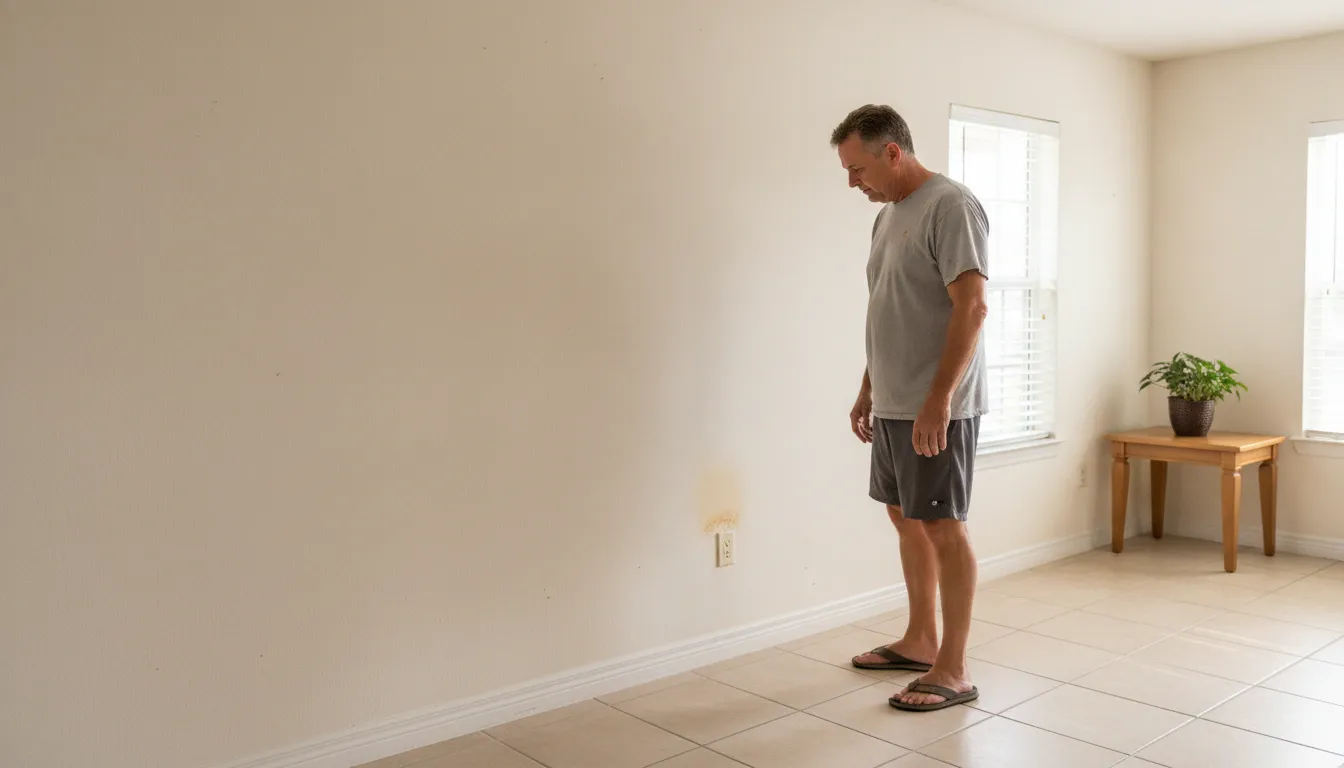
Look for a change, not a perfect picture of one mold color. Color alone does not tell you the species, and a dark spot can be dirt, dye, or old staining. These clues are worth writing down:
- A stain that returns after you wipe or paint it, especially a yellow or brown ring on a ceiling or wall.
- Paint that bubbles, paper that peels, or drywall that feels soft when you press it lightly.
- A baseboard, door casing, or cabinet toe-kick that swells, cracks, or pulls away from the wall.
- A musty, earthy smell that is stronger in one room, closet, or cabinet, and stronger after rain.
- Flooring that cups, carpet that stays cool and damp, or tile grout that stays dark after it should have dried.
- A supply line, ice-maker line, water heater, or air-conditioning drain that has a history of dripping.
A single clue is a reason to look closer. Several clues in the same area are a reason to stop cleaning and get the condition documented. Our Fort Myers mold and water damage page is the local service page for that visit. This article is the checklist you can use before you call.
Do not scrub a wide area, sand it, or blow a fan across loose debris. Disturbing a suspicious surface can spread material through the room and make the later assessment harder. If people in the home have breathing trouble, keep them out of that room and talk with a medical professional about symptoms. iMold documents building conditions. We do not diagnose health.
How to Trace the Moisture Before You Blame the Spot.
The visible spot is usually the end of the path, not the start. In Lee County homes the usual sources are a plumbing drip, a roof or window leak after a hard rain, an air-conditioning closet that overflowed, or storm water that sat on a floor. If you only clean the spot, the same moisture can wet the cavity again.
Walk the path in this order when it is safe:
- Find whether water is still arriving. Look under the sink, at the water heater pan, at the air-handler drain, and along the ceiling under a bathroom or roof slope.
- Note the timing. Did the stain appear after a storm, after the air conditioner ran, or after a fixture was used?
- Check the materials around the spot. Soft drywall, a swollen cabinet, or a damp carpet pad means the water did not stay on the surface.
- Photograph the wider room and the close-up before you move furniture or storage.
- Stop the source only if you can do it without stepping into standing water or reaching past electrical equipment.
If the smell is there and the surface looks dry, the moisture may be inside the wall or under the floor. Our guide on how to find a water leak in a wall covers that search in more detail. Leak detection for an active drip is a different visit from mold work. You can review water leak detection when the source is still running.
A moisture meter and a thermal camera are assessment tools, not something you need to buy before you call. During a no-cost visual mold inspection, the iMold team looks at accessible conditions and takes moisture readings where they help. The team then explains whether the next step is drying, a closer look, or a documented remediation plan. Laboratory sampling is separate. When an outside reading would help, iMold can coordinate third-party testing so the result is independent.
What to Protect Before Anyone Opens a Wall.
Belongings are part of the loss, and they are easy to harm in the first hour. Wet paper, fabric, and wood can grow mold. Dry items can pick up dust if someone starts demolition before they are moved. You do not need to empty the house. You do need a simple hold on the things that matter.
| Item | If it is wet | If it is dry but in the work area |
|---|---|---|
| Photos, papers, and books | Do not stack them wet. Spread or freeze only if you can do it without smearing ink. Ask before you discard. | Box them and move them to a dry room. Photograph the stack first if a claim is possible. |
| Clothing and linens | Separate them from clean laundry. Do not tumble-dry a musty load and put it back in a closet. | Bag clean items and move them out of the room that will be opened. |
| Wood furniture | Lift it off wet flooring. Wipe standing water. Do not place it against a damp wall. | Pull it a short distance from the wall so the assessment can see the base. |
| Electronics | Unplug them if you can do so without standing in water. Do not turn a wet device on to test it. | Move them before any cutting or sanding starts. |
| Area rugs and loose pads | Do not roll a wet rug tight. Leave it flat or ask about contents cleaning. | Roll only after the floor under it has been checked. |
Take wide photos and close photos before you shift furniture. Write the date, the room, and what you already did, such as shutting a valve or setting out towels. If you may file a claim, keep damaged materials until your carrier or the restoration team says they can go. Move them sooner only if safety requires it.
iMold can clean and pack contents when that is part of the loss. The Fort Myers contents page explains that path: contents remediation in Fort Myers.
Specialty cleaning is not a substitute for fixing the moisture. It is how salvageable items are handled after the source and the affected materials are known.
Leave built-in cabinets, tile, and drywall in place until someone has looked. Pulling a toe-kick or cutting a hole can be the right step later. Doing it first can spread debris and can remove the evidence a carrier wants to see.
Fort Myers Conditions That Keep Feeding the Damage.
A Fort Myers house can look dry on a sunny afternoon and still hold moisture from the last storm. Afternoon rain, long cooling seasons, and air handlers in closets are normal here. They also explain why a small drip becomes a repeat stain.
Watch these local patterns:
- Roof or window leaks that show up only after a heavy rain, then seem to fade.
- An air-conditioning closet with a clogged condensate line, a wet pan, or staining on the nearby wall.
- A supply line behind a washing machine, ice maker, or water heater that leaves the cabinet floor damp.
- Tile or vinyl that hides a wet pad or subfloor after a tub or toilet overflow.
- A closed guest room or closet that smells musty because the air does not move.
Storm water that entered the house is a water-damage event first. Our flood damage restoration page covers extraction and drying. Mold work starts when growth or damp materials remain after the water is addressed, not because every wet room automatically needs the same scope.
After a hurricane, the timeline and the safety checks are different. Use the mold after a hurricane guide for that event. This article is for the ordinary Fort Myers leak, stain, or musty room, including the slow ones that never made the news.
Indoor humidity matters, but a portable number on a store gauge is not a scope of work. The EPA notes that indoor relative humidity is best kept below 60 percent, and preferably between 30 and 50 percent, because mold needs moisture to grow. In a Fort Myers summer, the practical move is still the same: fix the leak, dry the materials, and do not paint over a damp stain.
When a No-Cost Visual Inspection Is the Next Step.
Call for emergency help when water is still coming in, sewage is involved, or a ceiling is sagging. Also call if you would have to stand in water near outlets or the electrical panel. For a stain, a smell, or a soft wall with no active flood, a no-cost visual mold inspection and estimate is the right first visit.
On that visit the team reviews what you saw, checks accessible surfaces, and looks for moisture connected to the complaint. A visual inspection does not include laboratory sampling by itself. If an outside lab comparison would answer a real question, iMold can coordinate third-party testing and explain why. You can read the difference on our mold inspection and testing page, and a closer look at the visit itself is in what happens during a mold inspection.
Use this split so you do not over-call or under-call:
- Active water, a sagging ceiling, sewage, or an electrical hazard: call (877) 771-1699 for 24/7 emergency service.
- A returning stain, a musty room, or soft material, with the water already stopped: schedule the no-cost visual inspection.
- You only need the regional sign list, not a Fort Myers damage walkthrough. Our mold inspection signs article covers that broader question.
iMold is a State Certified General Contractor (CGC1540205) and a State Certified Mold Remediator (MRSR2170).
The company is licensed, bonded, and insured, and the team holds IICRC credentials. We work directly with carriers, use Xactimate, and have preferred vendor status with major insurers. That coordination helps the file. It does not decide coverage. Your policy and your carrier do.
If the documented plan later includes repairs, rebuild services in Fort Myers can follow drying and remediation. Do not start that work by painting the stain. Paint hides the clue and leaves the wet material in place.
What to Write Down for the Visit and the Claim File.
A short record helps the inspection and, if you file, the claim. You do not need a perfect report. You need dates and photos that match the rooms.
- The date you first noticed the stain, smell, or soft material.
- The date of the leak, storm, or equipment failure, if you know it.
- Which rooms are involved, and whether the issue is on a ceiling, wall, floor, or cabinet.
- What you already shut off, moved, or dried.
- Photos taken before you moved furniture or threw anything away.
- Any prior drying, plumbing repair, or paint in that same spot.
Keep children and pets out of the affected room. Do not mix household cleaners, and do not run a household fan across debris. If you leave the house for the day, you do not need to treat every musty closet as an evacuation. For the separate question of staying home during the work itself, read whether you can stay home during mold remediation. That decision comes after a scope exists, not from a photo of one spot.
iMold’s Fort Myers office is at 3804 Ironbridge Blvd., Fort Myers, FL 33916. The company serves Lee County and the wider Southwest Florida area, including Cape Coral, Naples, Bonita Springs, and nearby communities within the normal service range. Response is coordinated to the property and the situation. We do not publish a fixed arrival promise.
Schedule a no-cost visual mold inspection
Frequently Asked Questions.
Does a water stain mean I already have mold damage?
No. A stain means water was there. Mold needs that moisture to keep growing, which is why the EPA tells homeowners to dry wet areas within 24 to 48 hours and to fix the water problem. A stain that returns, a musty smell, or soft drywall is a stronger reason to schedule a no-cost visual inspection.
Should I clean the spot before I call?
Wipe a small, hard surface only if you can do it without spreading debris, and stop if the material is soft or the stain comes back. Do not sand, paint, or cut the wall first. Leave wet papers, clothing, and furniture documented and out of the work area. Cleaning is not a substitute for finding the moisture.
Is the visual inspection the same as a lab test?
No. iMold’s no-cost visual mold inspection and estimate reviews accessible conditions and moisture clues. It does not include laboratory sampling by itself. If an independent result would help, iMold can coordinate third-party testing and explain what question it answers.
What if the damage is only in one closet?
A single closet can still matter if the smell is strong, the wall is soft, or a leak reached the cavity. Photograph it, move stored items that are still dry, and do not pile wet cardboard back on the shelf. A visual inspection can tell you whether the closet is the whole issue or a clue to a larger wet area.
Who decides whether insurance covers the work?
Your carrier and your policy decide coverage. iMold can document the scope, coordinate with the carrier, and use Xactimate. That support does not guarantee payment. Call (877) 771-1699 if water is active, or schedule the free estimate if you need the condition looked at first.
Get a Clear Next Step on the Damage You Can See.
If you are looking at a stain, a musty room, or belongings you are afraid to move, you do not have to guess the scope. Start with a no-cost visual mold inspection and estimate. The team explains what the accessible conditions show. The plan then covers drying, remediation, contents care, or repairs only when those steps fit.
For active water or an unsafe room, call (877) 771-1699 now. For a non-emergency concern, use the contact page to schedule a free estimate, or start from the mold removal services overview and ask for the Fort Myers inspection.