Water mitigation is the first work that stops storm water from spreading, not the rebuild that comes later. After a tropical storm or surge, start a clear record. Note where water sat, which materials got wet, and which hazards are still in the way. The U.S. Environmental Protection Agency says mold can grow on wood, drywall, carpet, and furniture that stay wet for more than 24 hours. Flood water can also carry bacteria, chemicals, or other hazards. A useful record lets a crew plan extraction and drying before those hours pile up.
Call (877) 771-1699 for 24/7 storm water mitigation
This guide is for a Southwest Florida owner who can see storm water, a tide line, or soaked finishes. It covers what to document before cleanup begins. It is not a definition of every water loss. It is also not a substitute for the flood-damage service that does the extraction. If water is still moving, power is questionable, or the water smells like sewage, leave the room and call for help. Do not wade in to get a better photo.
What Water Mitigation Means After Storm Water Enters
In a storm loss, water mitigation means stabilizing the building so wet materials stop feeding more damage. The owner side of that job is simple. Show where the water came from, how high it reached, and what it touched. The crew side is extraction, moisture checks, and drying. Repairs such as new drywall or flooring come after the building is dry.
That split matters because storm water is rarely a clean indoor leak. Rain through a failed roof can leave dirt behind. So can surge through a door, or street water pushed into a garage. The storm water mitigation page is the place to start when standing water or a soaked ground floor needs pumps, containment, and drying. Use this article to build the record that crew will need. Use that page when you are ready for the work itself.
A general indoor leak has a different first hour. You can often find one fixture, shut a valve, and keep the wet area small. Storm water can enter in more than one place, and it can return if the weather is still moving. Treat every wet room as part of one loss. Check the ground floor, the garage, and any closet that shares an outside wall.
What to Record Before Anything Is Thrown Away
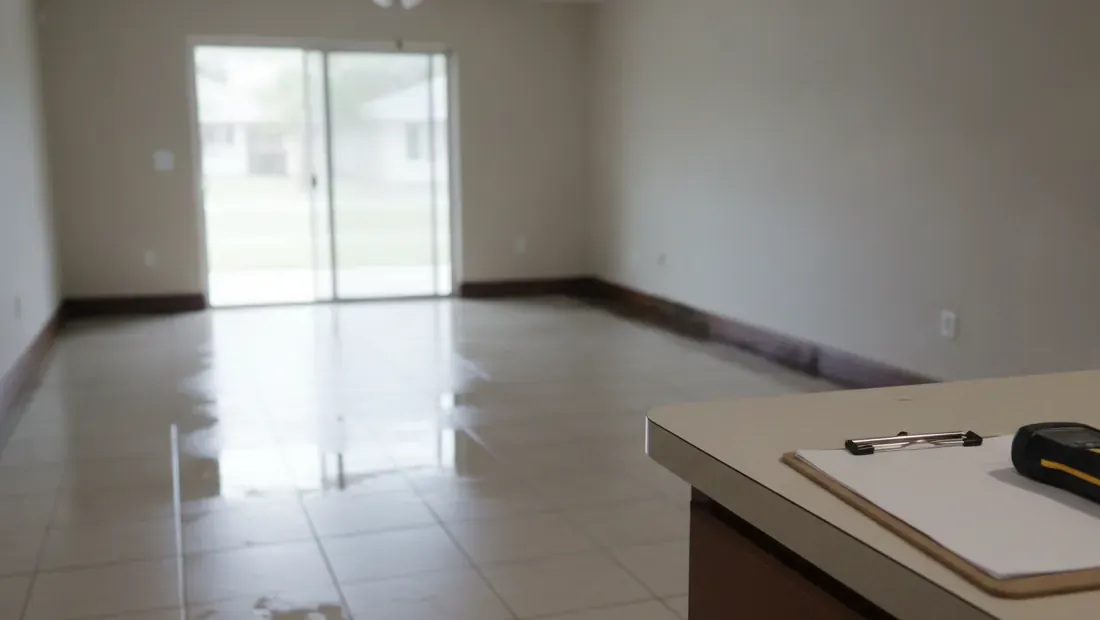
The National Flood Insurance Program tells owners to photograph and video damage before cleaning, fixing, or throwing items out. Take wide shots and close-ups of walls, floors, and furniture. Record serial numbers on electronics and appliances. Do this only after the room is safe to enter. A photo of a hazard is useful. A photo taken while standing in contaminated water is not worth the risk.
Shoot in this order so the file tells a story later:
- The outside approach: the street, the yard, and the door or opening where water entered.
- A wide shot of each wet room from the doorway, before anything is moved.
- The water line on each wall. Include a tape measure or a nearby outlet so the height is obvious.
- Close-ups of wet baseboards, swollen doors, stained drywall, and soaked flooring.
- Belongings that were sitting in the water, with serial numbers when you can see them safely.
- A short video that walks the same path and says the room name out loud.
Keep small samples of damaged carpet, drywall, or insulation if an adjuster may need them. Save every receipt if you buy drying supplies or pay for an emergency board-up. NFIP notes that mold damage is not covered under a standard flood policy. Photos that show how fast you acted can still matter, because mold itself is often a separate question. Do not throw out a whole wall of drywall just to tidy the room before someone has seen the water line.
Which Storm-Water Risks Need a Note Right Away
Not every wet surface is the same risk. Write down what you can see, and leave the testing to the crew. The notes below change the first visit.
| What you see | Why it changes the first visit | What to write down |
|---|---|---|
| Water is still standing on the floor. | Extraction has to happen before drying can start. | List the rooms, the depth, and whether the water is rising. |
| A dark line runs partway up the wall. | Drywall and insulation above the floor may be wet. | Note the height in each room, measured from the floor. |
| Water came from the street or a storm drain. | Dirty water needs a different handling plan. | Note where it entered and whether it left mud. |
| You smell sewage, or water came from a drain. | This is not a mop-and-fan job. | List the rooms and whether anyone walked through the water. |
| You see a soft spot, a sagging ceiling, or a buckled door. | Hidden moisture or a structural concern may be present. | Note the location and whether it appeared after the storm. |
| Power is out, or a generator is in use. | Drying equipment and safety both depend on power. | Note which circuits work and where the generator sits. |
EPA guidance is direct about two hazards that show up after Florida storms. Use a fuel-powered portable generator only outside, at least 20 feet from the building. Never run one in a home, garage, or shed, because the carbon monoxide it produces can kill. Do not mix cleaning products, and do not add bleach to other chemicals. If you are not sure a cleaner is safe on flood residue, wait.
Sewage or drain water is a separate path from ordinary storm wetting. iMold’s sewage cleanup service covers that contaminated loss. Say so in your notes if the smell or the source points that way, and keep people and pets out of the room. A musty odor without standing water can still mean wet drywall. Pair that note with the mold removal services page if you already see growth, but do not start demolition to check.
What to Stop Doing Until the Water Line Is on Record
Owners often try to make a flooded room look normal before help arrives. A few of those steps erase the evidence a crew and an insurer need, and some of them spread dirty water into dry rooms.
Leave wet belongings where they are until you have the wide photo. Then move only what you can carry without walking through the water. Lift small items onto a dry counter if the floor is merely damp. Do not drag soaked rugs across a dry hallway. Do not run the air conditioner as a dryer, and do not set a household fan so it blows across sewage water into the rest of the house.
Do not tear out drywall, pull insulation, or cut a wall open to “let it breathe” before the water line is photographed and a technician has mapped moisture. Those materials are part of the record. They also may be holding dirty water that should be contained, not scattered. If a ceiling is sagging, stay out from under it and point it out by phone. Do not poke it.
Turn power off at the breaker only if you can reach the panel without standing in water. If the panel is wet, or you would have to cross standing water to reach it, leave it and tell the crew. The same rule applies to the main water valve. Stopping a broken supply line helps. Reaching through floodwater to find the valve does not.
Skip household bleach as a first treatment on flood residue. EPA specifically warns against mixing cleaners. A premature chemical treatment can also hide odor that a technician uses as a clue. Write down any cleaner you already used, including the room and the product name, so the crew is not surprised by it.
How a Crew Uses Your Notes on the First Visit
Your photos do not replace a moisture survey. They tell the crew where to start. On an iMold visit, technicians look for the source, the rooms that are wet, and the materials that cannot be saved. Moisture meters and thermal imaging then check cavities, floors, and walls that look dry but are not. That second look is why a room with no standing water can still need drying.
Bring four things to the door if you have them. Bring the photo set, a room list with water lines, any samples you kept, and the claim number if you already opened one. You do not need a finished estimate. You do not need to name the category of water. Technicians are trained to make that call. If you guessed wrong in a note, say so. A corrected note is more useful than a confident one.
Structural drying is the stage after extraction, and it has its own monitoring log. If you want to see what that stage looks like before the visit, read structural drying after water damage. This storm guide stops at the record and the handoff. It does not walk air movers, dehumidifiers, or daily moisture readings. Those belong to the drying visit and the flood-damage scope.
iMold documents affected areas for the carrier and can work from Xactimate estimates. The carrier still decides coverage. Ask your insurer before you sign a repair contract you do not understand, and keep copies of every note you send. The insurance claims help page explains how that coordination works. It is not a promise that a flood policy pays for mold or for every soaked finish.
Storm Water Mitigation Across Southwest Florida
Storm water does not hit every county the same way, but the owner record does not change. A Fort Myers ground floor, a Cape Coral canal-front home. And a Naples garage can all show a tide line, wet insulation, and a door that will not close. What changes is which local crew rolls and which page describes that city’s service.
iMold has served Southwest Florida for 28 years. The team is available 24/7 and can carry a loss from the first extraction through rebuild. The company is a State Certified General Contractor (CGC1540205) and a State Certified Mold Remediator (MRSR2170), and its water technicians follow IICRC procedures. Free visual inspections and estimates are available, including when you are not sure the loss is large enough to call. There is no charge to have someone look and tell you the next step.
If you want city context while you wait, start with the page for your area.
Those pages describe local service. They are not a second copy of this checklist. If the loss is already a standing flood rather than a damp room, go back to the flood-damage page and ask for extraction. If the storm has passed and you are only seeing stains, the same phone call still works. Say whether water is standing, whether the power is on, and whether anyone has already removed wet materials.
Call (877) 771-1699 to start water mitigation
Frequently Asked Questions
What is water mitigation after a storm?
It is the work that stops storm water from causing more damage. For an owner, that means a safe record of water lines, wet materials, and hazards. For a crew, it means extraction, moisture checks, and drying. Rebuild work comes after the structure is dry.
How fast should I photograph storm-water damage?
Photograph the room as soon as it is safe to enter, and before you clean, repair, or throw anything away. The EPA says mold can grow on materials that stay wet for more than 24 hours. Take the photos and make the call in that same window when you can do both safely.
Should I pull out wet drywall before the crew arrives?
No. Photograph the water line first, and leave drywall, insulation, and flooring in place until a technician has mapped the moisture. Early demolition can erase the record and spread dirty water into rooms that were still dry.
Does a standard flood policy pay for mold?
NFIP says mold damage is not covered under a standard flood policy. Narrow exceptions apply when officials blocked access, or when floodwater made the home unsafe to enter. Call your carrier to confirm your own policy. Do not assume a water-mitigation invoice includes mold coverage.
When should I call instead of drying the room myself?
Call when water is still standing, when it came from the street or a drain, or when you smell sewage. Also call if a ceiling is sagging, or if materials have been damp since the day before. iMold offers 24/7 response and a no-cost visual inspection. Call (877) 771-1699 and describe the rooms, the water line, and whether the power is on.