

Commercial water damage restoration is the work of protecting a building and the business inside it at the same time. A burst line, a roof leak, or a drain backup can close a sales floor, a kitchen, or a suite of offices before anyone has a repair plan. The useful first move is not a full rebuild. It is a short list of limits, a clear picture of the water, and a call for an assessment while the building is still partly usable.
Get commercial restoration help from iMold, or call (877) 771-1699 for 24/7 emergency service.
iMold Cleaning and Restoration is based in Fort Myers and works across Southwest Florida, including Cape Coral, Naples, and Bonita Springs. The team is licensed, bonded, and insured. It holds State Certified Mold Remediator (MRSR2170) and State Certified General Contractor (CGC1540205) credentials. One plan can cover extraction, drying, cleaning, and rebuild. A no-cost estimate is available. A no-cost visual mold inspection is available when moisture raises that concern.
What should a manager limit before the crew arrives?
Limit only what you can do safely. The goal is to stop the loss from spreading and to keep people out of harm, not to start demolition. If you are unsure whether a panel, a ceiling, or standing water is safe, leave it and wait for the crew.
- Move people away from wet floors, sagging ceilings, and any area where water may have reached outlets or equipment.
- Shut off the water only if you can reach the valve without stepping through standing water or opening a wet electrical room.
- Leave sewage, storm floodwater, and any unknown water alone. Do not mop it into drains or onto dry floors.
- Lift or move inventory, records, and electronics that are still dry and easy to reach. Do not wade in to save them.
- Take photos and a short video of the source, the wet rooms, and anything you move, before cleanup changes the scene.
- Note the time you found the loss, who you notified, and whether the source is still running.
Those six steps are enough for the first call. When you reach iMold, the dispatcher will ask what happened, whether the source is still active, and which rooms are wet. That is the start of the assessment, not a demand that you diagnose the building yourself.
Southwest Florida buildings add a few local wrinkles. A roof leak after heavy rain can look like a small ceiling stain while water is already in the deck above a sales floor. An air-conditioning closet leak can wet a wall cavity between two tenant spaces. A slow supply leak under a restaurant prep sink can run for hours before anyone sees a puddle. In each case, the manager’s job is the same: keep people clear, stop only the source you can stop safely, and get a documented look at the wet materials.
How does the water category change the plan?
Not all water is treated the same way. iMold follows the IICRC S500 standard for water damage restoration. That standard sorts losses by how contaminated the water is. The category changes what can stay, what must come out, and how the crew protects the rest of the building. It is a planning tool, not a price list.
| Water category | What it usually is | What a manager should expect |
|---|---|---|
| Clean water. | A supply-line break, a water-heater leak, or another source that started clean. | Extraction and drying can often save more materials if the loss is caught early and the water has not sat. |
| Gray water. | Water that picked up contaminants, such as a washing-machine discharge or an appliance leak. | More materials may be removed, and cleaning is more controlled. Affected rooms are usually closed off. |
| Black water. | Sewage, rising floodwater, or water that has sat long enough to become highly contaminated. | The area is contained. Porous materials are often removed. People stay out until the crew clears the zone. |
A clean supply leak that sits in carpet and drywall does not stay a simple dry-out. Time, heat, and Florida humidity change the plan. The EPA guide for schools and commercial buildings says many materials should be dried or removed within 24 to 48 hours if you want to avoid mold. That window is a reason to start quickly. It is not a promise that every material can be saved. It is also not a reason to panic if you are already past it.
If the water is sewage or floodwater, skip the shop towels. iMold’s sewage cleanup work uses containment, protective gear, extraction, and controlled removal of materials that cannot be cleaned. A storm intrusion that entered from outside follows the flood damage path, which starts with extraction and a contamination check before any drying equipment is set.
Tell the crew what you know about the source, even if you are not sure of the category. A toilet overflow, a roof drain, and a broken domestic line lead to different protection steps. Guessing wrong and wiping a contaminated floor into a hallway can spread the loss into rooms that were still clean.
How is commercial water damage restoration different from a home job?
A house can often be emptied. A store, office, clinic, or restaurant usually cannot. Commercial water damage restoration has to account for customers, tenants, staff schedules, and rooms that share walls, ceilings, and air. The building may also hide water better. Ceiling plenums, pipe chases, and multi-story wet stacks can carry moisture far from the first stain.
If you want the commercial team that handles assessment through repair, start with iMold’s commercial restoration help. That page is the service hub. This guide is the decision list that comes before the crew sets equipment.
iMold’s commercial work is built around that reality. The company serves offices, retail, restaurants, hotels, schools, and other commercial buildings. Work can be scheduled around business hours when the loss allows it. The same team can move from extraction to drying, cleaning, and rebuild. You are not handing the file to a new contractor at each stage. For the service itself, see commercial water damage repair. The broader water damage restoration page covers the extraction and drying steps used in homes and businesses.
Three differences matter on day one:
- Access. A wet electrical room, a kitchen line, or a corridor that is the only exit changes where the crew can work and where staff can walk.
- Contents. Sales inventory, patient records, and kitchen equipment need a contents plan, not a pile in the parking lot. iMold can include contents remediation when items can be cleaned or moved rather than discarded.
- Stakeholders. An owner, a tenant, and an insurer may all need the same facts. One written record is easier than three phone recaps.
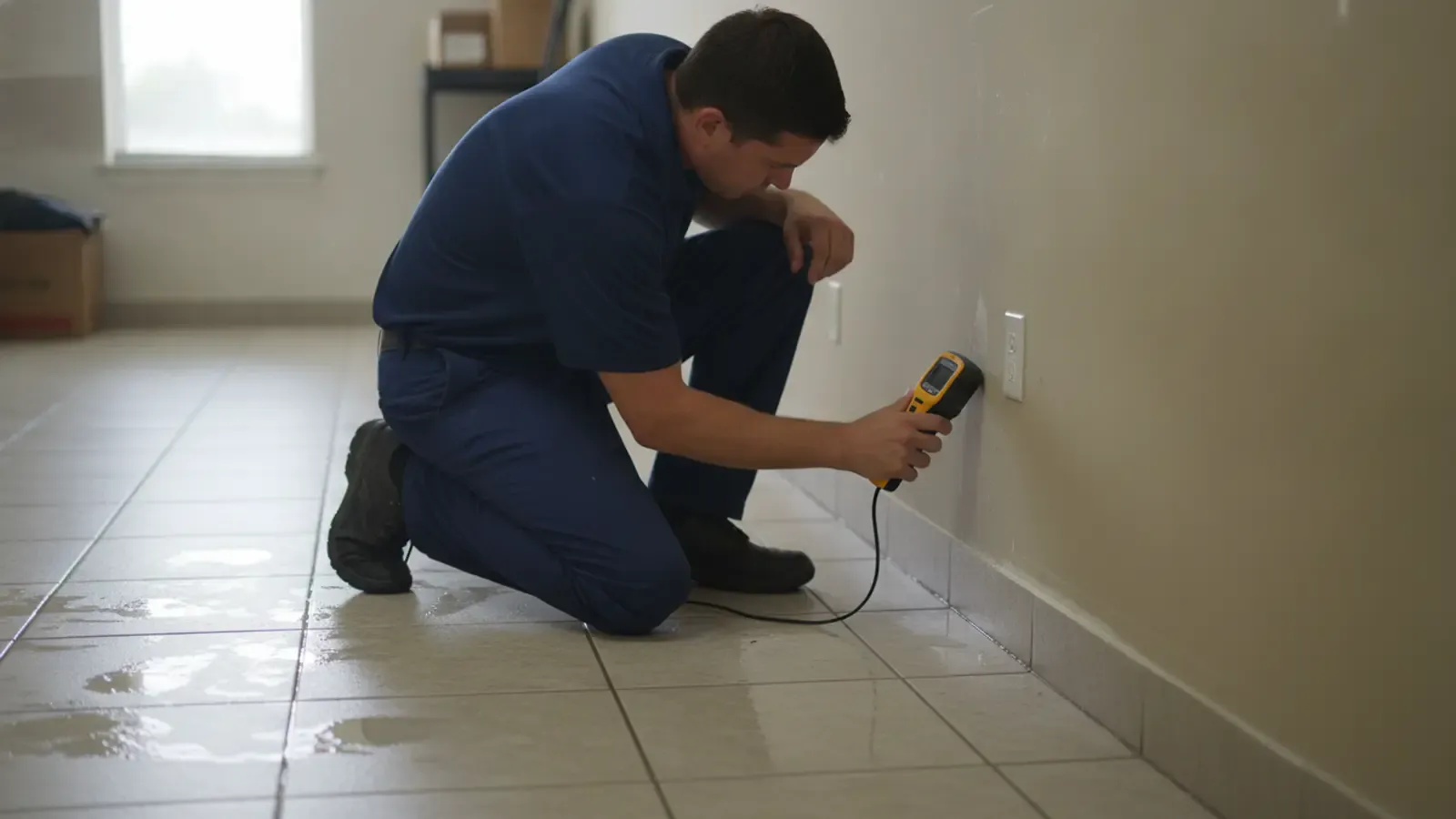
iMold has spent 28 years on this work in Southwest Florida. More than 35 certified professionals hold IICRC credentials that include water damage restoration. The crew uses moisture meters and thermal imaging. The drying plan follows readings, not the look of a dry surface. Preferred-vendor status with major insurers and Xactimate estimating keep the claim file organized. Coverage decisions stay with your policy and your carrier.
How do you keep part of an occupied building open?
Phasing is the commercial version of “work one room at a time.” The crew contains the wet zone, dries it, and leaves a path so the rest of the business can operate. It is slower on a floor plan than emptying the building. It is often faster in lost sales days.
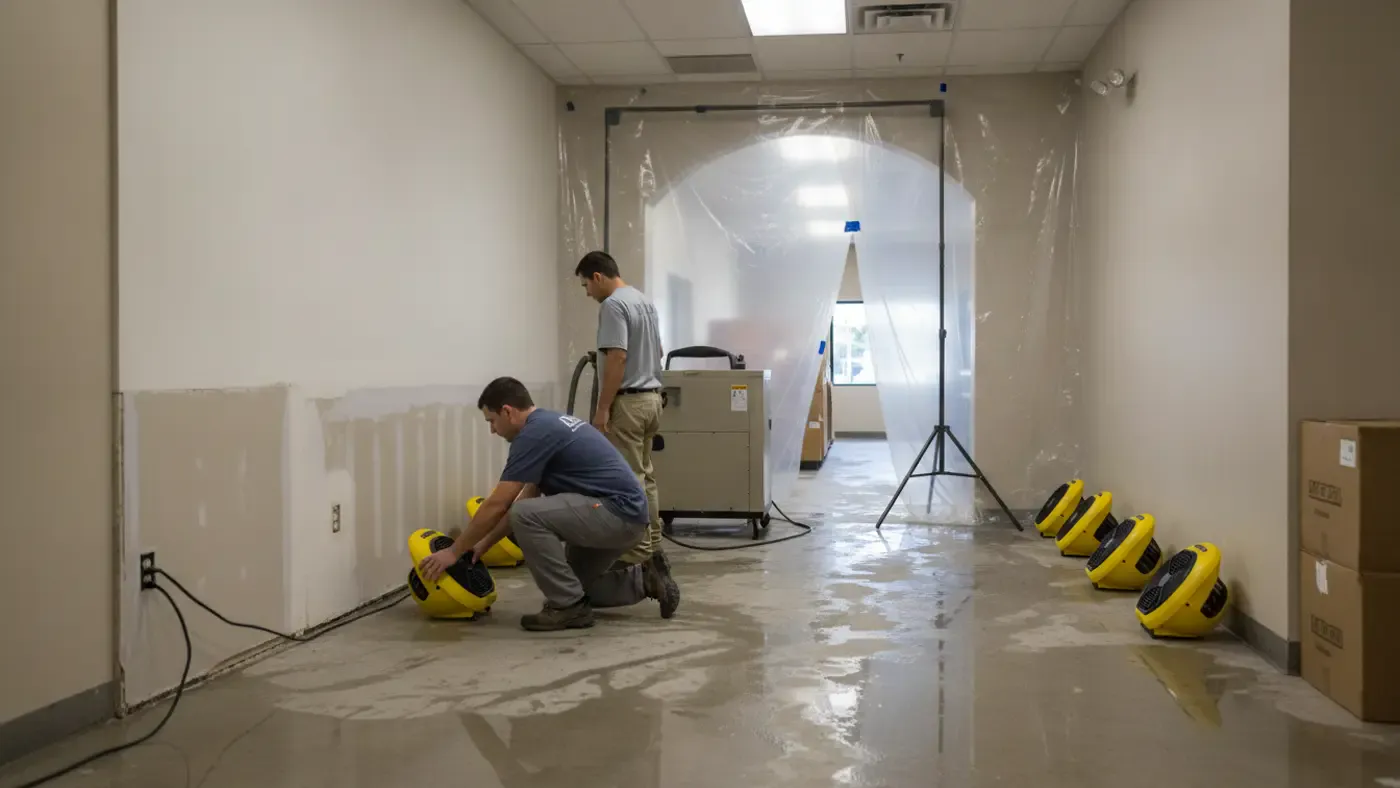
A workable phase plan usually answers four questions before equipment is placed:
- Which rooms are wet, and which rooms only share a wall or ceiling with the wet rooms?
- Where will customers, patients, or staff walk while the wet zone is closed?
- Which work is loud or dusty enough to move to off-hours, such as pad removal or drywall cuts?
- Who on your staff can approve a change if the moisture readings say the zone has to grow?
Containment is the barrier that makes those answers real. Plastic and controlled access keep dust and moisture out of the open side of the building. Negative air is added when the loss calls for it. Air movers and dehumidifiers then run inside the closed zone. Structural drying is finished when moisture readings say the materials are dry. A floor that only looks dry is not the test. Daily logs show you and your insurer that progress.
A restaurant might keep the dining room open while the prep area is contained. An office might close one suite and leave the lobby in use. A retailer might block one aisle and keep the register line. None of those layouts is guaranteed. Black water, a wet electrical panel, or a ceiling that is no longer sound can close more of the building. The point of the assessment is to say which of those limits apply today, and to revise them when readings change.
If visible mold is already part of the loss, the phasing question shifts. That sequence is covered in our commercial mold remediation guide. Water restoration comes first when the loss is still an active leak or a wet assembly. Mold remediation is the next scope if growth is present or testing says it is.
What should the written scope and the claim file include?
Ask for the scope in writing before rebuild starts. A useful commercial scope names the rooms, the water category as the crew understands it, the materials to dry in place, the materials to remove, and the order of work. It should also say what is not included yet, such as reconstruction, contents cleaning, or third-party testing.
Build one file and share it. You do not need a different story for the owner, the tenant, and the carrier.
- The incident note: when the loss was found, the likely source, and whether it was stopped.
- Photos and video from before cleanup, plus photos of anything that was moved.
- Moisture readings and the areas they cover, updated as drying proceeds.
- A list of rooms closed to staff or customers, and the date each one reopened.
- The written scope and any change to that scope.
iMold documents affected areas, uses Xactimate for estimating, and works directly with insurance carriers. That support is included with the restoration work. It does not mean every loss is covered, and it does not replace your own notice to the carrier. Start with the insurance claims page if you want to see how that coordination is set up. If a hidden leak is still the open question, water leak detection can narrow the source before more finishes come off.
Rebuild is a separate decision from drying. Once readings support it, drywall, flooring, cabinetry, and paint can be scoped. iMold’s rebuild services cover that phase so the same project record continues. When testing is appropriate, iMold uses a third party so the result is not graded by the company doing the repair. A no-cost visual mold inspection is the right first look when you see staining or you are unsure. It is not a substitute for testing when an insurer needs an independent result.
Payment questions can wait until the scope is clear. iMold does not publish a flat commercial price. The work depends on the building. Hearth financing, including 0% options for those who qualify, is available if you want a monthly plan. Ask the team about currently available payment options when you arrange the assessment.
Frequently asked questions
What is included in commercial water damage restoration?
For a business, it usually includes assessment, extraction, structural drying, cleaning, and a written scope. Rebuild, contents cleaning, and mold remediation are added only when the loss needs them. iMold can keep those steps on one plan instead of sending you to a new vendor after the water is gone.
Can a store or office stay open during the work?
Often, yes, if the wet zone can be contained and the exits and electrical conditions are safe. Loud removal and drywall work can move to off-hours. Sewage, floodwater, or an unstable ceiling can close more of the building until that zone is controlled.
How fast should a manager call?
Call as soon as the area is safe to leave. The EPA points to a 24- to 48-hour window for drying many materials before mold becomes the larger problem. iMold answers 24/7 at (877) 771-1699. Do not wait for a full repair bid before extraction starts.
Who decides what insurance will pay?
Your insurer decides coverage. iMold can document the loss, estimate with Xactimate, and talk with the carrier. A no-cost estimate explains the recommended work. It is not a coverage promise.
What if we already see mold?
Say so on the first call. Ask for a no-cost visual mold inspection, and ask whether third-party testing belongs in the file. Water still has to be controlled, but the scope should not pretend the visible growth is only a drying issue.
If your building is wet, call iMold at (877) 771-1699 or request a no-cost estimate. A technician can assess the loss, explain what to close, and start commercial water damage restoration with a written scope.

