

When a sewer line backs up, a small amount contained on a hard surface is different from wastewater that spreads through rooms or soaks building materials. Sewer backup cleaning services may be appropriate when water has moved beyond one fixture, reached carpet or drywall, or left areas that are difficult to clean and dry safely. iMold provides 24/7 emergency service in Southwest Florida, and a prompt call can help you understand the next steps. The company has 28 years of local experience and works from emergency response through restoration and reconstruction.
If you need to speak with the team right away, call iMold’s 24/7 emergency line. Keep people and pets out of affected areas while you arrange help.
When does a sewer backup become a cleanup concern?
The key question is where the water went, not only how large the visible puddle looks. A brief overflow that stayed on a small, sealed floor area may be manageable after the plumbing source is corrected, if it did not reach other materials. A broader cleanup assessment makes sense when wastewater reaches porous surfaces, crosses a room, gets beneath a floor covering, or returns after an initial cleanup.
Consider seeking professional guidance if any of these apply:
- Wastewater spread across a floor, entered more than one room, or reached a hallway.
- Carpet, padding, rugs, upholstery, insulation, or other absorbent materials were affected.
- Water reached lower drywall, baseboards, cabinets, or the gaps around flooring.
- A sewage odor remains after visible water is gone, or the backup recurs.
- You cannot tell whether water reached a concealed area or shared space.
- The affected property is a business, rental, or multi-unit building where access and records need coordination.
A plumbing professional addresses the cause of the backup; cleanup and restoration address impacted contents and building materials. Those can be related but distinct jobs. If the source may be a blockage, iMold’s information about sewer line clean-out can help you understand the plumbing side of the issue. For water-related building damage, see the company’s water damage restoration service.
What should you do before a cleanup team arrives?
Start by limiting exposure and avoiding actions that could spread contaminated water. Keep children, visitors, and pets away from the affected room. Do not walk through standing water if you can avoid it. If water is near outlets, appliances, or electrical equipment, do not touch them or enter the area to operate a switch. If you can stop water use from a safe, dry location, do so and contact a plumber if the backup continues.
Do not use a household vacuum or move wet items through clean rooms. Avoid mixing cleaners or applying a chemical treatment to materials before you know what was affected. A surface wipe or deodorizer cannot show whether water remains under flooring or inside a wall. For general public-health information, consult the Centers for Disease Control and Prevention, and ask a qualified cleanup professional about the specific conditions in your property.
If you can do so without entering an unsafe area, take a few photographs from a dry location. Record the time you noticed the backup, which fixtures were involved, the rooms or materials that appear affected, and whether the plumbing source has been addressed. Keep receipts and any plumber notes. These basic records can make conversations with a restoration team and your insurance carrier easier.
Why does the material matter after a backup?
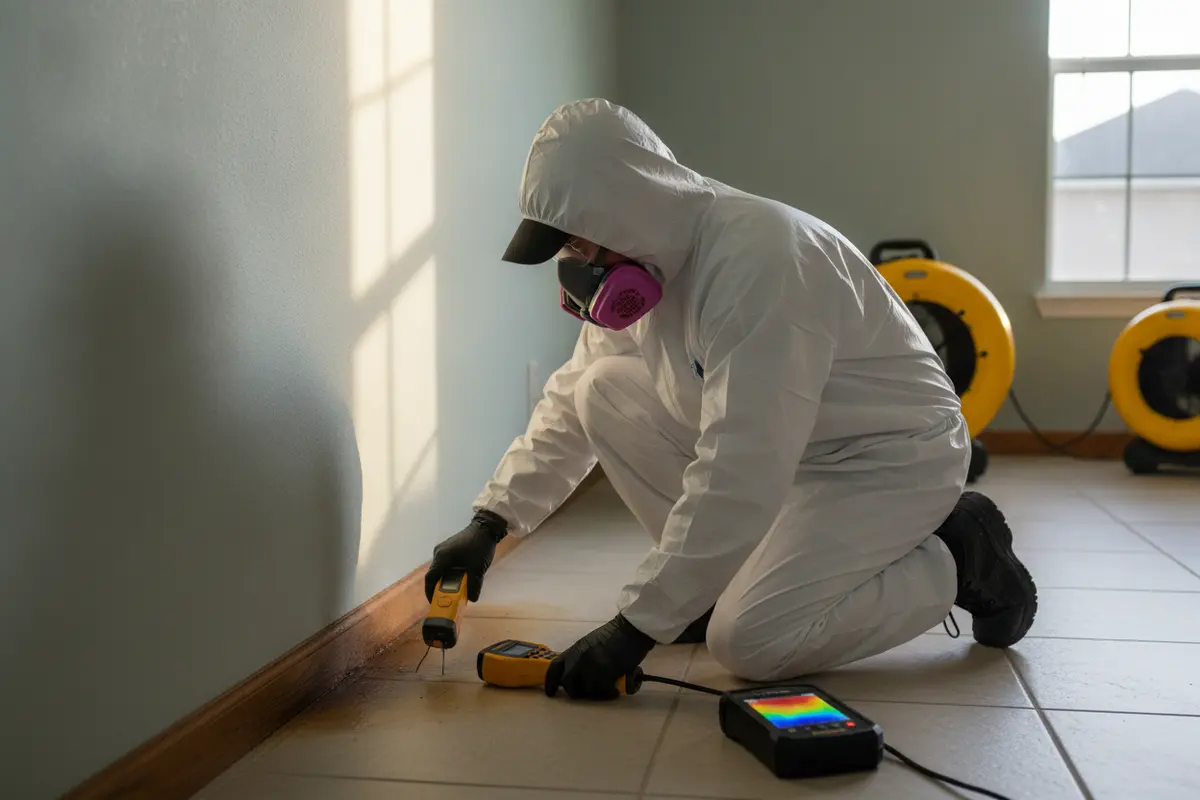
Different surfaces respond differently to wastewater. A sealed, nonporous surface may be accessible for cleaning, while carpet, its pad, upholstery, drywall, and some flooring layers can absorb water beyond the visible face. Whether an item can be retained depends on its material, the extent and duration of contact, and whether it can be cleaned and dried appropriately. Do not assume every affected item must be discarded, but do not assume wiping the surface is enough either.
Water can travel along edges and collect below materials. For example, a tiled bathroom may look dry after standing water is removed, while moisture remains at grout lines, beneath a vanity, or along a doorway threshold. Carpet can feel nearly dry on top while the pad remains wet. A damp baseboard can signal that moisture reached the wall edge, even when the center of the wall looks unchanged.
A qualified assessment helps map what needs attention before decisions are made. Tell the crew about all rooms the water may have crossed, even if a surface looks normal. They can assess affected areas, explain which materials may be cleaned or may need removal, and outline how drying and follow-up checks fit the job. Learn more about iMold’s restoration process, which describes assessment and work planning as part of a larger response.
| Area or material | What can be missed | Useful next step |
|---|---|---|
| Sealed tile or hard flooring | Moisture or debris may collect at edges, grout, or beneath the surface. | Keep traffic out and have the full affected boundary checked. |
| Carpet and padding | Both layers can absorb water; the top may not show the condition below. | Avoid household vacuuming and ask how the layers will be assessed. |
| Drywall and baseboards | Water may wick into trim or a wall cavity. | Document visible impact and have concealed areas considered. |
| Cabinets and built-ins | Water can collect beneath or behind fixed components. | Identify the exact areas reached before cleaning or drying is planned. |
| Upholstered belongings | Contamination may extend beyond a wipeable outer surface. | Separate from clean belongings and ask whether recovery is appropriate. |
What does an assessment and cleanup plan usually clarify?
A useful assessment translates the visible event into a scope of work. It should clarify which rooms and materials were affected, what can be cleaned in place, whether removal is being considered, and what needs drying or later repair. Ask the restoration professional to explain the reason for each proposed step in plain language. If the scope changes after concealed moisture is found, ask what new information led to the change.
The plan may distinguish immediate cleanup from later repairs. Removing visible water, addressing impacted materials, drying the remaining structure, and rebuilding are related phases, but one does not automatically mean the others are complete. Before reconstruction closes an area, understand what checks will be performed and what findings indicate it is ready for that next step.
For example, consider a laundry room overflow that reached only a small tiled area. The source is stopped, there is no odor, and nearby cabinets and wall edges are dry. That situation is different from a repeat backup that crossed a hallway, soaked carpet, and reached baseboards. In the second case, the visible water line does not define the entire scope; the affected path and concealed edges need consideration too.
Businesses and property managers may also need to plan room access, protect unaffected operations, and coordinate with tenants or staff. A simple list of affected rooms and times when access is available helps the assessment stay organized. Do not reopen or reoccupy an area solely because the puddle is gone; base the decision on the actual conditions and the advice of qualified professionals.
How do drying and follow-up checks work?
Removing visible water is only one part of recovery. Moisture may remain beneath flooring, behind trim, or inside wall assemblies. Opening windows or placing a household fan may not address water trapped in these locations. A drying approach should reflect the materials and the extent of the affected area, with checks over time to determine whether moisture remains.
Ask what areas are being monitored, how often conditions will be checked, and what the readings or observations will mean for the next step. You do not need to interpret equipment numbers on your own; ask the crew to explain them in relation to the materials and the scope. Keep pathways clear so the team can access affected edges and equipment. If an odor, new dampness, or another backup appears, report it rather than covering it with a fragrance or surface product.
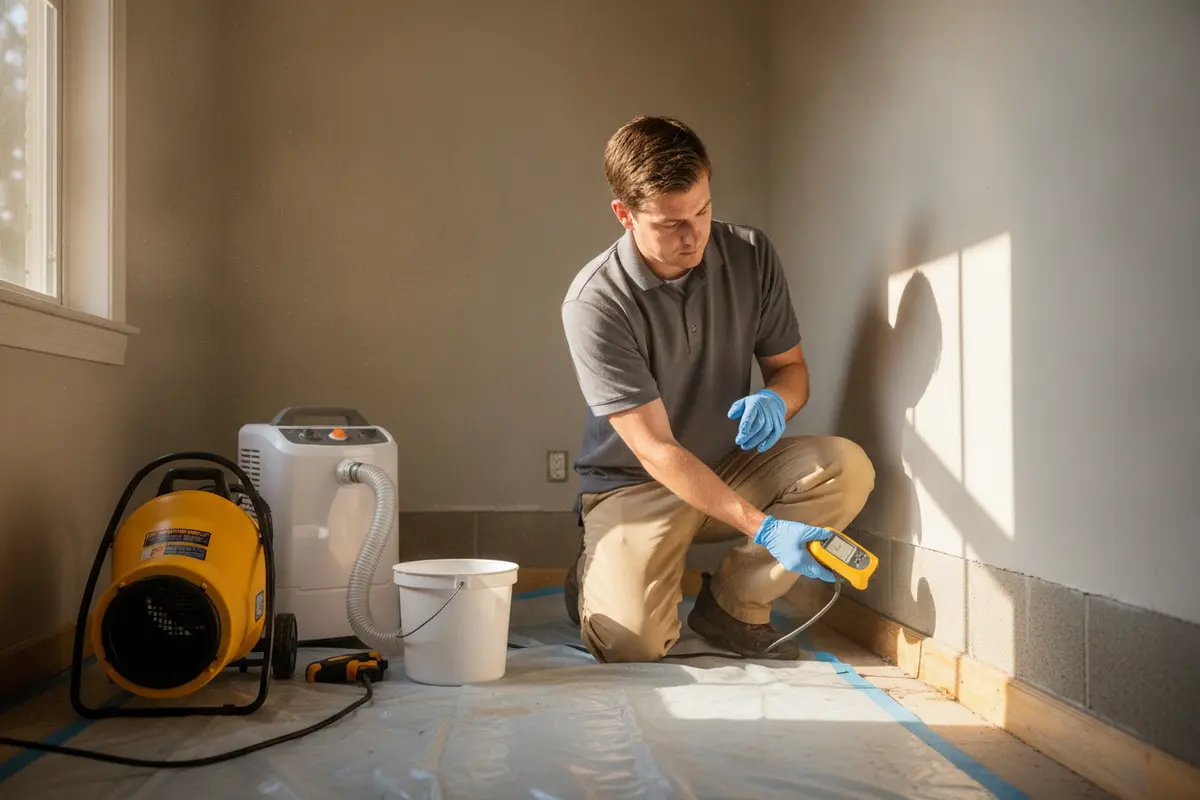
iMold offers water damage response and reconstruction, helping coordinate work beyond the initial removal of water. Its emergency response information explains how to request help, and its Southwest Florida service areas page lists communities served.
How should you document the event and discuss insurance?
Keep a simple event file in one place. Include photos taken from a safe position, dates and times, the rooms affected, notes about the plumbing repair, and any steps already taken. Save invoices, estimates, and written communications. If you discard an item for safety or access, photograph it first when practical and note why it was removed.
Contact your insurance carrier to ask about policy coverage, notice requirements, and records it needs. Coverage depends on the policy and the facts of the loss, so do not assume a particular repair or cleanup will be covered. iMold works directly with carriers, uses Xactimate, and has preferred vendor status with major insurers. You can review information about water damage and insurance claims and the company’s insurance coordination. Ask the carrier what approvals or documentation are needed before work proceeds.
When reviewing a proposed scope, ask for a plain explanation of the affected areas, cleaning or removal decisions, drying steps, and any repair work that may follow. If verification testing is suggested, ask what question it is meant to answer and who will perform it. iMold uses third-party testing for unbiased verification when applicable. The company is licensed, bonded, and insured, with State Certified General Contractor (CGC1540205) and State Certified Mold Remediator (MRSR2170) credentials.
How can you decide whether a small spill needs professional help?
Use the extent and materials as a practical guide, while treating uncertainty as a reason to ask for advice rather than a reason to guess. These examples are not a substitute for an assessment; they can help you organize the right questions:
- Contained and limited: A small overflow stayed on a sealed surface, the source is corrected, and no porous materials or adjoining areas were reached. Keep people away during cleanup and watch for odor or dampness.
- Spread to absorbent materials: Wastewater reached carpet, padding, soft furnishings, or stored belongings. Avoid moving items through clean areas and ask how the materials should be handled.
- Possible hidden impact: Water reached a baseboard, cabinet, wall edge, or flooring seam. Request an assessment that considers what may be behind or beneath the visible surface.
- Ongoing or repeated backup: Stop using affected fixtures if safe, contact a plumber about the source, and arrange cleanup guidance for any spread that has already occurred.
iMold serves homeowners and businesses in Fort Myers, Cape Coral, Naples, Bonita Springs, and communities across Southwest Florida. Its 24/7 service is backed by 28 years of local operation, and its team can work from emergency response toward restoration and reconstruction. You can learn about the company through its iMold background and customer reviews.
What information should you have ready when you call?
You do not need to know the technical answer before asking for help. A few observations can help the conversation focus on the right next step. Be ready to describe where the backup started, whether it is still happening, which rooms the water crossed, and what surfaces or belongings it touched. If the water came from more than one fixture or returned after being cleared, mention that as well. These details help distinguish a one-time contained spill from a wider event that may need a building assessment.
- Describe the path: Identify the starting room, any thresholds or hallways crossed, and the farthest point you can see from a safe location.
- Name the materials: Note whether the area includes tile, carpet, wood flooring, drywall, cabinets, or stored items.
- Explain what has changed: Share whether a plumber has been contacted, whether water use has stopped, and whether odor or dampness remains.
- Ask about access: For a business or rental, explain who can provide entry and which rooms need to remain available or closed.
- Confirm the next step: Ask what the assessment will cover, what records to keep, and how the cleanup plan will be explained.
These notes are useful whether you own a home, manage a rental, or oversee a business. For a business, you may also want to identify a point person who can communicate with the cleanup team and the insurer. In a multi-unit property, tell the team if water may have crossed a shared wall or floor so the affected boundary can be discussed. Do not enter a wet or potentially unsafe area just to answer a question; report what you can observe from a safe place and let qualified personnel assess further.
Frequently asked questions
Can I clean a small sewer overflow myself?
A small amount confined to a hard, sealed surface may be manageable after the source is fixed and if no water reached other materials. Keep people and pets away, avoid direct contact, and ask for professional guidance if the extent, material, or safety is uncertain.
Should I use bleach on a sewage-affected floor?
Do not rely on bleach or another surface product to establish that an affected area is clean. It cannot show whether water reached hidden layers, and mixing cleaning products can create hazards. Follow product directions and seek qualified advice for a spread or porous materials.
Does a dry-looking floor mean the room is ready to use?
Not necessarily. Moisture may remain beneath flooring, behind trim, or inside a wall. Follow-up assessment and suitable drying checks help determine whether affected materials remain damp.
Will insurance cover sewer backup cleanup?
Coverage depends on your policy and the circumstances. Contact your carrier, ask what notice and records are needed, and keep photos and documents together. iMold can coordinate with carriers and provide project documentation.
Who handles the plumbing source and the property cleanup?
A plumber investigates and repairs the sewer or plumbing problem. A restoration team assesses and addresses the resulting impact to building materials and belongings. Both may be needed, and keeping their scopes clear helps coordinate the work.
Schedule a no-cost visual inspection and estimate
If wastewater has spread, reached porous materials, or left you unsure about hidden moisture, keep the area clear and arrange a professional assessment based on the actual conditions.

