When a leak, storm, or musty odor raises concern about mold, the right first step is clear information. Not a rushed promise. iMold is available 24/7 for urgent water damage and property conditions. While homeowners with non-emergency concerns can begin with a no-cost visual inspection and estimate.
Schedule a free visual mold inspection and estimate.
Reliable residential mold testing services should explain the difference between a visual inspection, moisture assessment, laboratory sampling, remediation, and post-remediation clearance. Look for qualified professionals, transparent documentation, and independent third-party testing when unbiased verification is needed. The EPA notes that visible mold often makes sampling unnecessary and that there are no federal limits for mold spores. So testing should answer a specific question rather than serve as a scare tactic.
In Southwest Florida, choosing help also means understanding how moisture is located, how results are interpreted, and who handles the next step. A practical starting point is reviewing the provider’s mold inspection and testing services before deciding what your home actually needs.
What Residential Mold Testing Services Actually Include
When a Southwest Florida home has a musty odor, visible growth, or a history of water intrusion. The first step is usually a careful assessment, not an automatic laboratory test. The EPA describes mold assessment as mainly a visual inspection of areas affected by moisture or water damage. A qualified professional should look at the condition of the property, identify moisture sources, and explain what additional information is actually needed.
Visual inspection and moisture assessment
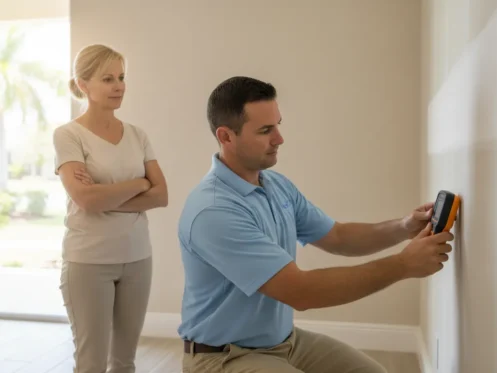
A visual inspection reviews accessible rooms, building materials, and areas connected to leaks, flooding, condensation, or previous cleanup. Moisture meters and thermal cameras may help identify damp conditions or patterns that are not obvious from the surface. This matters because moisture is central to mold growth. It also helps distinguish a current moisture problem from an old, dry stain or unrelated discoloration.
Visible mold does not automatically require sampling. The EPA says sampling is usually unnecessary when visible mold growth is already present. In that situation, testing does not remove the growth or correct the moisture source. The useful next step may be remediation and repairs, supported by appropriate documentation.
Sampling, laboratory analysis, and interpretation
Sampling may be considered when the scope is unclear, hidden conditions are suspected, a property transaction requires documentation, or independent verification would help guide a decision. Depending on the situation, a qualified tester may collect air or surface samples and send them to a laboratory. The EPA recommends using recognized methods from organizations such as AIHA or ACGIH, and says sampling should be performed by professionals experienced in protocol design, collection, and interpretation.
Laboratory results need context. The EPA has not established federal limits for mold or mold spores, so a report should not be presented as a simple pass-or-fail health score. Testing can have limited usefulness when there is no clear question for it to answer. A transparent provider will explain the purpose of each sample, what the results can establish, and what they cannot.
Clearance after remediation
Clearance is a separate step after cleanup. It may include visual review and, when appropriate, post-remediation sampling to help determine whether an area was adequately cleaned. The EPA notes that surface sampling may help evaluate remediation. iMold coordinates independent third-party testing for unbiased verification. Including baseline and post-remediation clearance testing, with results provided to the customer.
For a closer explanation of the distinction, review this guide to mold inspection versus testing. A visual inspection, laboratory testing, remediation, and clearance each answer a different question. Choosing the right combination helps homeowners make informed decisions without treating testing alone as a mold-removal solution.
How to Choose Residential Mold Testing Services in Southwest Florida
Choosing the right provider starts with understanding what you need answered. A visual inspection looks for visible growth, moisture patterns, and conditions that can support mold. Sampling may add useful information in specific situations, but it does not replace a careful assessment or solve the moisture source. Use these criteria when comparing residential mold testing services in Fort Myers, Cape Coral, Naples, Bonita Springs, and nearby communities.
- Ask what the appointment is designed to determine. A qualified professional should explain whether the first step is a visual inspection, moisture investigation, sampling, or a combination. EPA guidance describes mold assessment as mainly a visual inspection of areas with moisture problems or water damage. If visible mold is already present, sampling is often unnecessary. A provider should explain the recommendation instead of automatically presenting testing as the answer. Learn more about mold inspection and testing services before you schedule.
- Look for moisture-focused investigation. Moisture is central to mold growth, so ask how the provider will look for active or past water intrusion. Depending on the property, that may include moisture meters, thermal cameras, and inspection of areas affected by leaks, humidity, or water damage. The goal is to connect the visible condition with its likely source, including moisture that may be hidden behind finishes or beneath flooring. A report that lists sample results but ignores the moisture cause is incomplete.
- Verify the people performing and interpreting the work. EPA recommends asking about qualifications, training, experience, and references. It also notes that EPA does not certify mold inspectors or remediation firms, so do not treat an EPA endorsement as a provider credential. Ask who will design the sampling approach, collect samples, interpret the findings, and answer follow-up questions. Experience with Southwest Florida homes and their moisture conditions is a practical advantage.
- Ask how samples will be analyzed. If sampling is appropriate, the provider should identify the laboratory or analytical process and explain how the results will be interpreted. EPA recommends analysis methods from recognized professional organizations such as the American Industrial Hygiene Association or the American Conference of Governmental Industrial Hygienists. Because there are no federal limits that define a universally safe mold concentration, a responsible report should avoid turning a number into a diagnosis or a guarantee.
- Prefer independent verification when it matters. If remediation is recommended, ask whether baseline testing or post-remediation clearance testing will be handled independently. iMold coordinates third-party testing by Certified Indoor Environmental Professionals for unbiased verification. With results provided to the customer. This separation helps distinguish the company carrying out restoration from the professional evaluating the conditions and reporting results.
- Check licenses, standards, and the complete scope of work. Confirm that the provider can explain what happens after inspection or testing, including containment, remediation, documentation. And clearance when appropriate. iMold publicly identifies its State Certified General Contractor (CGC1540205) and State Certified Mold Remediator (MRSR2170) credentials and follows IICRC S520 standards for mold remediation. Ask for the next steps in writing, including what is included and what remains your responsibility.
- Choose transparency over urgency or guarantees. A trustworthy provider will explain limitations, answer questions. And avoid promising that testing alone will remove mold. iMold offers a no-cost visual mold inspection and estimate to help identify conditions and next steps. While independent laboratory testing may be a separate part of the process. For active water damage or an urgent property condition, 24/7 emergency service should be available. Otherwise, schedule an assessment that gives you clear information before authorizing disruptive work.
The strongest choice is not necessarily the provider offering the most samples. It is the one that connects inspection, moisture control, qualified interpretation, and independent verification into a clear plan.
When Testing or Inspection Makes Sense in a Florida Home
In Southwest Florida, a mold conversation often starts with moisture rather than a laboratory report. A roof, window, or pipe leak, flooding, or a recurring damp area can create conditions where mold develops. The CDC notes that mold can grow on materials such as drywall, carpet, fabric, upholstery. And wood, so the visible condition of a room may not tell the whole story. If active water damage is present, address the source promptly and contact a provider offering Southwest Florida water damage restoration.
After a leak, flood, or recurring moisture
An inspection is reasonable after a plumbing leak, storm intrusion, appliance overflow, or flood. Especially when materials remained damp or the area was closed up before it could dry. Moisture is central to mold assessment. A qualified professional can look for visible growth and use appropriate tools, such as moisture meters or thermal cameras, to help identify areas that need closer attention. The EPA describes mold assessment as mainly a visual inspection of areas with moisture problems or water damage. That means testing is not automatically the first or only step.
When odors or visible growth remain unexplained
A musty odor, new spotting, or discoloration around walls, ceilings, baseboards, flooring, or furnishings can justify a professional conversation. Mold can appear as spots in many colors and may smell musty, according to the CDC. If growth is plainly visible, sampling may not add useful information. The EPA says that in most cases visible mold makes sampling unnecessary. The practical priority is to identify the moisture source and determine what must be cleaned, removed, or repaired.
Testing may have a more specific role when the source or extent of a concern is uncertain. When documentation is needed, or when independent verification is appropriate after remediation. There are no established federal safe levels or regulatory standards for mold, so a test result should not be treated as a simple pass-or-fail health determination. Damp and moldy environments may cause health effects for some people or none at all. Health concerns should be discussed with a qualified medical professional, not answered by a contractor.
Choosing the next step
A no-cost visual inspection and estimate can help clarify whether the situation calls for moisture correction, remediation, independent testing, or further evaluation. For a practical checklist, see when to schedule a mold inspection. If sampling is recommended, ask who performs it, how results are interpreted, and whether the testing is independent from the remediation work. That separation can provide clearer documentation without turning every odor or spot into an emergency.
Inspection, Testing, Remediation, and Clearance Compared
These services answer different questions, so choosing the right one matters. A visual inspection looks for visible growth, moisture, and signs of water damage. Testing or sampling may add information in a situation where an independent professional believes it is useful. Remediation addresses the source and affected materials. Clearance verification checks whether the completed work meets the agreed objectives.
| Service | Primary purpose | What it may include | What it does not do |
|---|---|---|---|
| Inspection | Identify visible mold, moisture conditions, and areas that may need closer evaluation. | Visual review of moisture or water-damage areas, moisture readings, and thermal imaging when appropriate. | It does not remove mold or automatically establish a laboratory diagnosis. |
| Testing or sampling | Provide additional information for a specific question, such as baseline conditions or post-work verification. | Air or surface samples collected and interpreted by an experienced, independent professional when appropriate. | It does not set a universal safe mold level or replace correction of the moisture source. |
| Remediation | Control and remove affected materials while addressing the conditions that allowed mold to grow. | Containment, negative air pressure, HEPA filtration, cleaning or removal, and restoration as the scope requires. | It is not the same as testing, and testing alone cannot perform the cleanup. |
| Clearance verification | Document whether the remediated area is ready for the next stage of work or occupancy decisions. | Independent post-remediation evaluation and sampling when specified by the project or protocol. | It does not repair new leaks or guarantee that future moisture problems cannot occur. |
The distinction is especially important when visible mold is already present. The EPA explains that sampling is usually unnecessary when visible mold growth can be seen. It also notes that surface sampling may help determine whether an area was adequately cleaned or remediated. Because there are no established federal safe levels or regulatory standards for mold, test results require careful interpretation rather than a simple pass-or-fail assumption.
A practical sequence may begin with a visual assessment focused on moisture. iMold offers a no-cost visual mold inspection and estimate. Third-party testing can provide unbiased baseline or clearance verification when appropriate. Certified Indoor Environmental Professionals perform that independent testing and provide the results to the customer. If remediation is needed, review the mold remediation process steps so you understand how assessment, containment, extraction, remediation, and restoration fit together. Testing supports informed decisions, but it is not remediation.
Learn about mold remediation services after your inspection.
What a Trustworthy Southwest Florida Provider Should Explain
If active water damage or another urgent condition is affecting your property, choose a provider with 24/7 emergency availability. For a non-emergency concern, a trustworthy company should still make the decision process clear before recommending disruptive work. That starts with explaining who will assess the property, what the assessment can establish, and which steps may follow.
Experience that matches the local environment
Ask how long the company has worked in Southwest Florida and whether it regularly serves properties like yours. iMold has operated locally for 28 years. With more than 35 certified professionals serving an eight-county region that includes Fort Myers, Cape Coral, Naples, and Bonita Springs. This kind of local experience matters because the provider should be prepared to discuss moisture sources, water damage. And the practical conditions affecting homes and businesses in the area rather than relying on a one-size-fits-all explanation.
Credentials you can verify
Credentials should be stated precisely, not described with vague claims about being certified. iMold holds the public-facing licenses State Certified General Contractor (CGC1540205) and State Certified Mold Remediator (MRSR2170). The team also follows IICRC S520 standards for mold remediation. You can review documentation through the company’s licenses and certifications page, then ask how those qualifications apply to the work proposed for your property.
Clear separation between inspection, testing, and remediation
A provider should not imply that a visual inspection, laboratory testing, and mold removal are interchangeable. A no-cost visual inspection and estimate may use tools such as thermal cameras and moisture meters to assess visible conditions and moisture. When independent sampling or clearance verification is appropriate, iMold coordinates third-party testing performed by Certified Indoor Environmental Professionals. The results are provided to the customer, supporting a more transparent process. This separation also helps you understand whether you are reviewing an initial baseline, a remediation plan, or post-remediation clearance.
Documentation and insurance coordination
Before work begins, ask what you will receive in writing. A responsible provider should explain the findings, recommended scope, restoration steps. And documentation needed for your records. iMold provides written estimates and coordinates insurance documentation using Xactimate-based claims support. That does not replace your policy or insurer’s decisions, but it can make communication between the property owner, carrier, and restoration team more organized. A clear explanation of containment, HEPA filtration, and other controls used under IICRC S520 also gives you a practical basis for comparing proposals.
Get clear next steps from a Southwest Florida restoration team.
Frequently Asked Questions
Are home mold test kits worth using?
They can provide a limited snapshot, but they do not replace a professional assessment of moisture, visible growth, building materials, or the likely source. EPA notes that testing may have limited use because there are no established safe levels or regulatory standards for mold. When the result will guide remediation, a qualified professional should explain the sampling plan and how the findings will be interpreted.
Do I need testing if I can already see mold?
Not necessarily. EPA says sampling is usually unnecessary when visible mold growth is present. The more useful next step is to identify and correct the moisture source, document the affected areas, and determine whether remediation is appropriate. Testing may still help in a specific situation, such as establishing a baseline or verifying an area after cleanup.
What should a mold testing provider explain before collecting samples?
Ask what prompted the sampling, where samples will be collected, which laboratory will analyze them, and what decisions the results can support. EPA recommends professionals with experience designing protocols, using sampling methods, and interpreting results, with analysis methods recommended by recognized professional organizations. You should also receive the report and a plain-language explanation of its limits.
Will homeowners insurance pay for mold testing?
Coverage depends on the policy, the cause of the moisture, and the circumstances of the loss. Ask your carrier what documentation it requires before authorizing testing or related work. Keep records of leaks, water damage, inspection findings, laboratory reports, invoices, and repairs. A provider that coordinates with carriers can help organize documentation, but only your insurer can determine coverage.
Schedule a Free Visual Mold Inspection
If you are unsure whether moisture has led to a mold concern, a visual inspection can help clarify the next practical step without confusing inspection with independent testing. Schedule a free visual mold inspection and estimate, or call 877-771-1699 for 24/7 emergency service when active water damage needs immediate attention.