


iMold is available 24/7 for emergency restoration needs in Fort Myers and Southwest Florida. If you are weighing whether professional mold remediation is the right next step, focus first on the size and location of the affected area, whether the moisture source is fixed, and whether the problem keeps returning. A no-cost visual mold inspection and estimate can help you understand what you are seeing and what work may be needed.
Request a no-cost visual mold inspection
When should you call for professional mold remediation?
Call a qualified mold professional when growth covers a large area, appears in several rooms, returns after cleaning, or is connected to water damage that is not fully resolved. A professional assessment is also a sensible choice when mold or dampness may be inside a wall, beneath flooring, above a ceiling, or in a building system where you cannot see the full extent.
The U.S. Environmental Protection Agency advises consulting its remediation guidance when mold covers more than 10 square feet or when there has been a lot of water damage. That is a practical signal to seek informed help, not a substitute for assessing the specific building. The EPA also notes that the moisture problem must be addressed; otherwise mold can return. Read its Mold Cleanup in Your Home guidance for additional context.
Some situations do not require waiting to see whether a surface spot disappears. Contact a professional promptly if:
- You can see a broad patch or multiple patches, or the affected area seems to be spreading.
- A roof leak, plumbing leak, appliance overflow, or other water event left materials wet or caused damage in more than one area.
- A musty odor continues even though the visible surface looks clean.
- Mold appears again after cleaning, suggesting the moisture source or affected material may remain.
- You suspect growth behind drywall, under flooring, around cabinets, or in an air-conditioning area.
- You are responsible for a rental, workplace, or commercial property and need a documented plan for addressing the building concern.
These signs do not tell you exactly how much mold is present or what caused it. They do indicate that a surface-level guess may not be enough. A professional can look at the affected materials, moisture conditions, and likely scope before recommending next steps.
What can you do before help arrives?
Start by keeping people and belongings away from the affected area as practical. Do not scrape, sand, or dry-brush suspected mold, and do not open walls or pull up flooring just to look behind it. Those actions can spread dust and may make the source harder to assess. Avoid painting or caulking over a stained or moldy surface; covering it does not correct the moisture condition underneath.
If water is still entering, address the source only if it is safe to do so. For example, you may be able to shut off a leaking fixture. Do not enter standing water where electrical equipment may be involved, and do not climb onto a roof. If the water damage is active or extensive, iMold provides 24/7 emergency restoration response; a separate water damage restoration service may be needed to address wet materials and drying before mold cleanup can be considered complete.
Take a few photos from a safe distance and note when you first noticed the issue, any leak or water event, and whether the area has changed. If you can do so without disturbing materials, move dry belongings out of the immediate area. Do not use a household fan to blow directly across visible growth. Keep notes on actions already taken and any areas that continue to feel damp or smell musty.
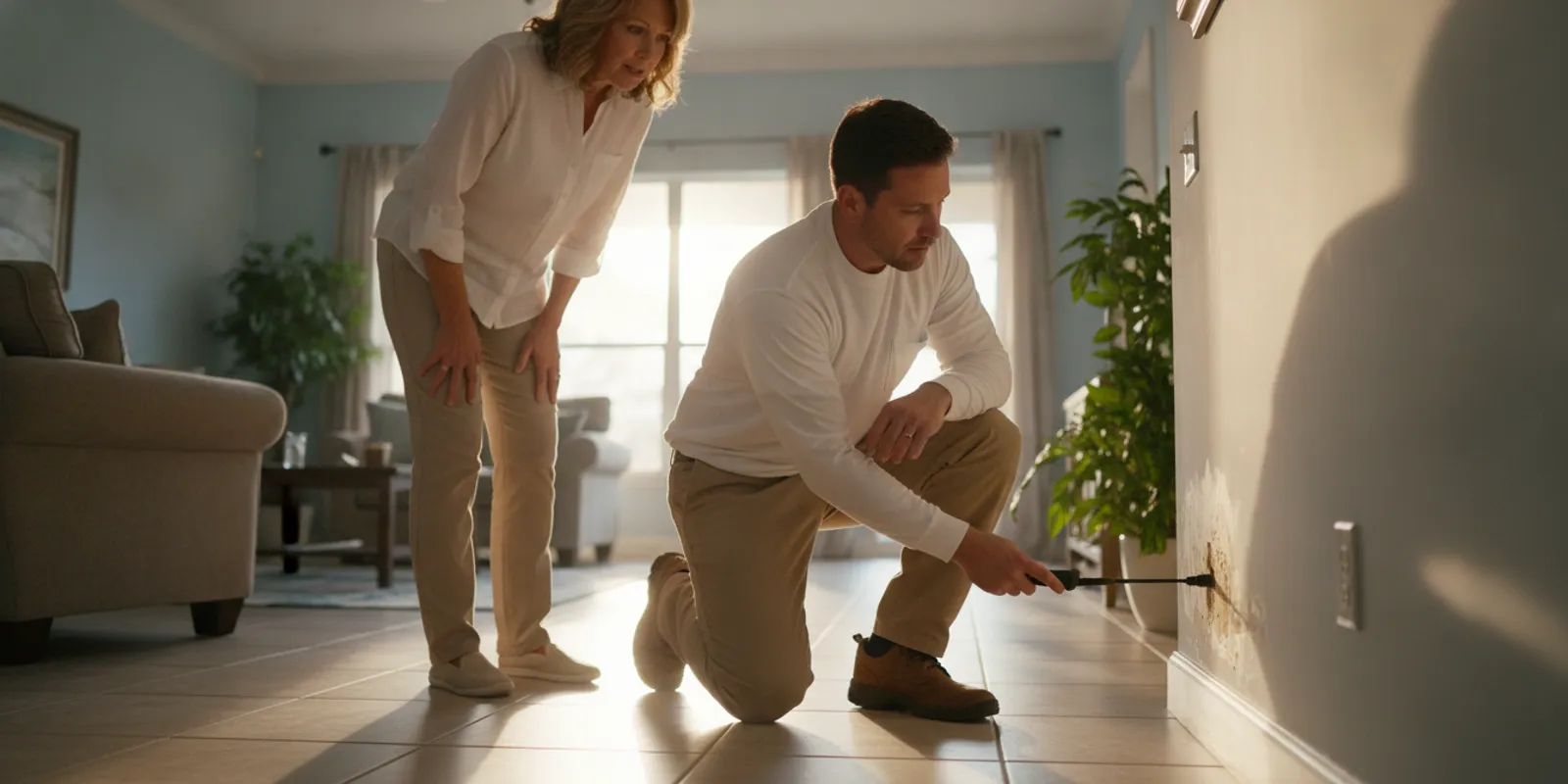
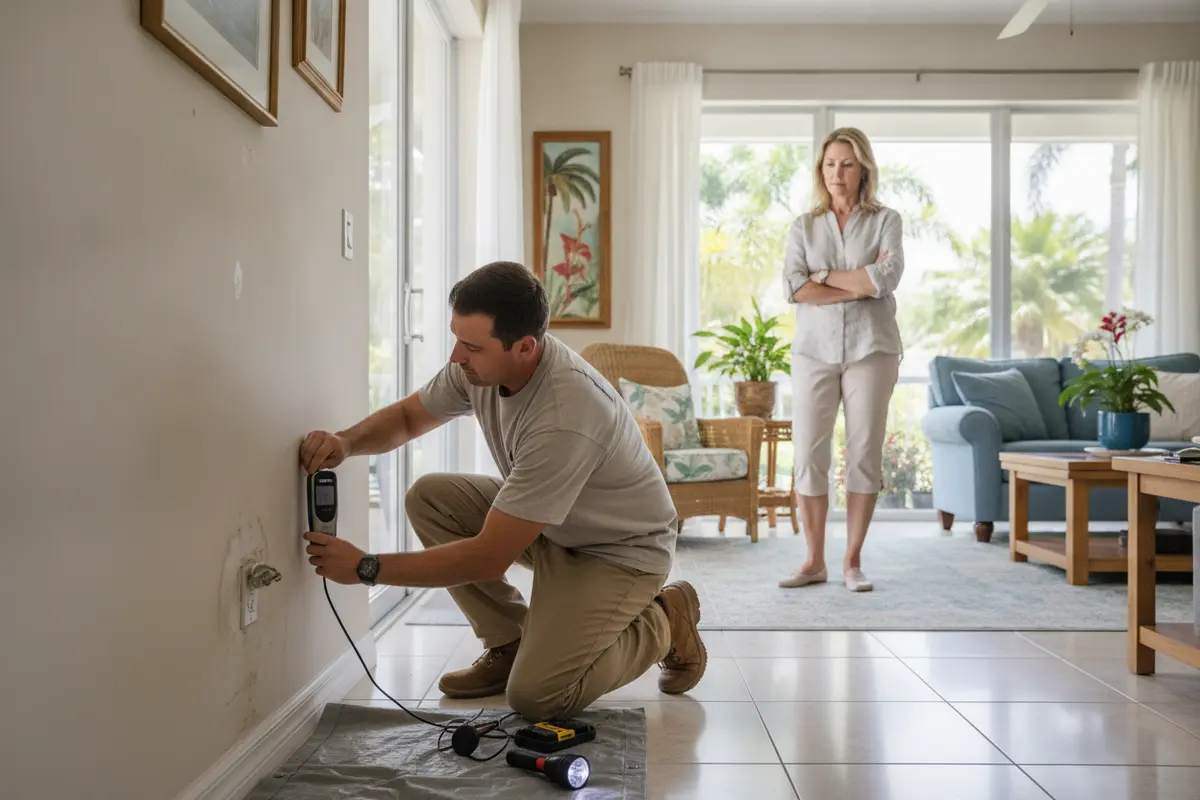
Why can a small visible patch need a closer look?
The visible surface is not always the full extent of a moisture problem. Water can travel along framing, behind a cabinet, or below a floor finish. A stain can also remain after a leak has stopped, while damp material nearby continues to need attention. That is why the location, the building materials, the history of water intrusion, and current moisture conditions matter alongside the visible spot.
This does not mean every small mark requires a large removal project. It means the right response depends on what is affected and whether the underlying cause has been corrected. A small area on a hard, cleanable surface with no ongoing moisture is different from a patch on porous drywall after a long-term leak. When you cannot tell which situation you have, ask for an assessment rather than relying on appearance alone.
Third-party testing may be appropriate in some circumstances to provide an unbiased check. It is not automatically necessary for every concern. The goal is to understand the problem and choose a response that fits it, rather than ordering tests or work without a clear reason.
What if the mark is not mold?
A dark patch, water stain, or discoloration cannot be identified reliably from a quick glance alone. Dust, dirt, and old staining can look concerning, while a moisture problem may be hidden behind a surface that looks mostly normal. Avoid treating color as proof of a particular mold type or using a photo to decide what material is affected.
Instead, note where the mark appears, whether it changes, and whether the area feels damp or follows a known leak. A professional visual assessment can help distinguish what is observable from what still needs checking. If the concern is limited and no moisture is present, the appropriate next step may be different from a case involving active leakage or growth in several places. The point is to make a decision based on the condition and history, not on appearance alone.
What happens during a professional mold assessment?
An assessment should begin with the story of the problem: where you see or smell an issue, when it began, and whether there has been a leak, flooding, or repeated condensation. The professional can then look at the accessible affected areas and signs of moisture, consider nearby materials, and discuss what is known and what still needs investigation.
Ask what the inspection covers and what it does not. A visual inspection is not the same as laboratory testing, and a visible sign alone does not identify a mold species. If testing is recommended, ask what question it is meant to answer, who performs it, and how the result will affect the plan. iMold offers mold remediation services, including no-cost visual mold inspections and estimates. The proposed work should explain the affected area, containment or protection steps where needed, removal or cleaning approach, and how the moisture source will be addressed.
For a better sense of the sequence, review the companyâs restoration process. A good conversation should leave you knowing the recommended scope, what happens next, and who to contact with questions. Do not hesitate to ask for unclear terms to be explained in plain language.
What should a clear remediation plan explain?
A useful plan should connect the recommended work to the conditions found at the property. It should identify the rooms or materials in scope and explain whether the work is limited to visible surfaces or includes opening an assembly for closer assessment. If the full extent is not known until work begins, ask how additional findings will be communicated and approved before the scope changes.
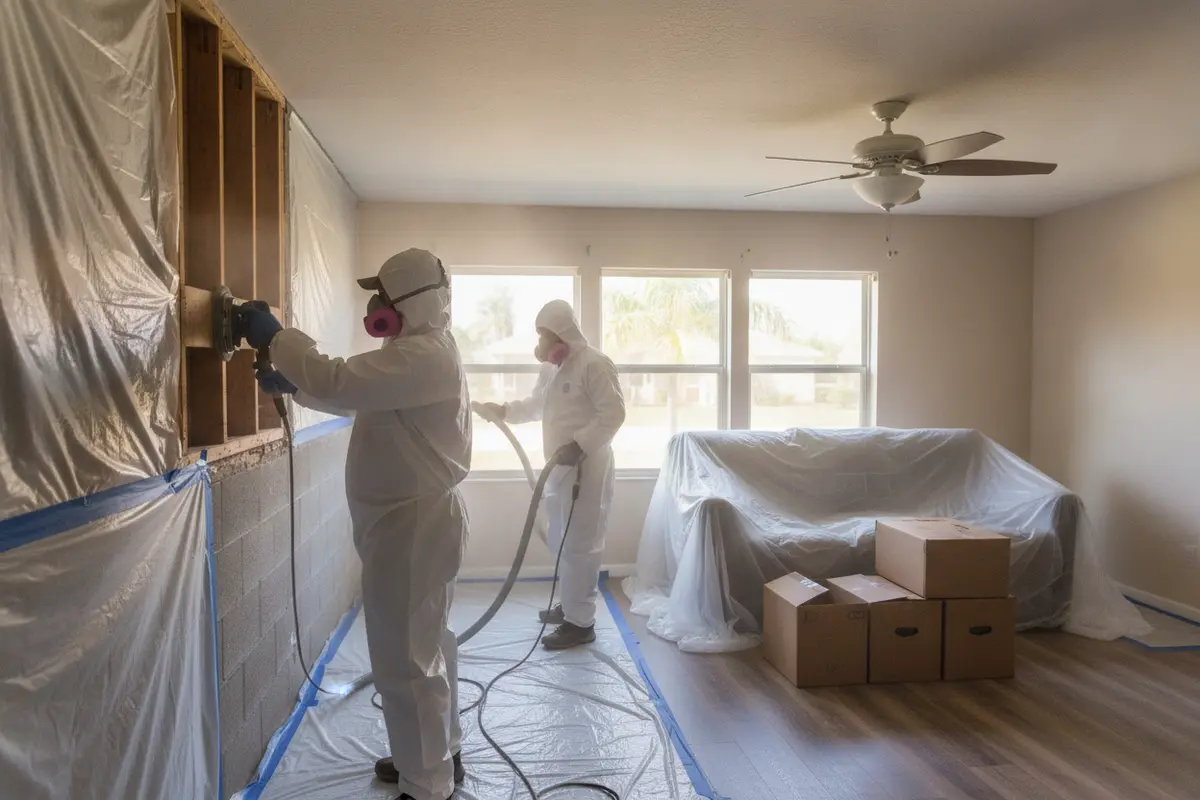
It should also describe how the work area will be managed. Depending on the situation, the provider may recommend isolating an area or protecting nearby surfaces and belongings. Ask what you should remove, whether you can remain in nearby rooms, and how access will be handled. The answers should reflect the specific site rather than a one-size-fits-all promise.
Finally, ask how the plan deals with moisture. Cleanup alone may not solve a recurring problem if a leak, condensation, or another source remains. Clarify who is responsible for addressing the source, what drying or repair work is included, and what documentation you will receive when the agreed work is complete. A clear explanation helps you compare providers and understand the next decision without guessing.
How do cleaning, remediation, and repair differ?
People often use âÂÂmold removalâ to describe the entire job, but different tasks may be involved. Cleaning addresses affected surfaces that can be cleaned. Remediation is the broader work of controlling and removing affected material as appropriate, while reducing the chance of spreading contamination to unaffected areas. Repairs or reconstruction address building components after the source and affected materials have been handled.
| Situation | Typical next step | What to clarify |
|---|---|---|
| Small, isolated surface concern with no known ongoing moisture | Assess the surface and check whether the moisture source is resolved | Can it be safely cleaned, and what would indicate a larger issue? |
| Visible growth across a larger area or in several locations | Professional assessment and a defined remediation scope | Which materials are affected, and how will nearby areas be protected? |
| Recent leak or water intrusion with damp building materials | Address the water source, evaluate affected materials, and plan drying and remediation as needed | What must happen first, and how will completion be documented? |
| Damage to finishes after moisture and mold work | Repair or reconstruction after the underlying issue is addressed | Which repairs are included in the proposal and which are separate? |
This table is a starting point, not a diagnosis. A professional may recommend a different sequence based on the site conditions. iMold offers restoration services beyond mold work, including home damage repairs, which can help property owners discuss how remediation and repair fit together.
How should you compare mold remediation proposals?
Compare proposals by scope and process, not just by the headline description. Ask each provider to identify the area being addressed, the materials involved, how the work area will be managed, what happens to removed materials, and how the moisture source is considered. If there was water damage, ask how drying and mold-related work coordinate. The written scope should make it clear what is included and what may require a separate decision.
- Ask what prompted the recommendation. Have the provider connect the proposed work to the observed condition or water history.
- Confirm how the area will be protected. Ask what steps will limit disturbance or spread to nearby parts of the home.
- Understand the sequence. Clarify whether water mitigation, removal, cleaning, and repairs happen in stages.
- Discuss verification. Ask whether any testing or other review is proposed, who will do it, and why it is useful in your case.
- Get payment and insurance details in writing. Ask what documentation is available and what you are responsible for confirming with your carrier.
iMold coordinates with insurance carriers and uses Xactimate for claims documentation. Coverage depends on the policy and circumstances, so do not assume a specific outcome. The insurance claims information can help you prepare questions, but your insurer determines coverage. Keep copies of photos, proposals, invoices, and communications.
What should Fort Myers property owners keep in mind?
Southwest Florida homes and businesses may experience roof leaks, plumbing failures, appliance leaks, or water intrusion. Warm, humid conditions can make it important to address moisture promptly, but they do not make every stain mold or every mold concern an emergency. Use what you can observe, take the water history seriously, and get professional input when the affected area is extensive, hidden, recurring, or tied to unresolved water damage.
Choose a provider who can explain the plan and the limits of what is known. iMold serves Fort Myers and communities across Southwest Florida. Its service area information can help you check coverage, and the company background provides more context about its local restoration work. Review the proposal carefully and make sure you understand the scope before work begins.
Contact iMold to discuss your property
Frequently asked questions
Can I remove mold myself?
A limited surface issue may be manageable in some circumstances, but the right approach depends on the material, size, and moisture source. Do not disturb a large area, hidden growth, or material affected by extensive water damage. If you are unsure, ask a professional to assess it first.
Does a musty smell always mean there is mold?
No. Odor alone does not identify its source. A persistent musty smell can be a reason to investigate for moisture or concealed material concerns, especially when paired with a known leak or damp area. Describe where and when you notice it during an assessment.
Do I need mold testing before remediation?
Not in every case. Testing is useful when it answers a specific question, and a professional can explain why it is being recommended. Third-party testing can provide unbiased verification when appropriate, but it is not a required first step for every visible concern.
Will my insurance pay for mold remediation?
There is no single answer for every policy or loss. Contact your insurer to ask about your coverage and documentation requirements. Keep records of the water event, photos, and the written scope, and review frequently asked questions for general service information.
Contact iMold to discuss your property
If you see a spreading area, have lingering moisture, or cannot locate the source of a recurring concern, getting a professional assessment can help you choose a clear and appropriate next step.

