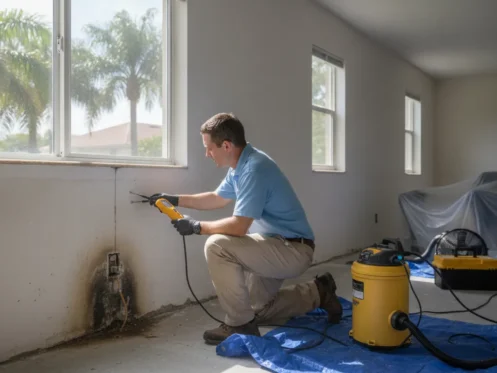
A lingering musty, sour, or damp smell after a leak does not necessarily mean the visible cleanup failed. Odors can remain when moisture is trapped behind walls, beneath flooring, inside porous materials, or along HVAC pathways. In Florida, warm, humid conditions can make thorough drying and source correction especially important. If active water intrusion is still present or the odor is strong and persistent, start with a professional assessment rather than masking it with fragrance.
Call iMold for 24/7 emergency service at 877-771-1699
Effective odor removal after water damage florida properties generally requires identifying the source, removing or drying affected materials, cleaning or remediating contamination when necessary, and verifying that moisture is controlled. A deodorizer may improve the smell temporarily, but it cannot correct hidden moisture or remaining source material.
For a broader look at how water, mold, cleaning, and reconstruction can fit together, see iMold’s specialty restoration services in Florida. The first step is understanding why water damage can create odors that persist long after the surface appears dry.
Why Does Water Damage Create Persistent Odors in Florida?
A water-loss odor can remain long after standing water is gone because the visible cleanup may not address every place moisture traveled. Water can settle behind baseboards, beneath flooring, inside wall cavities, or under cabinets. Porous materials such as carpet, padding, drywall, insulation, and unfinished wood can absorb that moisture and hold onto odor-producing residue. The EPA notes that carpet can absorb moisture and provide a place for biological pollutants to grow. That is one reason surface deodorizing alone may not solve the problem.
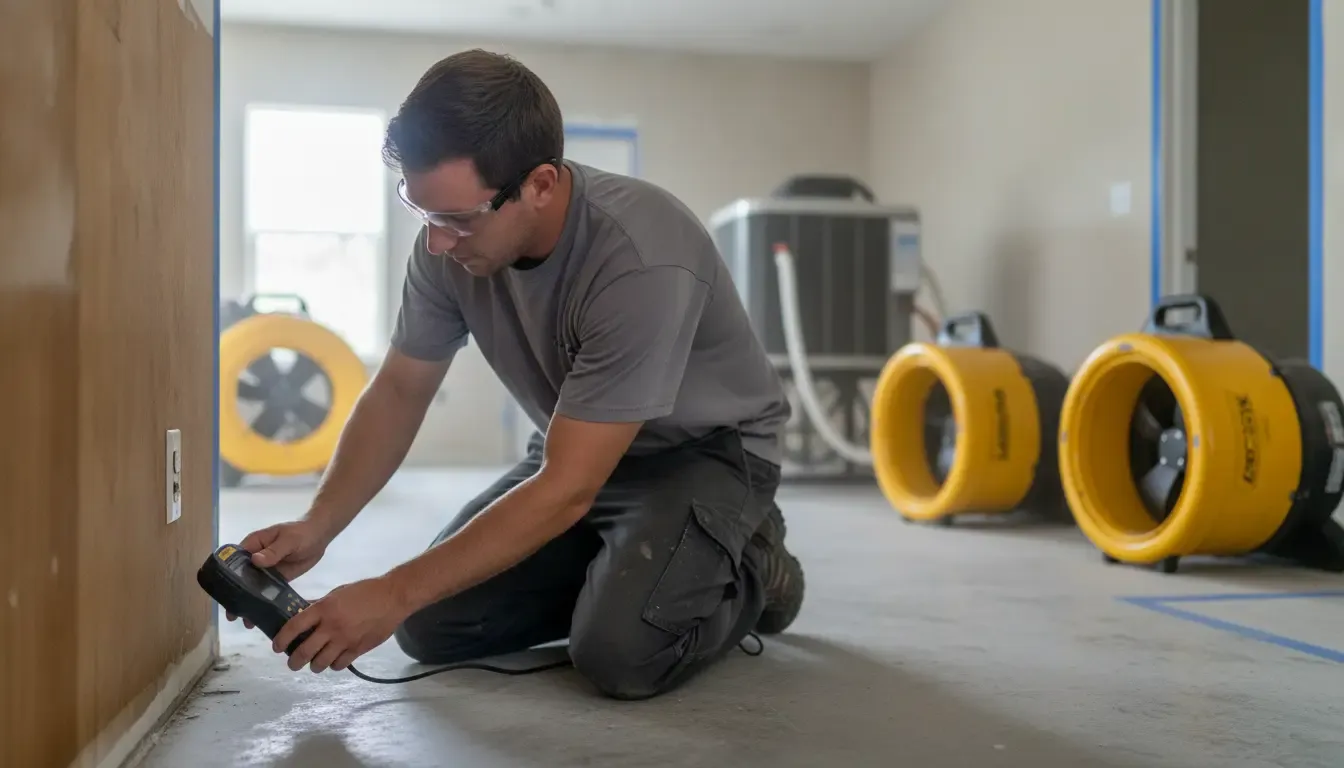
Florida’s warm, humid conditions can make drying more difficult. Indoor relative humidity should stay below 60 percent, ideally between 30 and 50 percent, according to the EPA’s guidance on mold, moisture, and your home. When humidity remains high, damp materials dry slowly and odors can become more noticeable. The EPA also advises drying water-damaged areas and items within 24 to 48 hours when possible. Delays do not guarantee mold growth, but they can give moisture more time to affect materials and create persistent musty smells.
Common reasons the smell keeps returning
- Hidden moisture: A slow leak, wet subfloor, or damp wall cavity may continue feeding the odor even when the surface looks dry.
- Porous materials: Carpet, padding, drywall, upholstery, and wood can retain water, organic residue, and odor after a flood or plumbing failure.
- Contaminated residue: Sewage, dirty floodwater, or heavily soiled water can leave residues that require targeted cleaning or removal rather than fragrance.
- HVAC pathways: Moisture or particles near returns, supply registers, or air-handling components can distribute an odor through multiple rooms.
Air movement can also make diagnosis confusing. A smell may be strongest in one room but originate in an adjacent wall, cabinet, crawlspace-like void, or connected air pathway. Thermal imaging and moisture meters can help identify areas that are not obvious during a visual inspection. If the odor followed a leak, flood, or plumbing backup, reviewing Florida water damage restoration services can help you understand why source identification, moisture removal, and material assessment come before deodorizing.
Persistent odors do not by themselves establish a health diagnosis, and not every odor has the same source. The practical first step is to find and correct the moisture or contamination pathway, then clean, dry, and verify the affected area.
What Causes a Musty Smell After Mold Remediation?
A musty odor after visible mold has been treated does not automatically mean mold has returned. The smell may point to moisture or affected materials that still need attention, but it can also linger because porous surfaces absorbed odor during the original water event. A careful follow-up looks for the source instead of covering it with fragrance.
Hidden moisture may still be present
Water can remain behind drywall, beneath flooring, inside cabinets, around plumbing penetrations, or in insulation after a room appears dry. In Southwest Florida, warm, humid conditions can make moisture control more difficult. The EPA recommends keeping indoor relative humidity below 60 percent, ideally between 30 and 50 percent, and identifies moisture control as central to mold control. See the EPA’s guide to mold, moisture, and your home for additional guidance.
Some odors also travel through wall cavities, floor assemblies, or HVAC pathways. A small remaining wet area can continue affecting the surrounding air even when the original leak has been repaired. Moisture meters and thermal imaging can help identify patterns that are not visible during a basic visual check.
Porous materials can retain odor
Carpet, padding, upholstered furnishings, wood products, and other absorbent materials may hold odor after drying. The material may need detailed cleaning, HEPA vacuuming, antimicrobial treatment, or removal when it cannot be adequately restored. Surface deodorizing alone can make a room smell better temporarily without correcting the affected material or moisture source.
Source correction and independent verification
A lingering smell may also indicate that an affected area was missed, a leak continued, or cleaning and drying did not reach the full extent of the damage. That is why Fort Myers mold remediation services should be approached as source identification, moisture removal, cleaning or remediation, and verification, rather than a single deodorizing treatment.
When appropriate, third-party testing can establish a baseline and provide post-remediation clearance. This independent verification can help distinguish an unresolved condition from residual odor in materials, while giving property owners clearer documentation about the next step.
Q: Can mold come back after remediation?
A: Mold can return if the moisture source remains or a new water intrusion occurs, but a musty smell by itself does not prove recurrence. A qualified reassessment should check moisture levels, concealed areas, HVAC pathways, and materials that may retain odor. If visible growth reappears, water damage continues, or the odor intensifies, arrange an inspection rather than relying on air fresheners or repeated surface cleaning.
Is DIY Odor Elimination Enough After Water Damage?
Sometimes, yes. A small clean-water spill that is found quickly, fully extracted, and dried within a day or two may not require extensive restoration. EPA guidance says wet or damp materials dried within 24 to 48 hours will, in most cases, not grow mold. Cleaning the affected surface, drying nearby materials, and monitoring for changes may be reasonable when the source is known and no odor remains.
The decision changes when moisture may be hidden, materials are porous, or the water was contaminated. Carpet, padding, drywall, insulation, wood, and upholstered items can hold moisture below the visible surface. A fragrance or household deodorizer may cover the smell temporarily while the source continues to affect the property. EPA identifies moisture control as central to mold control and recommends keeping indoor relative humidity below 60 percent, ideally between 30 and 50 percent. See the EPA guidance on mold, moisture, and your home for additional background.
| Situation | Reasonable next step | Why the boundary matters |
|---|---|---|
| Small, clean-water spill; source is stopped; hard surfaces and nearby materials dry completely within 24 to 48 hours. | Extract water, ventilate or dehumidify, clean surfaces, and continue checking for dampness or odor. | Prompt drying can limit conditions that support mold growth. |
| Musty odor remains. Moisture may be behind a wall or under flooring, or carpet and padding may be saturated. | Arrange moisture detection and source identification before relying on deodorizing. | Surface treatment cannot confirm that concealed materials are dry. |
| Visible mold covers a broad area. Materials stayed wet, or the loss involved sewage, floodwater, or another contaminated source. | Use qualified restoration support. Consider professional sewage cleanup when applicable. | Contamination and affected-material decisions require more than routine household cleaning. |
| Odor returns after cleaning. It may also spread through several rooms. | Seek an assessment. It may include moisture readings, thermal imaging, cleaning, and verification. | Recurring odor often points to an unresolved source. It is not a need for stronger fragrance. |
Stay within safe cleanup limits
CDC guidance notes that mold cleanup can present health and injury risks. If you handle a small cleanup, use gloves, eye protection, and at least a NIOSH-approved N95 respirator, and follow product directions. Never mix bleach with ammonia or any other cleanser. People with allergies, immune suppression, or underlying lung disease may need to avoid cleanup and discuss concerns with a healthcare professional.
For persistent smells after a leak, flood, or mold work, odor removal service should begin with finding the source, removing moisture, cleaning or remediating affected materials, and verifying the result. That sequence is more reliable than masking the odor alone.
How Do Professionals Remove Odors After Water Damage?
Effective odor control starts with finding and correcting the source. A fragrance, fog, or deodorizing spray may make a room smell better temporarily. But it cannot resolve moisture trapped behind a wall, beneath flooring, inside insulation, or in porous contents. A professional process connects diagnosis, drying, cleaning, treatment, and verification so the odor is addressed as part of the water-damage loss.
- Inspect and map the affected areas. Technicians document visible conditions, ask when the odor began, and trace the likely path of the water. Moisture meters help identify wet materials and concealed moisture, while thermal imaging can highlight temperature patterns that warrant closer inspection. Photographs and readings create a practical map, including areas behind walls and under flooring. This assessment is central to the iMold restoration process.
- Stop the water source. Drying and deodorizing cannot succeed while a supply line, roof opening, appliance, drain, or other source continues to add moisture. The source must be repaired or controlled first. If the loss involves contaminated water, technicians also establish appropriate boundaries and occupancy precautions before disturbing affected materials.
- Extract standing water and dry the structure. Commercial extraction removes liquid water, followed by air movers and dehumidifiers that reduce moisture in materials and indoor air. In Florida’s humid climate, dehumidification is especially important because a room can feel comfortable while building materials remain damp. EPA recommends keeping indoor relative humidity below 60 percent, ideally between 30 and 50 percent, when possible: EPA moisture and mold guidance.
- Clean or remove affected materials. Technicians determine whether flooring, drywall, insulation, carpet, contents, or other porous materials can be cleaned and dried or require removal. HEPA vacuuming and controlled cleaning help reduce particulate matter. Containment, negative air pressure, and HEPA filtration may be used where needed to limit the movement of airborne particles into unaffected areas.
- Treat the remaining odor appropriately. After the source has been corrected and materials are clean and dry, professionals select a treatment suited to the odor and the space. Options may include HEPA air scrubbing, activated-carbon filtration, antimicrobial treatment where appropriate, or other odor-control methods. Treatment choices account for occupants, pets, ventilation, and the condition of the materials. The goal is source reduction, not simply covering the smell.
- Verify conditions before closing the project. The team rechecks moisture readings, drying progress, affected surfaces, and indoor conditions. If mold-related work is involved, independent third-party testing may establish a baseline or support post-remediation clearance. Verification helps confirm that the underlying moisture problem was addressed and that the property is ready for the next restoration step.
Occupants should follow the restoration team’s safety instructions during extraction, demolition, air cleaning, or treatment. Mold and water-damage cleanup can involve health and injury risks. Chemicals should never be mixed. Professional odor removal after water damage in Florida is less about masking a smell and more about controlling moisture. It also protects the occupied space and documents the work from inspection through final verification.
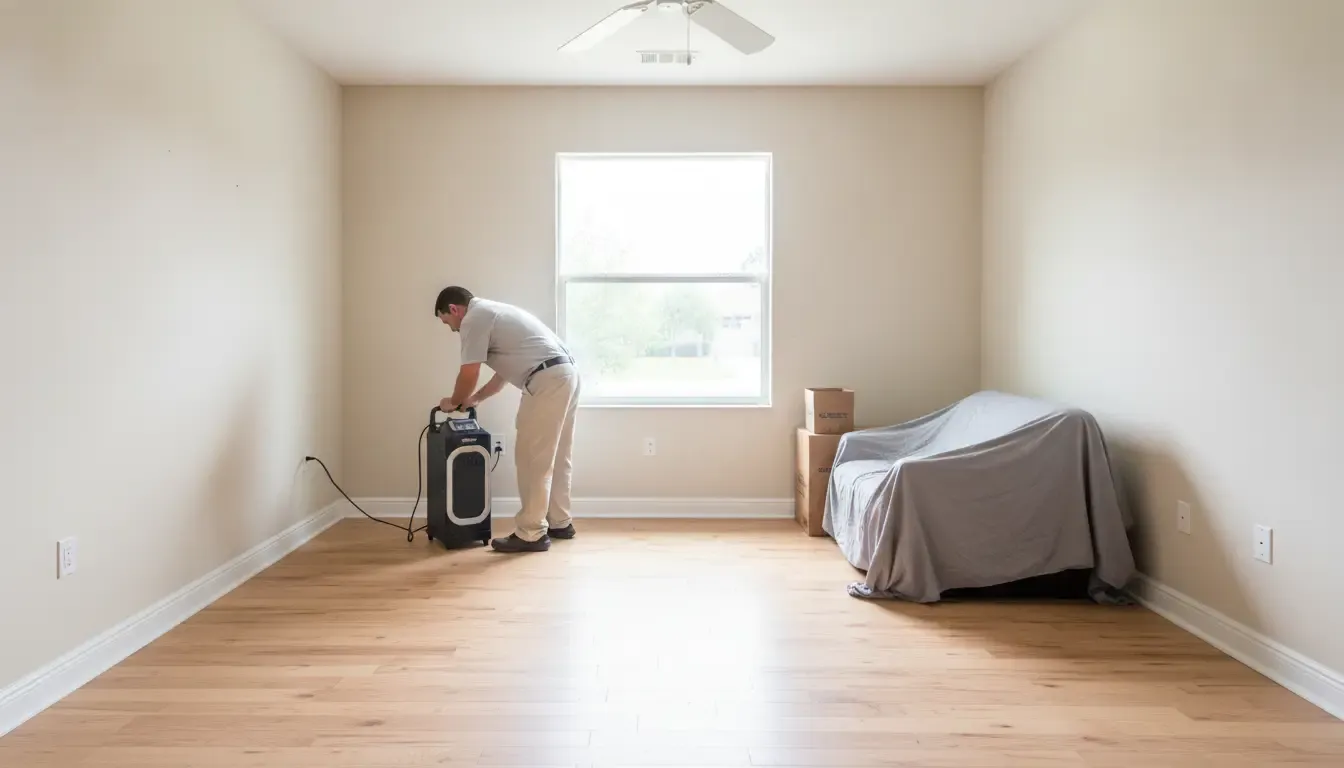
How iMold Handles Odor as Part of Full Restoration
Lingering odor is often a sign that restoration needs to address more than the surface. iMold treats odor control as part of correcting the water, moisture, mold, or material source, rather than masking the smell with fragrance. That approach matters in Southwest Florida, where delayed drying and humid conditions can allow odors to remain in porous materials, wall cavities, or flooring.
The company follows the iMold restoration process, organized around five connected stages:
Assess
Technicians document affected areas, take moisture readings, and look for conditions that may be hidden behind walls or beneath flooring. Depending on the property, assessment may include moisture meters, thermal imaging, photographs, and a review of what happened, such as a roof leak, plumbing failure, flood, or previous mold work. iMold provides a free visual mold inspection and estimate, giving the property owner a clear starting point before work is recommended.
Contain and Extract
Containment helps separate affected areas from occupied parts of the property. Physical barriers, negative air pressure, and HEPA filtration may be used when appropriate. Extraction and drying then remove standing water and reduce moisture with commercial extraction equipment, air movers, and dehumidifiers. Odor treatment is more effective when the conditions feeding the odor have been corrected first.
Remediate and Restore
When affected materials require cleaning or removal, the work is planned around the type and extent of damage. HEPA vacuuming, air scrubbing, antimicrobial treatment, and material removal may all have a role. iMold’s IICRC Odor Control Technician (OCT) credential supports this specialized focus, while the exact public-facing credentials include State Certified Mold Remediator (MRSR2170) and State Certified General Contractor (CGC1540205).
For added transparency, third-party testing can establish a baseline or provide independent post-remediation verification when mold-related concerns call for it. iMold also coordinates with insurance carriers, uses Xactimate, and provides documentation and progress records that can help support a claim. The company has served Southwest Florida for 28 years, with 24/7 emergency availability. A 30-minute response promise applies only within the immediate service zone, not every location in the broader service area.
Request a free visual mold inspection and estimate from iMold.
When Should You Call for Odor Removal After Water Damage in Florida?
Call for professional help when an odor continues after visible water has been removed, returns after cleaning, or becomes stronger when the air conditioner runs. A recurring musty, sour, sewage-like, or damp smell can point to wet materials, trapped moisture, contaminated contents, or an affected HVAC pathway that surface deodorizing will not correct.
Do not wait if you find visible mold, saturated carpet or flooring, water inside walls or cabinets, or damage from sewage or other contaminated water. Prolonged dampness also deserves prompt attention. The EPA recommends drying water-damaged areas and items within 24 to 48 hours, and keeping indoor relative humidity below 60 percent, ideally between 30 and 50 percent. In Florida’s humid climate, a property can look dry while moisture remains behind walls, beneath flooring, or in porous materials.
Health concerns are another reason to avoid a do-it-yourself cleanup. The CDC notes that mold cleanup can present health and injury risks, particularly for people with allergies, immune suppression, or underlying lung disease. Odor alone cannot diagnose a health problem. If anyone develops persistent coughing, wheezing, shortness of breath, sneezing, or itchy or watery eyes, contact a healthcare professional. Keep people away from the affected area while the source is evaluated, and never mix bleach with ammonia or another cleanser.
What to do before the inspection
- Stop active leaks if it is safe, and document the affected rooms with photos.
- Note when the odor began, whether it changes with HVAC operation, and any prior drying or mold work.
- Avoid masking the smell with fragrances or moving saturated materials through clean areas.
- Secure pets and preserve insurance records, invoices, and contractor documentation.
iMold serves Fort Myers, Cape Coral, Naples, Bonita Springs, Estero, and properties across eight Southwest Florida counties. The team offers 24/7 emergency response, with a 30-minute response promise limited to the immediate service zone. A free visual mold inspection and estimate can help identify the next step, including whether you need Florida water damage restoration or targeted odor treatment.
Call iMold for 24/7 emergency service at 877-771-1699
Frequently Asked Questions
How long does an odor last after water damage?
There is no reliable fixed timeline. Odor can linger until the moisture source, affected materials, and residue are addressed. In Florida’s humid climate, drying and humidity control matter, and the EPA recommends drying water-damaged areas within 24 to 48 hours when possible and keeping indoor humidity below 60 percent, ideally between 30 and 50 percent: EPA guidance.
What is the fastest reliable way to remove a water damage odor?
Find and correct the source first, then extract standing water, dry the structure and contents, clean affected materials, and verify that moisture is controlled. Fragrance or surface deodorizer may mask a smell temporarily, but it cannot solve hidden moisture or contaminated materials. Moisture readings and thermal imaging can help locate areas that are not visible.
Can a property smell moldy without visible mold?
Yes. Moisture may remain behind walls, beneath flooring, inside cabinets, or in porous contents without visible growth. A persistent musty odor warrants source identification and moisture inspection rather than assuming the problem is only on the surface.
Does odor removal include mold remediation?
It can, when inspection shows that mold or contaminated materials are contributing to the odor. Odor control should follow source identification, moisture removal, and appropriate cleaning or remediation. Remediation may include containment, material removal when necessary, HEPA vacuuming, air scrubbing, and verification.
Will insurance cover odor removal after water damage?
Coverage depends on the policy, the cause of loss, exclusions, and the documentation required by the carrier. Keep photos, drying records, invoices, and other evidence. iMold can coordinate with insurers, use Xactimate, and provide written documentation and progress records, but your carrier determines coverage.
Ready to Address Persistent Odors?
When an odor continues after water damage or mold, identifying the source can help guide the right restoration steps instead of masking the smell. For practical help with persistent odors and related property damage, call iMold at 877-771-1699 to discuss your situation and request 24/7 emergency restoration assistance.