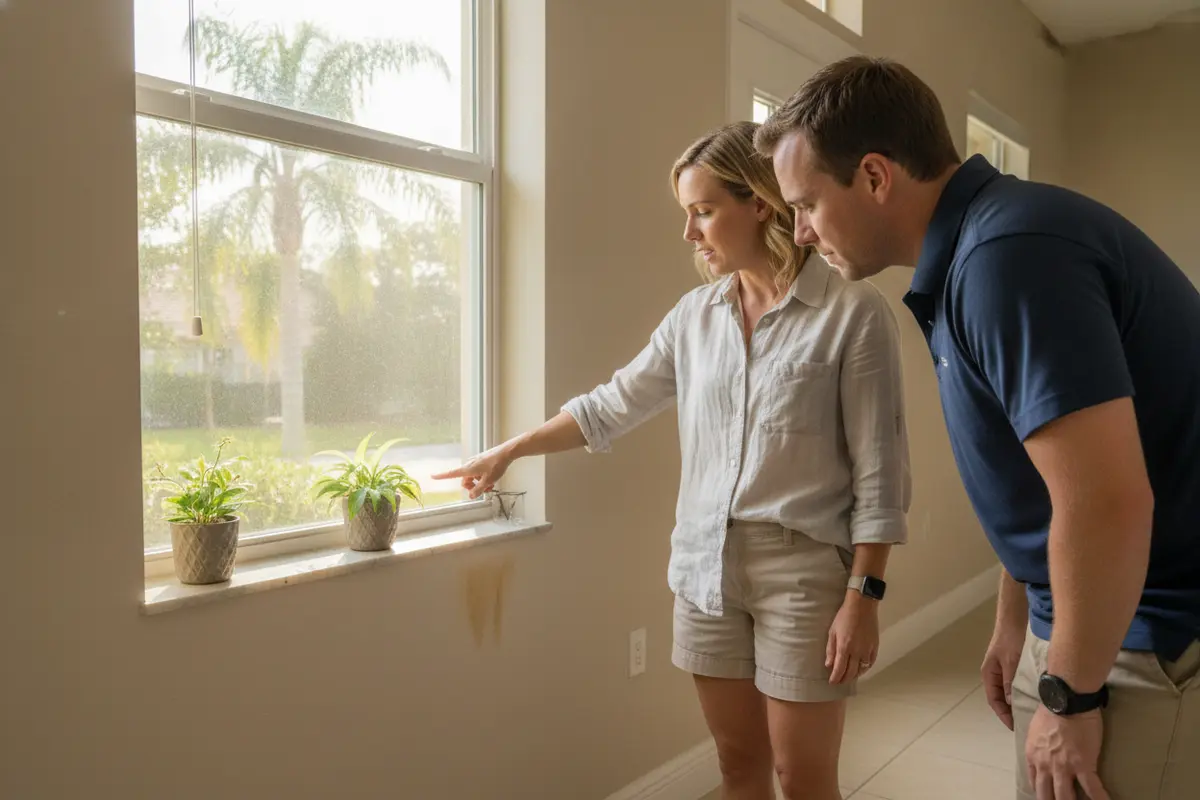
Buying a home in Florida is a major decision, and a general walkthrough may not answer every question about moisture. Mold inspections for Florida homebuyers can help clarify visible concerns, signs of past water intrusion, and whether a closer look is warranted before closing. If you are under contract and have questions about a damp smell, staining, or a prior leak, timely information can help you discuss practical next steps with your agent and seller.
Contact us about an inspection
Why consider a mold inspection before closing?
A home inspection and a mold-focused evaluation answer related but different questions. A general home inspection considers the property’s overall condition. A mold inspection focuses on moisture conditions and areas of concern that could support mold growth. It can help buyers understand what is visible, where moisture may be entering, and whether further investigation or repairs should be considered.
Timing matters because a purchase contract has deadlines. Share concerns promptly with your real estate professional, and review your inspection period and contract terms with them. An inspection does not decide whether you should buy a home, guarantee that every concealed condition will be found, or replace legal, real estate, or insurance advice. It gives you information to use in your decision-making.
What signs should prompt a closer look?
Some clues are easy to see; others are subtle. During a showing or inspection, note the location and condition of anything that raises questions. Common reasons to ask about a focused evaluation include:
- A persistent musty or damp odor, especially in a closed room or cabinet.
- Water stains, bubbling paint, warped trim, or damaged drywall.
- Visible growth or discoloration around a window, air-conditioning area, sink, or ceiling.
- Evidence of a roof, plumbing, appliance, or window leak.
- Recently repaired surfaces where the cause of prior damage is unclear.
- Repeated condensation or dampness in a room, closet, or storage area.
A single mark or odor does not by itself establish that mold is present or explain its source. Ask when the issue occurred, what repairs were completed, and whether records are available. In Southwest Florida’s humid climate, moisture control is important, but an inspection should be based on the actual property conditions rather than assumptions.
What does a mold inspection look at?
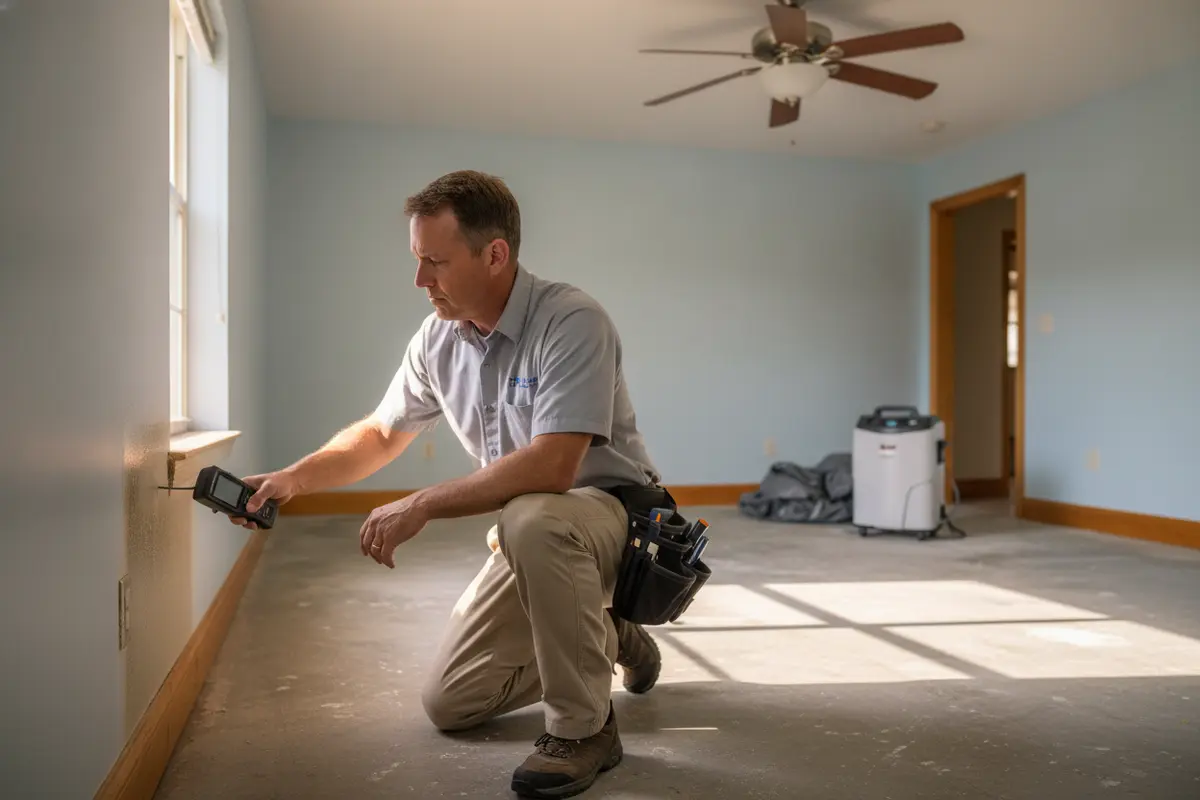
A professional assessment typically begins with the areas that prompted the call and the property’s moisture history. The inspector may look for visible conditions, moisture indicators, and possible sources of water intrusion. The scope depends on the property, access, and the questions being asked. Ask what areas are included, what limitations apply, and whether any sampling is recommended.
Testing and inspection are not identical. Testing can provide information about samples collected under specific conditions; it does not replace finding and correcting a moisture source. When testing is appropriate, independent third-party testing can support transparent verification. Discuss the intended question before authorizing any sampling, so you understand what the results can and cannot tell you.
Inspection, testing, and a general home inspection: how do they compare?
| Type | Main focus | Useful questions | What it does not establish alone |
|---|---|---|---|
| General home inspection | Broad review of accessible home systems and visible condition | What defects or maintenance concerns were observed? | It may not determine the extent or cause of a specific mold or moisture concern. |
| Mold-focused inspection | Moisture conditions and areas of suspected mold or water damage | Where are the concerns, and what should be investigated or addressed? | It cannot guarantee that all concealed areas are free of mold. |
| Sampling or testing | Samples collected and analyzed for a defined question | What does this sample indicate under the conditions and method used? | A result alone does not identify or repair the moisture source. |
| Remediation assessment | Work scope for addressing confirmed conditions and related moisture | What steps are proposed, and how will completion be documented? | It is not a substitute for reviewing contract terms or making the purchase decision. |
What should buyers ask before scheduling?
Clear questions help keep the inspection focused. Before booking, explain your timeline and the conditions that concern you. Ask which rooms or areas are included, whether visible conditions and moisture readings will be documented, what access is needed, and which areas cannot be assessed. If sampling is proposed, ask what specific question it would answer. Also confirm how findings and recommended next steps will be delivered and whether the visit can fit within relevant contract deadlines.
Confirm what the service includes before scheduling. Keep the written scope and report with your purchase records. iMold offers no-cost visual mold inspections and estimates; ask what applies to your concern and the scope of work. You can learn more about mold remediation services and the company’s restoration process.
How can you prepare for the appointment?
Preparation is simple and can make the visit more useful. Gather any available disclosures, repair invoices, leak records, or prior reports. Make a list of odors, stains, or recurring dampness, including when you noticed them. If possible, identify the route to areas of concern, such as an attic access or sink cabinet, and make sure the inspector can safely reach them.
- Share the purchase timeline and any inspection-period deadline.
- Point out each concern rather than relying on a general description.
- Tell the inspector about known leaks, repairs, or water events.
- Request photographs and written notes when appropriate.
- Ask that limitations and inaccessible areas be clearly stated.
Do not disturb suspected growth or remove materials simply to make an area easier to inspect. Avoid opening walls or ceilings without appropriate direction. If there is active water entry, prioritize stopping the source through the appropriate professional and protecting people from unsafe conditions.
How should you use the findings before closing?
Read the report carefully and separate observations from recommendations. Note the location, apparent condition, and any suggested follow-up. If the report identifies a possible moisture source, ask what further evaluation is needed and who is qualified to perform it. Share relevant information with your real estate professional, who can explain how it relates to your contract and negotiations.
Where repairs are proposed, ask for a written scope that identifies the work, affected areas, and how completion will be documented. For mold-related concerns, remediation should address both affected materials and the moisture conditions that allowed growth. iMold describes its work as spanning emergency response through restoration. Review its 24/7 emergency response information or learn about water damage restoration.
Insurance coverage for a prior or future issue depends on the policy and circumstances. A home inspection report does not determine coverage. If you have a claim question, consult your insurer and review the relevant policy; you can also read about insurance claims and mold remediation.
What should you compare when reviewing proposals?
When follow-up work is recommended, compare the scope and documentation rather than relying on a broad label. A useful proposal should explain the affected areas, planned steps, moisture-source considerations, and any limitations. Ask who will perform the work, how the area will be protected, and what records you will receive at completion.
Check whether the proposal separates immediate mitigation from repairs or reconstruction. A leak may need to be stopped first, followed by drying and evaluation of affected materials. Later work may include rebuilding surfaces after the moisture concern is addressed. Ask how each stage relates to the observations in the inspection report. A clear sequence can help you understand what is being proposed without assuming that every home requires the same work.
Also ask how independent verification fits into the plan. When third-party testing is appropriate, clarify what will be sampled, when it will occur, and how results will be shared. Do not treat a single sample as a substitute for addressing an identified water source or for inspecting inaccessible locations. The goal is to match the next step to the documented concern and preserve a useful record for your purchase file.
How do insurance and records fit into a home purchase?
Keep copies of the inspection report, seller disclosures, repair receipts, photographs, and any written communication about the concern. Store them together with the date and location of each observation. If the seller says a leak was repaired, ask for the available record that describes the repair and any follow-up. These documents do not prove that a condition is resolved, but they help you and your advisers understand the history and identify unanswered questions.
If you plan to ask an insurer about coverage after purchase, request guidance directly from that insurer. Coverage depends on the policy terms, cause, timing, and other facts. Do not assume that a report, remediation proposal, or seller statement guarantees payment. For broader homeowner questions, review your policy and consult the appropriate professional. iMold’s frequently asked questions may also help you prepare service-related questions.
What if the seller has already repaired the area?
A fresh coat of paint or new drywall may be a normal repair, but it can also leave a buyer wondering what happened before the surface was replaced. Ask for the repair date, the original water source, the work completed, and any photographs or invoices. Find out whether the source was corrected and whether the area was dried before it was closed up. A buyer should not assume that a recent repair means there is an ongoing problem, or that a new finish alone proves the concern is fully resolved.
Use the answer to decide what follow-up question is reasonable. If the documentation is clear and the general inspection found no related concern, you may simply retain the records. If the source is uncertain, the odor remains, or staining returns, ask whether a focused moisture evaluation is warranted. Keep the discussion factual: identify the area, the information you have, and the specific uncertainty you want addressed.
How can you organize a useful buyer follow-up?
After an inspection, turn the findings into a short action list. Separate urgent conditions, items needing clarification, and observations to monitor. For each item, write down the room, approximate location, report reference, and next person to contact. This makes it easier to discuss the issue with your agent, the seller, an inspector, or a restoration professional without relying on memory.
- Urgent: active water entry or a wet area that continues to grow; ask the appropriate professional about controlling the source.
- Clarify: a prior repair without supporting details; request available records and a clear explanation.
- Evaluate: persistent odor, recurring dampness, or visible damage; ask whether focused assessment is appropriate.
- Document: inaccessible areas or inspection limits; record what could not be viewed and whether access can be arranged.
Set a reminder for any follow-up that must happen before a contractual deadline. Your agent can help you understand the timing and communication process, while qualified inspection or restoration professionals can address technical questions. This division of roles helps keep technical observations separate from contract decisions.
For background on the homebuying process, the Consumer Financial Protection Bureau offers owning a home resources. For local information, you can review iMold’s Southwest Florida service areas.
When is a 24/7 call the right next step?
If the property has active water intrusion, a growing wet area, or a leak that has not been controlled, do not wait for a routine purchase decision to address the immediate condition. iMold provides 24/7 emergency availability for restoration concerns. For non-urgent questions, you can review the company’s company background and its customer reviews.
Request a no-cost visual inspection
Frequently Asked Questions
Does every Florida homebuyer need a mold inspection?
Not necessarily. Consider one when the general inspection, disclosures, visible conditions, or your own observations raise a specific moisture or mold question. Discuss the scope with a qualified professional and your real estate agent.
Can an inspection prove there is no mold anywhere in the home?
No inspection can guarantee that every concealed space is free of mold. Findings reflect the areas accessible and conditions observed during the evaluation. Ask that any limitations be explained in writing.
Should I request mold testing before closing?
Testing may be useful when it answers a defined question, but it is not automatically necessary in every case. Discuss the reason for sampling, how it will be performed, and what the results can establish before proceeding.
What if the inspection finds a water issue?
Ask for the source and affected area to be evaluated, and arrange appropriate repairs or restoration. Share the report with your real estate professional and follow your contract deadlines. Address active leaks promptly.
Make an informed decision
A focused mold inspection can give homebuyers a clearer understanding of visible moisture concerns before closing, while also identifying questions that need follow-up. Gather the relevant records, clarify the inspection scope, and use the findings with advice from your real estate and other qualified professionals.