

If you suspect mold in HVAC after water damage, focus first on limiting further disturbance and getting the right assessment. iMold offers 24/7 emergency availability for property damage concerns across Southwest Florida. You do not need to know whether mold is inside a duct or air handler before asking for help.
Water can affect more than the visible part of a room. If a leak, overflow, or other water event reached an air handler, duct, return, or nearby building material, moisture may have affected parts of the HVAC system. A musty odor or visible mark can be a reason to look closer, but neither one alone confirms where mold is or how far it extends. The practical response is to avoid spreading dust or debris, record what happened, and arrange a qualified evaluation.
What should you do first?
Start with the water source and the system’s immediate condition. If water is still entering the property, address the source only when it is safe to do so. Keep people away from standing water near electrical equipment. Do not open electrical panels or handle wet HVAC components. If there is an immediate electrical or structural hazard, leave the area and contact the appropriate emergency service.
- If the HVAC system may be wet or contaminated, switch it off if you can do so safely. This can reduce air movement through an area of concern while it is being evaluated. Do not approach a wet unit, exposed wiring, or unsafe controls to turn it off.
- Do not run the system just to test the smell. Repeated operation is not a reliable way to identify the source and may move air through affected areas.
- Do not take apart the air handler, remove duct insulation, or brush or vacuum suspected growth. Disturbing material can make assessment harder and spread debris.
- Keep the area accessible but undisturbed. If practical, keep children, pets, and other occupants away from visibly wet or suspect materials.
- Arrange professional guidance. Call a restoration professional about the water damage and an HVAC professional when system components need inspection or repair.
Turning off the system is a precaution, not a diagnosis. If weather, health, or other property needs make it difficult to leave the system off, explain that when you call and ask what safe next step is appropriate for your situation.
What details should you document?
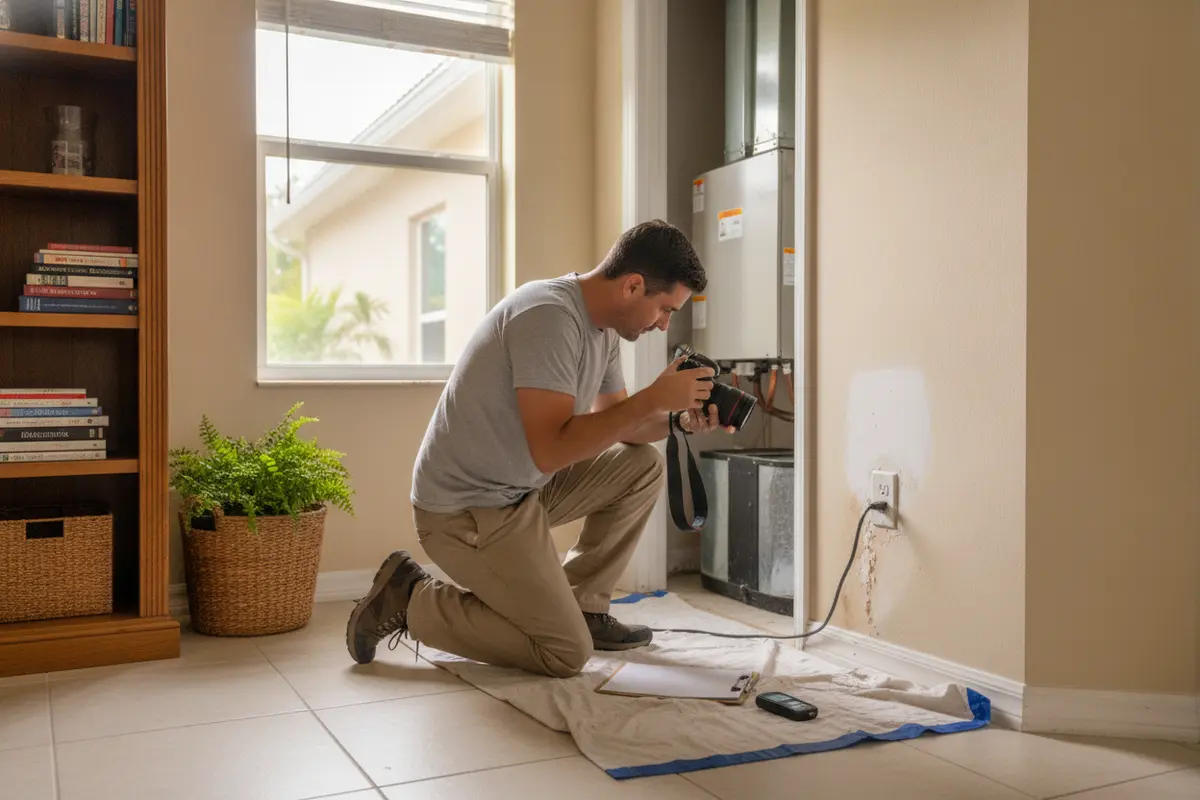
Useful details help professionals understand the sequence of events. Write down when the water was first noticed, where it came from if known, which rooms or equipment were wet, and when the HVAC last ran. Note whether water reached the unit, a return grille, supply registers, or nearby ceiling or wall materials. Take photos from a safe distance before cleanup changes the scene.
Keep any available records of plumbing repairs, leak detection, or prior service visits. Make a simple list of symptoms you observed, such as a persistent odor or visible dampness, but avoid labeling a stain as mold without confirmation. If the system has a filter you can reach safely without opening equipment or touching wet material, note its condition; do not remove or shake a suspect filter. These records can help the assessment team and may also be useful if you later speak with your insurance carrier.
For water-related concerns, review iMold’s water damage restoration services and emergency response information. The immediate priority is understanding the extent of moisture and making a plan, not guessing at the source from a smell alone.
How can you tell if the HVAC system is involved?
There is no single homeowner check that can confirm mold inside an HVAC system. A musty odor near a vent can have more than one possible source. A discolored spot on a grille may be dust, residue, or another material. Water damage near an air handler may affect nearby building materials without showing that the inside of every duct is contaminated. The source and extent need to be assessed rather than assumed.
A professional evaluation can consider the water path, visible moisture, the condition of accessible HVAC components, and whether materials around the system were wet. The right scope depends on what happened and what can be safely inspected. A restoration professional can evaluate water and mold concerns in the property; an HVAC technician can assess mechanical components and advise on system-specific cleaning or repair. When needed, these professionals can coordinate so that restoration work does not overlook equipment and HVAC work does not disturb affected building materials without a plan.
A visual mold inspection is a starting point, not a guarantee that concealed areas are clear. iMold offers no-cost visual mold inspections and estimates. Ask what the inspection covers and what it cannot determine. If independent testing is appropriate, third-party testing can provide a separate perspective. Testing is not automatically needed in every case; the decision should fit the property conditions and the question that needs answering. See the company’s mold remediation services for information on its mold-related work.
Which professional should you call?
It may take more than one trade to address water and possible HVAC contamination. Use the observations and scope of work to identify who needs to be involved. The table below is a practical starting point, not a substitute for a property-specific evaluation.
| Concern | Who may assess it | What to ask |
|---|---|---|
| Water damage in rooms or building materials | Water damage restoration professional | What areas and materials appear affected, and what steps are proposed to address moisture? |
| Visible or suspected mold on building materials | Mold remediation professional | What is included in the assessment, and how will the work area be managed? |
| Wet, damaged, or poorly functioning HVAC equipment | Qualified HVAC technician | Can the equipment be safely operated, and does it need service, cleaning, or repair? |
| Uncertainty about whether testing is useful | Appropriate independent testing professional, when warranted | What question would testing answer, and how will results guide the next step? |
Ask each provider to explain the limits of the proposed work. For example, cleaning a component is not the same as repairing a water source, drying surrounding materials, or removing damaged building materials. A clear plan should say which areas are included, what needs to happen first, and who is responsible for HVAC-related work. iMold describes its general restoration approach on the process page.
How should HVAC and mold work be coordinated?
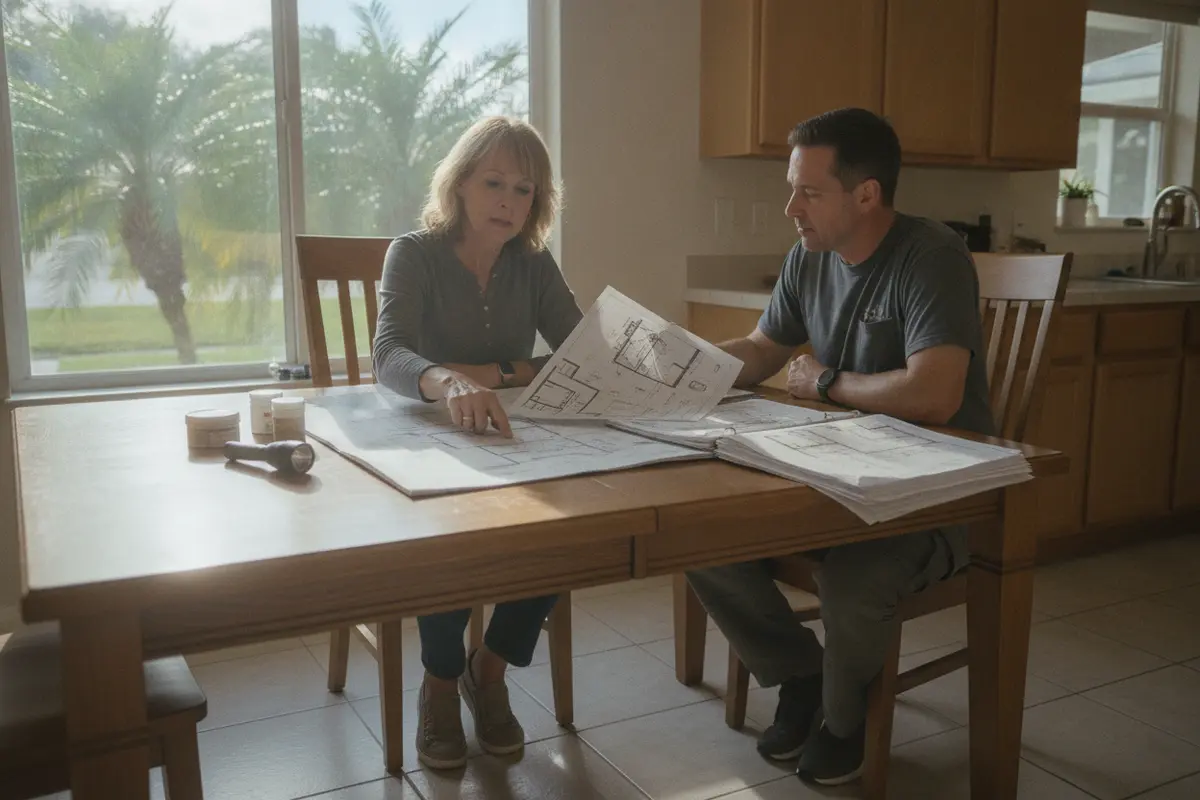
Coordination matters because HVAC equipment and the structure around it can be affected in different ways. Before work begins, confirm that the proposed plan addresses the water source, affected materials, and any HVAC components that may need separate attention. Ask who will inspect the air handler and accessible ductwork, who will handle equipment service, and when the system can be used again. The answer should be based on the actual condition of the equipment and the work performed, not a generic promise.
Ask for the work area and sequence to be explained in plain language. For example: what will be isolated or protected, which materials will be cleaned or removed, how will moisture be addressed, and what condition must be met before repairs or normal use? If a scope excludes ducts, equipment, or concealed spaces, ask why and what follow-up is recommended. Keep copies of estimates, work authorizations, photos, and completion records.
Do not assume that a filter change alone resolves a moisture or mold concern. A filter is one component of a system, and it cannot correct a wet air handler, a continuing leak, or affected building materials. Likewise, spraying household products into vents or using a scented product to mask an odor does not establish that the source has been handled. Wait for qualified guidance before cleaning or replacing components that may be affected.
What should you ask before approving work?
A written estimate or work plan should make it possible to understand the proposed scope. Ask questions until you know which work is included, which work is not, and what could change if additional affected areas are found.
- What observations support the proposed work, and what areas were not accessible?
- Does the plan address the water source and moisture in nearby materials as well as the visible concern?
- Will an HVAC professional inspect or service the unit, and is that work included or separate?
- How will the work area be managed to limit disturbance of suspect materials?
- What documentation will be provided during and after the work?
- What should happen before the system is turned back on?
For an insurance claim, contact your carrier and ask what documentation or authorization it needs. Coverage depends on the policy and circumstances, so do not assume that a particular service is covered. iMold coordinates with insurance carriers and uses Xactimate; its insurance claim information can help you understand the company’s role. Keep your own copies of communications and approvals.
What mistakes should you avoid?
- Do not keep operating a system that may be wet or affected just to see whether the odor goes away. Get advice about safe operation.
- Do not use bleach, fogging products, or air fresheners as a substitute for finding the moisture source. These do not establish the condition of hidden materials or HVAC components.
- Do not remove ductwork or open equipment without the right training. You could damage components or disturb material that needs controlled handling.
- Do not rely on a single visual clue. Odor, staining, and dust can prompt an inspection, but they do not by themselves establish where mold is present.
- Do not approve a vague scope. Ask how restoration, HVAC assessment, and any needed repairs fit together.
For general information about mold and indoor environments, consult the U.S. Environmental Protection Agency at EPA.gov. For a property-specific decision, rely on an appropriate professional assessment rather than broad online guidance.
When is it time to call for help?
Call promptly if water reached an air handler or return, if a leak is ongoing, if dampness or an odor persists after water damage, or if you cannot tell whether the system is safe to use. You can describe what you observed and ask what kind of inspection is appropriate. iMold serves Southwest Florida and offers no-cost visual mold inspections and estimates. Its service area page lists the communities it serves.
If the concern is primarily HVAC equipment, arrange for an HVAC technician to assess the system as well. If the concern includes wet building materials or suspected mold, a restoration professional can help evaluate those areas. A clear scope can identify where the trades overlap and where they do not.
Call iMold at +1 877-771-1699 to discuss a property damage concern.
Frequently asked questions
Should I turn off the HVAC if I suspect mold after water damage?
If the system or nearby components may be wet or affected, turning it off is a sensible precaution when you can do so safely. Do not approach wet electrical equipment. Ask a qualified professional what to do next and when the system can be used again.
Does a musty smell from a vent prove there is mold in the ducts?
No. Odor can prompt a closer look, but it does not identify the source or prove that ductwork is contaminated. A professional needs to evaluate the conditions and accessible components.
Can I clean the vent or change the filter myself?
A simple filter change may be appropriate in ordinary maintenance, but do not handle a filter or vent if it is wet or has suspect material on it. Avoid brushing or vacuuming visible growth. Ask a professional first when the system may have been affected by water.
Will a mold inspection confirm every hidden area is clear?
A visual inspection can help identify visible conditions and guide next steps, but it cannot promise that every concealed space has been examined. Ask what was inspected, what could not be accessed, and whether independent testing or additional evaluation would answer an important question.
Get a clear next step
When mold may have entered an HVAC system after water damage, stop and assess rather than experimenting with the equipment. Document what happened, avoid disturbing suspect materials, and get a coordinated evaluation of both the property and the HVAC system. A clear plan helps you understand what needs attention and who should handle each part of the work.

