

iMold provides 24/7 emergency service for Southwest Florida property damage. If you are asking who pays for mold remediation, the answer depends on what caused the moisture, who owns or insures the affected space, and the terms of the applicable policy or agreement. An insurer may pay for some work when a covered event caused the damage, but coverage is not automatic. Start by protecting people and property, documenting what happened, and asking for a clear assessment.
Contact iMold for a no-cost visual mold inspection and estimate
Who usually pays for mold remediation?
In many situations, the property owner initially arranges and pays for remediation, then seeks reimbursement from an insurer if the policy covers the cause and resulting damage. The word “initially” matters: an insurance claim may be open while the owner is arranging steps to prevent additional damage. Ask the insurer how it wants the claim handled before authorizing non-emergency work, and keep records of instructions and expenses.
There is no single payer for every mold problem. The answer can change depending on whether the affected property is a house, rental, condominium, or business; whether the moisture came from a sudden event or a long-term condition; and what the policy, lease, or association documents say. A restoration company can document observed conditions and explain its proposed work, but it cannot decide an insurer’s coverage or replace legal advice.
For background on the assessment and work itself, see iMold’s mold remediation services and restoration process pages.
Can homeowners insurance pay for mold remediation?
Sometimes. Coverage often turns on the source of the moisture and the exact policy language. A policy may treat mold differently when it follows a sudden, accidental water event than when it develops from ongoing seepage, neglected maintenance, or a condition that existed for an extended period. Some policies include special limits, conditions, or exclusions. These are general examples, not a promise that a particular claim will be covered.
For example, a homeowner who discovers a leak after a pipe breaks may want the insurer to review both the water damage and any mold-related work. That does not mean the entire project is automatically covered. The policy may distinguish between repairing the failed plumbing, drying materials, removing damaged materials, and addressing mold. The insurer’s written coverage decision and the policy determine what it will pay.
By contrast, if moisture has been entering around a poorly maintained window for months, the carrier may ask when the condition began and what steps were taken to address it. Depending on the policy and evidence, some or all of the related work may not be covered. Do not assume the answer based on the visible mold alone; identify and document the moisture source as carefully as possible.
Florida’s Office of Insurance Regulation is a government resource for insurance-related information. For a specific claim, ask your insurer or agent to identify the policy language it is applying and explain any limits, exclusions, or next steps in writing.
How should you organize the insurance conversation?
A focused conversation can help you understand what the insurer needs without assuming that a claim will be approved. Before calling, gather the policy number if available, the date you noticed the damage, a brief description of the water source, and a list of affected rooms. If you do not know when the moisture began, say so rather than estimating a date as fact. Separate what you observed directly from what someone else told you.
During the call, ask whether a claim should be opened, how to report any urgent mitigation, and whether an adjuster or other representative needs to inspect before materials are removed. Ask how the insurer wants photographs, estimates, invoices, and receipts submitted. Write down the claim number, the representative’s name or department, the date, and any instructions. Afterward, confirm important directions in writing through the insurer’s approved channel.
It can also help to request separate explanations for different parts of the loss. For instance, ask whether the insurer is reviewing the plumbing repair, water extraction or drying, mold-related removal, contents, and reconstruction as distinct items. A question about one line of work does not necessarily answer whether another part is covered. If the adjuster’s scope and the contractor’s estimate describe different areas or steps, ask each party to explain the difference and identify any supporting records they need.
Keep a simple claim folder, either digital or on paper. Save original photographs, copies of written estimates, emails, invoices, and receipts together. Use descriptive file names such as the room and date, and keep a short timeline of calls and work completed. This makes it easier to answer follow-up questions and spot when a requested document has not yet been sent. Do not alter or discard damaged items solely to make documentation easier; ask the insurer what it needs to inspect first, while taking reasonable steps to prevent additional damage.
What should you do before asking the insurer to pay?
Take sensible steps to limit further damage, but do not put yourself at risk or disturb materials unnecessarily. If water is still entering, there is standing water near electrical equipment, or the structure appears unsafe, keep clear and contact the appropriate emergency or utility professional. Once it is safe, use this checklist:
- Record what you can see. Take dated photos or video of the affected areas, visible water, damaged belongings, and the apparent source. Do not remove evidence before documenting it when it is safe to wait.
- Write down the timeline. Note when you first noticed the problem, when the water event may have occurred, what steps you took, and any conversations with a landlord, association, plumber, or insurer.
- Contact the insurer promptly. Use the claim-reporting process in your policy. Ask for a claim number, instructions about inspections and emergency mitigation, and guidance on what records to keep.
- Ask before discarding damaged property. The insurer may want to inspect materials or belongings. Ask what can be removed or cleaned and how to document it. Keep receipts for reasonable emergency expenses.
- Get the proposed work in writing. Ask for a clear scope that identifies the affected areas, the moisture issue being addressed, and what is included or excluded. Compare the scope with the insurer’s instructions.
For active water intrusion, review iMold’s water damage restoration information and emergency response details. Promptly addressing the water source is important because remediation cannot solve the underlying moisture problem if it continues.
Who pays when the property is rented?
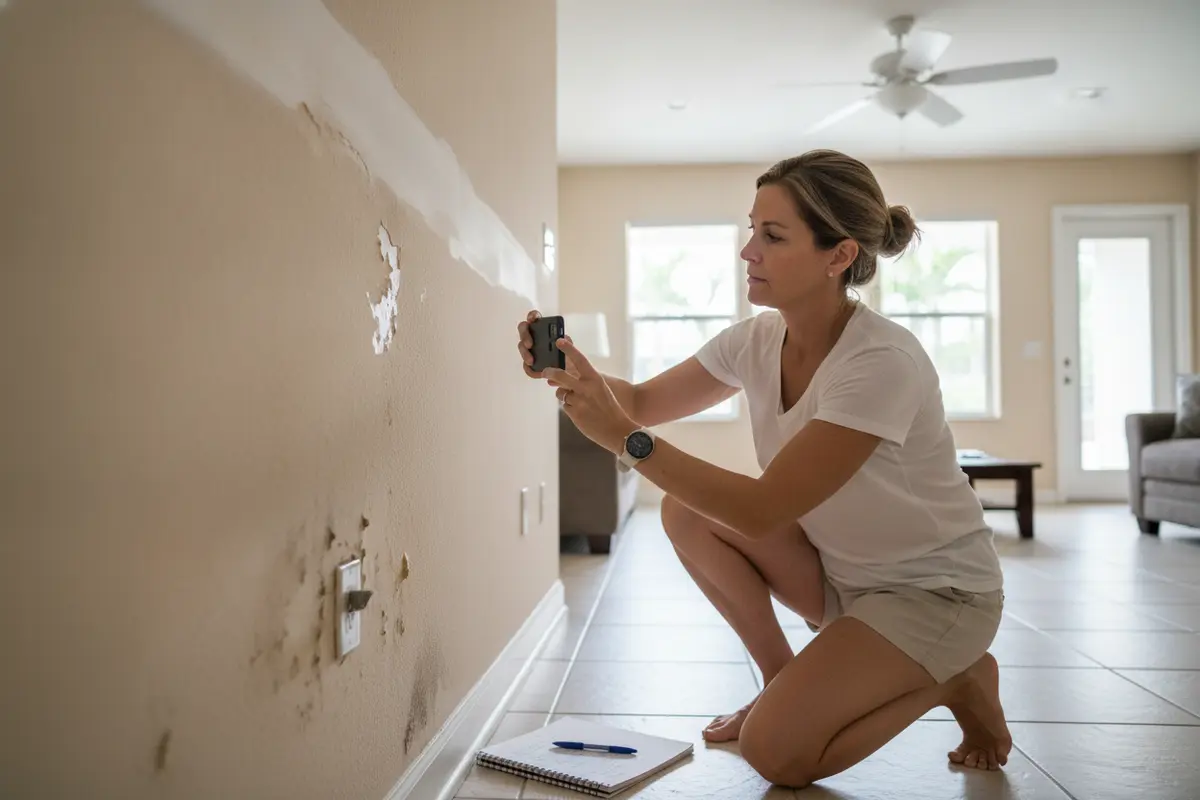
For a rental home or apartment, responsibility may involve the owner, the tenant, or one or more insurers. The lease, the cause of the moisture, each party’s actions, and applicable law can all matter. A tenant should report a leak or visible mold to the landlord or property manager promptly, using the communication method required by the lease, and keep a dated copy. The owner should investigate the reported condition and review the relevant insurance and lease terms.
A renter’s policy may cover certain personal belongings or additional living expenses in some circumstances, but it generally is not the same as the owner’s property coverage. Whether a particular loss is covered depends on the policy. Tenants should contact their own insurer about belongings and temporary housing, and should not assume that the landlord’s policy covers personal property.
Owners and tenants should avoid jumping to conclusions about fault. A report of mold does not, by itself, establish how it started or who is financially responsible. Document the conditions, communicate in writing, and get the moisture source assessed. When the parties disagree about legal obligations, consult a qualified Florida attorney or appropriate housing resource rather than relying on a restoration estimate to settle the dispute.
What if the mold is in a condominium or shared building?
In a condominium, payment responsibility may depend on the association’s governing documents, the location of the affected materials, the cause of the damage, and the insurance policies involved. A leak that begins in a shared system or affects common elements may be handled differently from damage confined to an owner’s unit. The boundary between association and unit-owner responsibility is not always obvious from the room where the damage appears.
Notify the association or property manager and your own insurer as soon as practical. Ask the association to identify which documents and insurance contacts apply, and request that the source of water be investigated. Keep your own photos and written timeline. If the association, owner, and insurers each need to inspect, coordinate access so documentation is not lost while the moisture issue is addressed.
How does the answer differ for a business?
A business owner or property manager should review the commercial property policy, lease, vendor agreements, and any applicable building-management responsibilities. If the business leases its space, the lease may assign some repair duties to the landlord and others to the tenant. Business interruption coverage, damaged inventory, equipment, and building repairs may be evaluated separately. Ask the broker or insurer what coverage applies and what documentation it needs.
Businesses should also consider safe access and continuity. If an affected space needs to be closed or isolated, follow appropriate safety guidance and document the decision. Keep records of the affected rooms, inventory, equipment, cleanup expenses, and communications. For a commercial assessment, iMold’s industries served page provides information about its work across property types.
What should you compare in an estimate and insurance scope?
A clear estimate helps you understand the work being proposed; it does not guarantee that an insurer will approve or reimburse it. Review the estimate against the insurer’s written instructions and ask questions about differences before assuming that either document settles the claim. These are useful points to compare:
| Item to review | Questions to ask | Why it matters |
|---|---|---|
| Moisture source | What source was observed, and does it appear active? | Coverage and lasting repairs can depend on the cause and whether the moisture continues. |
| Affected areas | Which rooms, surfaces, and contents are included? | A written boundary helps identify missing areas or work that needs separate approval. |
| Work steps | What removal, containment, cleaning, drying, or repair is proposed? | Specific steps make it easier to compare the contractor’s scope with the claim instructions. |
| Limits and exclusions | What does the insurer say is covered, limited, or excluded? | Knowing the written decision helps you plan for any amount that may remain your responsibility. |
| Documentation | What photos, readings, reports, invoices, and receipts will be provided? | Organized records support clear communication among the owner, contractor, and insurer. |
Ask for clarification when the estimate and insurer’s scope use different descriptions or quantities. If a claim is disputed, request the insurer’s explanation in writing and follow the policy’s stated process for questions or review. iMold’s insurance claims information can help you understand how restoration and claim discussions may fit together; it cannot guarantee an outcome.
What if insurance does not pay?
If the insurer denies the claim or excludes some work, ask for the decision and the reasons in writing. Confirm which policy language applies, whether the decision addresses all parts of the reported damage, and whether additional documentation is needed. If you have new evidence about the date or cause of the water event, ask how to submit it. Use the claim’s available review or dispute process, and consider speaking with a licensed insurance professional or attorney if you need advice about your rights.
If you must pay some or all of the cost yourself, ask the contractor to explain the scope, the work sequence, and what is not included before approving it. A no-cost visual inspection and estimate can help you understand the observed conditions and potential next steps. iMold financing through Hearth includes 0% options; ask about current terms and eligibility before relying on a particular option. It is still sensible to compare the written scope with your priorities and ask questions before authorizing work.

Frequently Asked Questions
Does homeowners insurance always pay for mold remediation?
No. Coverage depends on the policy, the cause of the moisture, when the damage occurred, and any applicable exclusions or limits. Ask the insurer for a written coverage decision rather than relying on a general rule.
Should I wait for the insurance adjuster before stopping a leak?
Do not let preventable active damage continue just to wait for an inspection. Follow your policy’s instructions for protecting the property, document conditions when safe, and contact the insurer promptly to ask what emergency steps and records it requires.
Can a remediation company tell me whether my claim will be covered?
A restoration professional can document observed conditions and explain a proposed scope, but the insurer interprets the policy and makes its coverage decision. Ask the insurer or agent about coverage and consult a qualified professional for legal questions.
What is the first step if I see mold after water damage?
Address any ongoing water source safely, document the area, and notify the insurer or responsible property manager. For a no-cost visual mold inspection and estimate in Southwest Florida, you can also contact iMold.
Request a no-cost visual inspection and estimate
Get a clear next step for your property
When mold appears, the payer is determined by the circumstances and the documents that apply—not by appearance alone. Preserve records, communicate promptly with the insurer or responsible property contact, and get the moisture issue and proposed work clearly explained. iMold serves Southwest Florida with 24/7 emergency service and can help you understand the property-restoration next step.

