

24/7 emergency availability matters when water enters a Florida home. Crawl space and attic mold in Florida can develop after a roof leak, plumbing problem, ventilation issue, or period of high humidity. Because these areas are often out of sight, a small moisture problem may continue until you notice an odor, staining, or changes in indoor comfort. A careful inspection can identify the moisture source and help you choose a reasonable next step without relying on guesswork.
Schedule a free visual inspection
Why are crawl spaces and attics vulnerable to mold in Florida?
Florida homes face warm temperatures, heavy rain, coastal moisture, and frequent air-conditioning use. Those conditions do not automatically create a mold problem. Mold needs moisture and a surface where it can grow. However, a hidden leak or persistent condensation can supply both for long enough to support growth.
An attic may receive moisture through damaged roofing, flashing, roof penetrations, or an exhaust fan that vents into the space instead of outdoors. Warm, damp air can also condense on cooler roof components when ventilation is not working as intended. In a crawl space, water may enter through grading, plumbing leaks, drainage problems, or humid outdoor air. Exposed wood, insulation, cardboard, and dust can then hold moisture.
The location matters because these spaces are connected to the rest of the home through gaps, ductwork, utility openings, and air movement. That does not mean mold in an attic or crawl space will always spread through the living area. It does mean the source and pathway deserve attention rather than a quick surface cleaning.
What are the common signs of attic or crawl space mold?
Some signs are easy to see. Others are clues that a professional should investigate further. Look for:
- Musty or earthy odors that are stronger near a ceiling, attic access panel, floor register, or crawl space entry.
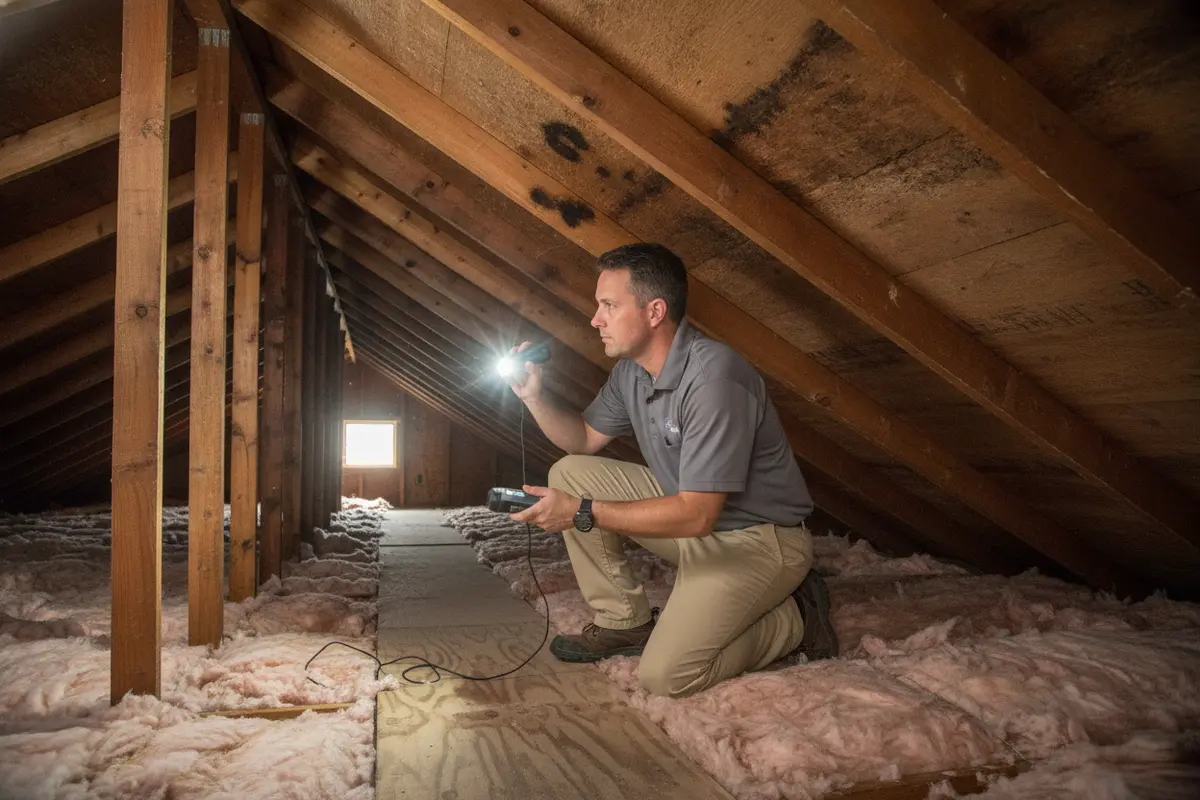
- Dark, green, white, or irregular discoloration on framing, sheathing, insulation, or other materials.
- Water marks, damp wood, rusted fasteners, peeling finishes, or crumbling materials.
- Insulation that is wet, compressed, displaced, or showing visible growth.
- Condensation on ducts, pipes, roof decking, or other cool surfaces.
- Recurring ceiling or wall stains after rain, even when the visible area looks dry later.
- Increased humidity or unexplained changes in temperature between rooms.
These signs do not identify the type or extent of mold by themselves. A stain may come from dirt, soot, old water damage, or another material. Conversely, mold can be hidden behind insulation or in a tight corner. Avoid disturbing a suspicious area until you understand what caused the moisture.
How can you inspect these spaces safely?
Start with observation, not demolition. If you can safely reach an attic or crawl space, use a flashlight and look for moisture patterns, damaged materials, and ventilation concerns. Do not step on areas that are not designed to support weight. In an attic, walk only on established flooring or boards. In a crawl space, watch for unstable surfaces, exposed wiring, standing water, sharp fasteners, and limited access.
Do not open walls, pull out insulation, scrape growth, or use a household fan to move air through the area. Disturbing contaminated materials can spread particles and can make the eventual scope harder to understand. If the space is wet, has a strong odor, contains extensive visible growth, or cannot be reached safely, stop the inspection and contact a qualified professional.
The Florida Department of Health mold guidance explains that identifying moisture problems and using appropriate investigation and cleanup methods are important parts of addressing mold concerns. Testing is not always needed to confirm that visible mold requires attention, but a professional can help determine whether third-party testing would add useful, unbiased information for the situation.
What causes mold in a Florida attic?
An attic assessment should look beyond the visible patch. Common moisture pathways include:
- Roof or flashing leaks: Rainwater may enter around shingles, valleys, vents, skylights, or other roof penetrations.
- Improper exhaust ventilation: Bathroom or laundry exhaust that terminates in the attic can add warm, wet air to the space.
- Insufficient or blocked ventilation: Airflow may be reduced when vents are obstructed or the ventilation design is not functioning properly.
- Air-conditioning equipment: A drain problem, duct condensation, or equipment issue can add moisture.
- Air leakage: Gaps around ceiling penetrations can allow humid indoor air to reach cooler attic surfaces.
- Post-storm damage: Even a small opening can admit water during heavy rain.
Cleaning the visible area without correcting the moisture source is unlikely to be a durable solution. The roof, ductwork, exhaust routing, insulation, and ventilation may require separate evaluation by the appropriate professional. Restoration work can address affected materials, while a roofing or building professional may be needed for a repair outside the remediation scope.
What causes mold in a Florida crawl space?
Crawl space moisture can come from above, below, or through the surrounding air. A leaking supply line, drain, water heater, or air-conditioning component may wet the area from inside the home. Poor grading, drainage, or damaged plumbing may allow water to enter from outside. In some homes, humid air enters through vents or access points and condenses on cooler surfaces.
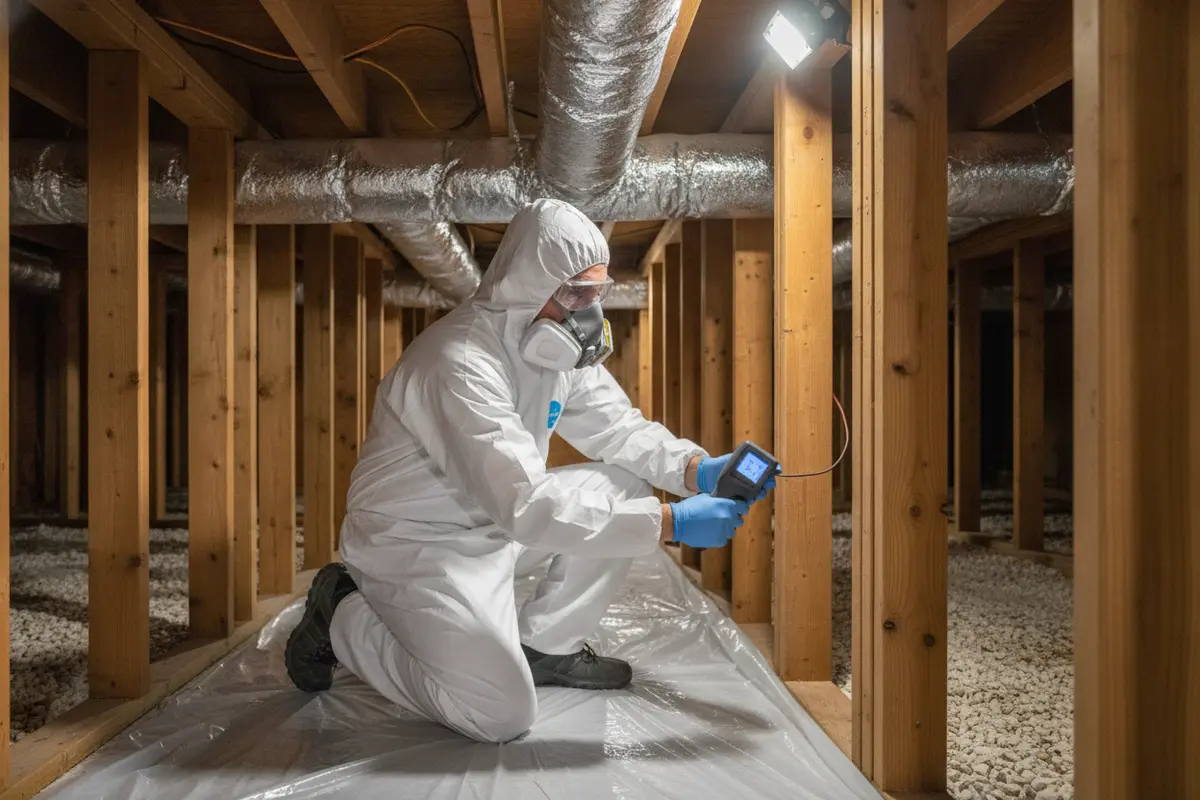
Signs in a crawl space may include damp soil, standing water, wet insulation, sagging insulation, stained joists, peeling wood fibers, or rust on metal components. A crawl space can also remain humid after visible water has disappeared. That is why moisture readings, airflow observations, and the history of leaks matter when determining the cause.
Do not assume that adding a fan solves the problem. Moving humid air into another part of the home can create new condensation. The correct response depends on the source, the construction, the materials affected, and whether water is still entering. A professional assessment can help separate an active leak from residual moisture and surface contamination.
How are attic and crawl space mold concerns different?
The same basic principles apply: find the moisture, protect unaffected areas, remove or clean affected materials as appropriate, and verify that conditions have improved. The work environment is different, however. Attic projects may involve roof leaks, insulation, heat, and limited headroom. Crawl space projects may involve standing water, soil moisture, tight access, pipes, wiring, and structural components.
| Area | Common moisture clues | Materials to assess | Important planning point |
|---|---|---|---|
| Attic | Roof stains, condensation, wet insulation, exhaust moisture | Roof decking, framing, insulation, ducts | Correct roof or ventilation sources before final cleanup |
| Crawl space | Standing water, damp soil, plumbing leaks, humid air | Joists, subfloor, insulation, vapor-control materials | Check drainage, plumbing, and humidity conditions |
| Both areas | Musty odor, visible growth, recurring dampness | Porous materials and nearby air pathways | Limit disturbance and document the scope before work |
What does professional mold remediation involve?
A sound plan begins with an assessment. The technician should document visible conditions, consider the likely moisture source, and explain what can and cannot be determined during the inspection. iMold’s restoration process is designed to move from assessment through containment, extraction, remediation, and restoration. The exact work depends on the property and the materials involved.
Typical planning questions include:
- Where did the moisture come from, and is the source still active?
- Which materials are affected, and which can be cleaned or dried?
- How will workers limit the movement of dust and particles?
- What equipment and protective measures are appropriate for the space?
- What repairs or coordination are needed before the area is restored?
- What documentation or verification will show that the planned work is complete?
Some porous materials may not be suitable for cleaning if they are extensively affected or have lost their function. Other materials may be cleaned, dried, or treated as part of a documented scope. The goal is not to make a broad promise before seeing the property. It is to match the work to the moisture history, material condition, and safe access requirements.
For related questions, review iMold’s mold remediation services and water damage restoration services. If a recent leak caused the concern, prompt emergency restoration response can help limit additional damage while the cause is being addressed.
Should you test for mold in an attic or crawl space?
Testing can be useful when the result will answer a specific question, such as whether hidden areas need further evaluation or whether post-remediation verification would provide independent information. It is not a substitute for correcting a leak or removing visibly affected material. Air or surface results can vary with sampling location and timing, so they need to be interpreted in context.
iMold uses third-party testing when unbiased verification is appropriate. That approach separates the remediation work from the testing role. Ask what question the test is intended to answer, who will collect it, and how the result will affect the next decision. You can also read about common restoration and mold questions before scheduling an assessment.
How should insurance and documentation fit into the process?
Coverage depends on the policy, the cause of loss, exclusions, and the facts of the claim. Do not assume that a mold concern is covered or excluded without reviewing the policy and speaking with the carrier. Photographs, dates, moisture findings, affected materials, and invoices can help create a clearer record.
iMold can coordinate with insurance carriers and uses Xactimate for claim documentation. The company’s insurance claims resource offers more context. You remain responsible for understanding your policy and any deductible or coverage decision. If the damage followed a sudden water event, notify the carrier promptly and take reasonable steps to prevent further damage without disturbing evidence unnecessarily.
How can you compare a mold remediation proposal?
A low price is not enough to show that a proposal addresses the problem. Compare the scope, assumptions, access plan, moisture-source coordination, containment approach, material handling, documentation, and follow-up. A clear proposal should identify areas that were inspected and explain work that is outside the current scope.
- Does the proposal describe the moisture source or identify what still needs investigation?
- Does it distinguish remediation from roofing, plumbing, HVAC, or reconstruction repairs?
- Does it explain how unaffected parts of the property will be protected?
- Does it identify affected materials and the planned treatment or removal?
- Does it explain documentation, testing, or completion checks?
- Does it list assumptions that could change after concealed areas are opened?
For background on the company, its local team and restoration experience page can help you understand the services available. iMold is a licensed, bonded, and insured restoration company serving Southwest Florida, with professionally certified staff and a long local operating history.
What should you do now if you suspect hidden mold?
First, address any active water source if it can be done safely. Move valuables away from the affected area, avoid disturbing suspicious growth, and record what you see with dated photographs. Do not mix cleaning chemicals or enter an unsafe space. If the odor or staining returns after cleaning, treat that as a reason to investigate the moisture pathway rather than repeatedly wiping the surface.
Homeowners and businesses in Fort Myers, Cape Coral, Naples, Bonita Springs, and surrounding Southwest Florida communities can request a no-cost visual mold inspection and estimate. iMold has more than 28 years of local restoration experience and provides full-spectrum support from emergency response through reconstruction. Contact the team to discuss the conditions at your property and determine whether an inspection is appropriate.
Get a clear next step for your property
Frequently Asked Questions
Can attic mold come from a roof leak?
Yes. Roof leaks are one possible source, but condensation, exhaust ventilation, ductwork, and air leakage can also add moisture. An inspection should consider all likely pathways.
Can crawl space mold affect the rest of the home?
It can contribute to odors and may affect indoor conditions through air movement, gaps, and duct pathways. The extent depends on the location, materials, moisture level, and connection between the crawl space and living areas.
Is a musty smell enough to prove mold is present?
No. A musty smell is a useful clue, but it does not identify the cause or confirm the extent of growth. Visual inspection and moisture investigation are better starting points.
Should I clean a small patch myself?
That depends on the material, location, moisture source, and safety conditions. Avoid disturbing hidden or extensive growth, wet insulation, or areas that require unsafe access. A professional can help define a suitable scope.
How quickly should I respond?
Respond as soon as you identify active moisture or recurring dampness. Prompt attention can help limit additional damage, but the work should still begin with a safe assessment and a plan for correcting the source.
When crawl space or attic conditions are unclear, a documented inspection can replace uncertainty with a practical plan for protecting your Florida property.

