A boat can look clean on deck while moisture is quietly collecting in its cabin cushions, storage compartments, and woodwork. In Fort Myers, warm air, high humidity, and limited ventilation make mold and mildew a recurring maintenance concern for boat owners, especially after storms or periods of storage.
Effective boat mold removal fort myers starts with finding and correcting the moisture source, then safely containing, cleaning, and drying affected materials. iMold offers 24/7 emergency service. A 30-minute response promise, and free visual mold inspections and estimates for property owners who need a clear plan.
Knowing why boats are especially vulnerable in Southwest Florida makes it easier to recognize early warning signs and protect your marine investment. It also helps clarify when routine cleaning is enough and when a broader specialty mold and restoration service is the safer choice.
Schedule a free boat mold inspection and estimate with iMold today to see the true scope of any mold concern before it spreads further.
Why Boats Are So Vulnerable to Mold in Southwest Florida
Boats in Fort Myers and throughout Southwest Florida face a combination of moisture, warmth, and limited airflow that makes mold prevention an ongoing responsibility. Mold spores are present throughout the environment, but they need moisture to germinate and grow. Marine settings provide that moisture more consistently than many indoor spaces, especially during the region’s humid weather.
Rain can enter through hatches, windows, seams, and other openings. Even when a cabin appears dry, damp upholstery, carpeting, wood panels, and stored gear can retain moisture. Condensation creates another pathway. Warm, humid air meets cooler cabin surfaces, leaving water behind in places that may not be obvious during a quick visit. Because marine environments inherently contain high moisture, preventing mold requires continuous attention rather than a one-time cleaning. Specialty mold and restoration services can help identify moisture sources that are easy to overlook.
Warm air and high humidity accelerate growth
Southwest Florida’s marine climate is warm and humid for much of the year. Those conditions can significantly accelerate mold growth when moisture remains trapped inside a boat. High humidity also makes it harder for wet materials to dry, allowing a small leak or spill to become a recurring problem. The EPA identifies moisture control as the primary way to manage mold growth, because there is no practical way to eliminate every mold spore from an indoor environment. On a boat, that means reducing humidity and addressing leaks, condensation, and wet materials at the source.
Enclosed cabins trap moisture and stale air
Boat cabins are compact, enclosed spaces with cushions, curtains, closets, storage compartments, and other surfaces that restrict air movement. When hatches and doors remain closed during storage, humidity can build up without enough cross-ventilation to carry it away. A dehumidifier can lower ambient moisture, while deliberate ventilation helps air circulate through the cabin and storage areas. These measures are especially important after heavy rain, extended storage, or any event that leaves the interior damp.
Mold can grow on almost any surface where moisture is present, including wood, fabrics, and plastics commonly found in boat interiors. That is why a musty odor should not be dismissed as a normal marine smell. It may indicate growth in a concealed compartment or beneath a material that has absorbed moisture. When visible growth, persistent odor, or repeated dampness continues, a professional mold remediation process can address both affected materials and the conditions allowing the problem to return.
Where Mold Typically Grows Inside a Boat
Boat mold is not limited to one visible patch. Because mold can grow on almost any surface where moisture is present, a damp cabin may involve wood, fabrics, plastics, and other materials at the same time. The first clue is often a persistent musty odor, especially when the boat has been closed up. That smell deserves attention even when the surfaces look clean.
Common marine mold hotspots
- Cabins and berths: Check mattresses, mattress platforms, wall coverings, and the corners behind bedding where air movement is limited.
- Upholstery and cushions: Cushions can hold moisture against seat bases and beneath removable covers. Examine seams, piping, and the underside of each cushion.
- Curtains and canvas: Damp curtains, cabin liners, bimini tops, and other fabric components can develop mildew when stored wet or allowed to dry slowly.
- Wood panels and trim: Wood is porous, so it can absorb moisture and support deeper mold growth than a hard, nonporous surface.
- Heads and wet areas: Inspect around plumbing, shower compartments, flooring edges, caulking, and cabinets near sinks or other water sources.
- Bilges and storage lockers: Standing water, condensation, wet gear, and poor air circulation make these enclosed spaces easy to overlook.
- Behind cabinetry: Mold may colonize the hidden side of panels or the wall behind a cabinet where leaks and condensation remain undetected.
Fabric treatment requires care. Upholstery, curtains, and canvas may need marine-grade cleaning agents rather than standard household products, which can damage the material or leave residues without addressing the moisture source. Wood panels require similar caution because absorbed moisture can keep a problem active below the surface.
Ventilation is another important part of the inspection. Poor cross-ventilation allows humid air to remain trapped in cabins, lockers, and compartments. Open and inspect areas that can be safely accessed, including beneath cushions and inside storage spaces, while looking for condensation, staining, softened wood, or recurring odor. A boat can appear tidy while hidden moisture continues to support growth.
Finding the affected zones helps determine whether cleaning is sufficient or whether porous materials and concealed spaces need a more thorough assessment. For broader guidance, review iMold’s specialty mold and restoration services and address the moisture conditions before treating surface symptoms.
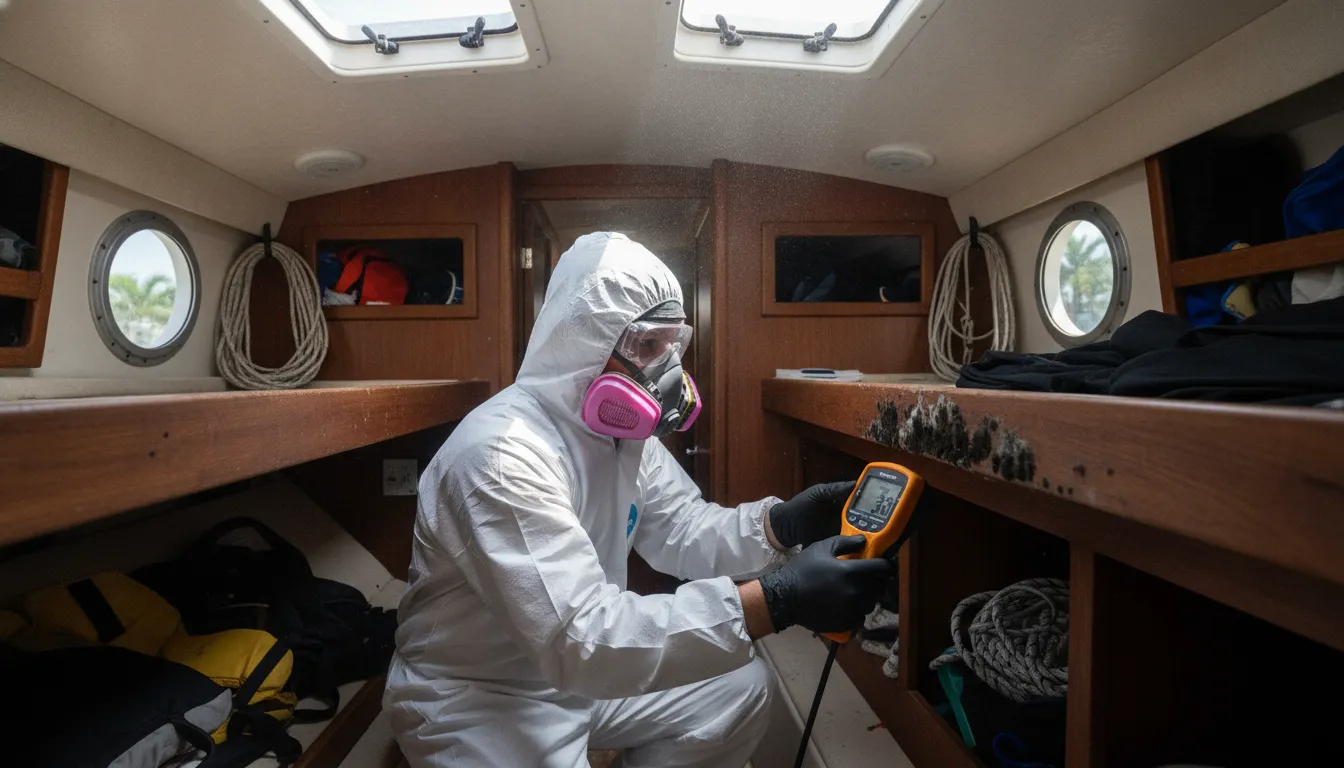
An experienced boat mold removal team in Fort Myers uses containment and professional drying equipment to address growth in concealed cabins, upholstery, and porous wood rather than only treating visible surface stains.
How to Prevent Mold From Growing on Your Boat
Prevention starts with moisture management. Mold spores are present throughout the environment, but they need moisture to germinate and grow. Both the EPA and CDC identify moisture control as the central strategy for limiting mold. On a boat, that means making drying, airflow, and routine inspections part of the normal care schedule rather than waiting for a musty odor or visible spotting.
- Air out the interior after every use. Open cabin doors, hatches, and storage compartments when conditions are safe. Remove damp towels, life jackets, clothing, and other wet gear, then let each item dry fully before putting it away. Trapped moisture in cushions, lockers, and upholstery can remain even when exposed surfaces appear dry.
- Create cross-flow ventilation. Use available vents and openings to move fresh air through the cabin instead of allowing warm, humid air to sit in enclosed spaces. Check that vents are not blocked by gear or stored supplies. Good cross-ventilation is a fundamental prevention measure in boat cabins, especially during periods of frequent rain or high humidity.
- Use a dehumidifier in enclosed cabins. A properly sized dehumidifier can lower ambient moisture and help prevent recurrence in sleeping quarters, heads, and other spaces with limited airflow. Empty or drain the unit as directed, and inspect it regularly so the equipment does not become another source of standing water.
- Find and correct leaks promptly. Inspect windows, hatches, plumbing connections, air-conditioning components, and areas around fittings after storms or heavy use. Dry affected materials quickly, then monitor them for returning dampness. A small leak that remains hidden behind a panel or beneath upholstery can sustain growth over time.
- Store the boat to support drying. Choose a storage arrangement that allows ventilation, use a properly fitted cover that does not trap condensation, and avoid packing compartments tightly with damp equipment. During storage, check the cabin periodically rather than leaving it closed for an extended period.
These habits reduce the conditions mold needs, but they cannot correct established growth inside porous materials or concealed cavities. If mold keeps returning despite consistent drying and ventilation, stop covering up the symptom and investigate the moisture source. A professional can evaluate the affected materials, contain the work area, and explain our restoration process for returning the space to a clean, usable condition.
Professional Boat Mold Remediation vs. DIY Treatment
A small, recent spot on a hard, non-porous surface may be suitable for careful cleaning. Boat mold is often more complicated than it first appears, however. Mold spores are present throughout the environment, and moisture allows them to grow. In Southwest Florida, persistent humidity can continue feeding growth after a visible stain has been wiped away. Wood panels, upholstery, curtains, insulation, and other porous marine materials can absorb moisture deeply, making surface treatment insufficient. Professional mold remediation in Southwest Florida is worth considering when the source is unclear, the odor returns, or growth extends beyond an isolated area.
| Consideration | DIY treatment | Professional remediation |
|---|---|---|
| Scope | Usually limited to visible growth on accessible, cleanable surfaces. | Investigates moisture, hidden growth, porous materials, and affected air and contents. |
| Effectiveness | May improve a small surface area but can miss embedded growth or the moisture source. | Uses a documented process to address the source, affected materials, airborne spores, and restoration needs. |
| Safety | Requires protective gear, ventilation, and careful handling to limit exposure and spread. | Uses containment and professional equipment, including industrial air scrubbers, to manage airborne spores. |
| Testing | Generally relies on visual inspection and odor. | Can coordinate third-party testing for unbiased verification of mold levels after remediation. |
| Cost approach | Lower initial outlay, with a risk of repeated cleaning or overlooked damage. | Custom scope based on conditions, materials, containment, remediation, and restoration. No generic dollar figure should be assumed. |
| When to call a pro | Only when the area is truly small, accessible, and understood, and the moisture issue is controlled. | Call when humidity persists, growth returns, porous materials are involved, odors indicate hidden growth, or the affected area is extensive. |
What professional remediation adds
A qualified team should not simply spray and deodorize. The iMold Way follows five stages: Assess, Contain, Extract, Remediate, and Restore. Assessment identifies likely moisture pathways and the extent of affected materials. Containment helps keep spores from moving into clean areas, while extraction and remediation address moisture and mold. Industrial air scrubbers can help remove airborne spores during the work. Restoration then focuses on returning the boat’s materials and spaces to a usable condition.
DIY cleaning also has important limits. The EPA recommends protective equipment when handling mold and warns against painting or caulking over moldy surfaces, since that does not solve the underlying problem. If mold has entered porous materials that cannot be thoroughly cleaned, replacement may be necessary. When the cleanup is complete, independent third-party testing can provide a clearer, unbiased check rather than relying only on appearance or odor. That distinction matters when you want confidence that the cabin is ready to use again.
Boat Mold Removal Fort Myers Services From iMold
When a boat needs mold removal in Fort Myers. Response time and the right qualifications matter. iMold Cleaning and Restoration is available 24/7, with a 30-minute response promise for emergency restoration calls. Start with a free visual mold inspection and free estimate so you can understand the condition of the cabin. Materials, and affected areas before deciding on the next step.
iMold brings a restoration background suited to the demands of Southwest Florida’s marine environment. The company is a state-licensed Mold Remediator (MRSR2170) and General Contractor (CGC1540205). Its team also holds seven IICRC credentials: WRT, ASD, MRS, AMRT, FSRT, OCT, and CCT. That combination supports a coordinated response when mold affects more than a single surface, including situations that may require cleaning, controlled removal, drying, or reconstruction.
A local, licensed team for marine properties
Fort Myers boat owners benefit from a company that understands the region and can stay involved through the full restoration process. iMold serves an eight-county Southwest Florida area. Including Lee, Collier, Charlotte, Sarasota, Manatee, Hendry, DeSoto, and Hardee counties. That coverage includes the Fort Myers marina community and surrounding properties. The team is Licensed, Bonded, and Insured, giving owners a clear trust standard when professionals are working around valuable finishes, furnishings, and structural components.
Local experience also means the service does not stop at surface cleaning. iMold’s established approach follows the iMold Way: Assess, Contain, Extract, Remediate, and Restore. Depending on the inspection, the work may include identifying moisture sources, protecting unaffected areas, addressing contaminated materials, and planning repairs where porous components cannot be adequately restored. For broader background, see iMold’s specialty mold and restoration services.
Clear coordination from inspection through payment
Insurance questions can make a property damage event more complicated. iMold works directly with insurance carriers. Has preferred vendor status with major insurers, and uses Xactimate for transparent billing and claim documentation. This coordination can help keep the restoration plan and claim information aligned, although coverage remains subject to the policy and carrier’s determination.
If payment planning is needed, Hearth financing options may be available. Ask about eligibility and terms during the estimate, rather than delaying an inspection while moisture or mold concerns remain unresolved. With more than 900 Google reviews and a 4.9-star average, iMold offers an established local option for boat owners who want prompt service. Documented qualifications, and a clear path from free inspection to restoration.
Get a free boat mold inspection and estimate from iMold and take the next step toward a clean, safe cabin.
Frequently Asked Questions
How do you remove mold from a boat cabin?
Start by identifying and correcting the moisture source, then clean affected hard surfaces with a marine-appropriate mold cleaner. Porous materials such as cushions, carpet, insulation, and unfinished wood may require specialized evaluation because surface wiping does not necessarily address embedded growth. Improve ventilation and dry the cabin thoroughly after cleaning. If the affected area is extensive, returns after cleaning, or involves hidden materials, professional assessment can help determine the appropriate remediation steps.
Does boat mold removal in Fort Myers require professional help?
Not every small surface spot requires professional service, but professional help is a prudent choice when mold covers a broad area. Affects porous materials, follows water intrusion, or keeps returning. A qualified remediation team can locate moisture, establish containment when appropriate, clean affected areas, and identify materials that may need restoration or replacement. Avoid painting over visible mold, since that can conceal the problem without addressing its source.
How can you prevent mold in a boat cabin in Southwest Florida?
Keep the cabin dry and improve air movement with regular ventilation. Use a dehumidifier when the boat is stored or closed for extended periods, and check cushions, lockers, bilges, and other enclosed spaces for trapped moisture. Repair leaks promptly, allow wet materials to dry completely, and inspect the interior regularly. Prevention works best when moisture control is consistent rather than limited to occasional cleaning.
How much does boat mold removal cost in Fort Myers?
Cost depends on the size of the affected area, the materials involved, and how deeply moisture has penetrated cabin surfaces, cushions, and woodwork. Because every boat and every mold situation is different, iMold does not publish generic prices. A free visual mold inspection and estimate helps you understand what your specific cleanup may involve before any work begins, so you can plan the next step with clear information.
Schedule Your Free Boat Mold Inspection
A professional inspection can help identify visible and hidden mold concerns before you plan the next restoration step. Schedule a free boat mold inspection and estimate with iMold, available 24/7 for Southwest Florida property owners. Call iMold at (877) 771-1699 to talk with the team and arrange your next step.