Southwest Florida homes face a persistent mold challenge: Gulf-coast humidity can keep indoor spaces damp long after a leak, storm, or plumbing issue appears resolved. In Fort Myers, Cape Coral, Naples, and nearby communities, prompt attention matters. Mold can remain hidden behind wall coverings or inside HVAC systems while gradually damaging the materials it grows on.
Mold remediation southwest florida requires more than surface cleaning. A qualified team identifies and corrects the moisture source, contains affected areas, and removes or cleans contaminated materials as appropriate. It then verifies that the space is safe to restore. iMold offers 24/7 emergency service and a 30-minute response promise in its immediate service zone. Free visual mold inspections and estimates are also available.
You do not need to determine the full extent of a problem on your own. Understanding why local humidity makes mold easier to sustain is the first step toward choosing the right response and avoiding a temporary fix.
Why Mold Remediation in Southwest Florida Is a Bigger Problem Than You Think
Southwest Florida homes face a combination of moisture, heat, and limited drying time that can make mold more persistent than many homeowners expect. A small leak, condensation problem, or storm-related intrusion may not remain a small issue when the surrounding air is already humid. The right response is not simply to wipe away what is visible. It is to identify how moisture entered, determine where mold may have spread, and correct the conditions that allow it to return.
Humidity and the Gulf climate
The Gulf Coast climate keeps indoor and outdoor moisture levels high for much of the year. Air conditioning can reduce humidity, but poorly performing systems, clogged condensate lines, duct condensation, and uneven cooling can still create damp areas inside a home. Coastal storms and heavy rain add another layer of risk, especially when roof assemblies, windows, exterior walls, or plumbing are compromised.
In Fort Myers, Cape Coral, Naples, Bonita Springs, and nearby communities, moisture can collect in places that are not obvious during a quick walkthrough. A musty odor, recurring discoloration, peeling paint, or a room that feels unusually damp deserves attention even when there is no large visible colony. Southwest Florida’s humid climate significantly increases the risk of mold growth, which is why prompt evaluation matters.
Hidden mold behind walls and in HVAC
Mold is not always located where the original water damage occurred. It can grow behind wall coverings, above ceilings, beneath flooring, inside cabinets, or within HVAC components. The Environmental Protection Agency notes that extensive hidden mold may be expected behind materials such as vinyl wallpaper or in an HVAC system. EPA guidance on hidden mold and remediation helps explain why a surface-level cleaning may not resolve the underlying problem.
That hidden spread also explains why professional assessment is valuable. An inspection can help distinguish an isolated, cleanable area from a moisture problem affecting building materials or air-handling equipment. The company’s mold removal services are designed to address the source, affected materials, and appropriate next steps rather than treating only the most noticeable spot.
Mold can also damage property gradually. According to the EPA, mold growth may destroy the materials it colonizes over time, and cleaning may not restore an item once deterioration has progressed. Addressing moisture early can protect drywall, wood, insulation, finishes, and personal belongings while giving the remediation plan a clearer scope.
Mold Remediation vs. Mold Removal: What’s the Difference
Mold removal usually describes taking visible growth away from a surface or removing a damaged item. Mold remediation is the broader corrective process. It addresses the contaminated materials and the moisture problem that allowed mold to develop in the first place. Without controlling the source, remaining moisture can support new growth even after a surface looks clean. The EPA’s remediation guidance treats moisture control as part of resolving a mold problem, not as an optional extra.
That distinction matters in Southwest Florida, where a leak, flooding event, condensation problem, or elevated indoor humidity may continue behind a finished surface. Cleaning can be appropriate for some materials, but it cannot restore every item. Mold gradually damages the surfaces it colonizes, and the EPA notes that some materials may be damaged beyond what cleaning can repair or return to their original appearance. Porous or heavily affected materials may therefore need careful removal, while salvageable contents and surfaces may be cleaned using the appropriate method.
A responsible plan is not based on a single rule such as removing everything or treating every spot the same way. Remediation guidelines are organized around the size of the affected area to help professionals select suitable techniques. The EPA specifically cautions that square-footage categories are practical planning tools, not proof that a particular method is safe or effective at one exact size. The type of material affected also changes the strategy, including how it is handled, contained, cleaned, or discarded.
Assessment comes before treatment. A qualified remediation professional should determine how far contamination extends, whether hidden areas may be involved, which materials can be restored, and what moisture source needs correction. That evaluation supports appropriate containment and protects occupants and workers from unnecessary exposure. For homeowners comparing mold remediation southwest florida services, the deciding question matters most. Do not ask only, “Can you remove what I can see?” Ask whether the plan addresses the contamination, the affected materials, and the cause.
The iMold Way: A 7-Step Mold Remediation Process
Effective remediation is more than treating visible growth. It connects the mold problem to the moisture source, protects occupants and workers, and verifies that the property is ready to use again. The iMold Way frames the work in five phases, Assess, Contain, Extract, Remediate, and Restore, delivered through seven practical steps. The exact approach depends on the affected area, materials, water source, and conditions in the property. EPA guidance also emphasizes that remediation managers must use professional judgment rather than apply one method to every situation.
- Assess the property and moisture source. The team begins by identifying visible and suspected hidden mold, tracing moisture, and evaluating affected materials. Mold may not be apparent immediately, especially after a recent water loss, so a careful assessment determines the scope and the safest response. This first step guides the remediation plan instead of relying on assumptions.
- Document the damage and plan the work. Findings are organized into a clear scope that accounts for the type of material affected, the extent of contamination, and occupant concerns. Professional remediation guidelines are based on the size of the affected area and the materials involved, not on a single universal square-foot method. The plan may be more conservative when sensitive occupants, such as people with severe allergies or asthma, are present.
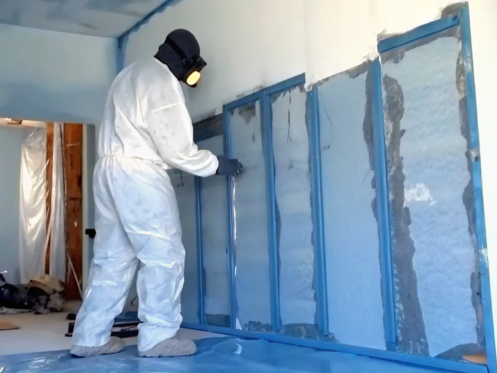
- Contain the affected area. Containment helps limit the movement of mold particles and protects clean portions of the home or business while work proceeds. The level of containment and PPE is selected according to the contamination. If sewage, chemicals, or biological pollutants may be present, OSHA requirements for PPE and containment apply. Contaminated water should be handled by professionals with the right expertise.
- Extract standing water and begin drying. Water removal reduces the conditions that allow additional growth and damage. Materials that have been wet for less than 48 hours may still be candidates for prompt professional cleanup, even when mold is not visible. The response should be timely because moisture can move into porous materials and concealed spaces.
- Remediate contaminated materials. Depending on the material and condition, remediation can involve cleaning, controlled removal, or both. The goal is to remove contaminated materials when necessary while addressing the moisture problem that caused the growth. Work methods are adjusted to protect occupants, workers, and salvageable contents.
- Restore the affected space. Once remediation is complete, damaged areas can be repaired or rebuilt as appropriate. Restoration may include replacing materials that cannot be adequately cleaned and returning the property to a functional. Finished condition. iMold’s full-spectrum capabilities connect mold remediation with reconstruction when the project requires it.
- Verify the result and communicate next steps. A completed project should leave the owner with a clear understanding of what was addressed and what maintenance may prevent recurrence. iMold uses third-party mold testing for unbiased verification of clearance. Making transparency part of the closeout process. Read more about the professional mold remediation process before choosing a response.
For homeowners and property managers across Southwest Florida, a documented process provides a steadier path from moisture intrusion to a safe, usable property. If the source involves contaminated water or the growth is extensive, prompt professional guidance is the responsible next step.
What Professional Mold Remediation Costs in Southwest Florida
A reliable mold remediation estimate starts with an inspection, not a guess based on a photo or a single room. Several conditions shape the work required in a Southwest Florida property, and each should be documented before a restoration plan is prepared.
The size and type of affected materials
The affected area is one important factor, but square footage alone does not determine the appropriate response. Remediation guidelines use the size of the area to help professionals select suitable techniques, while the type of material also matters. Porous drywall, insulation, carpeting, cabinetry, and structural components may require different treatment or removal decisions. The goal is to address contaminated materials and correct the moisture source, not simply make visible growth disappear.
Hidden spread and building systems
Mold can extend behind wall coverings, inside wall cavities, beneath flooring, or through an HVAC system without being obvious during a casual walkthrough. Finding and safely accessing those areas can expand the scope of assessment, containment, cleaning, removal, and restoration. A careful inspection helps distinguish what is visible from what may be affected behind the surface.
Containment, air cleaning, and independent testing
Professional work may require containment barriers, negative air control, air scrubbing, and appropriate protective equipment to limit the movement of spores and protect occupants and workers. The extent of contamination and the material involved guide those decisions. If contaminated water is suspected, additional safety requirements may apply.
Third-party mold testing can provide unbiased verification after remediation. iMold uses independent testing for clearance, treating it as a transparency measure rather than a hurdle. Testing, containment, and air-scrubbing needs are part of a responsible scope when conditions call for them.
Rebuild and insurance coordination
Once remediation is complete, damaged drywall, flooring, cabinets, or other finishes may need to be rebuilt. That restoration scope is separate from the initial cleaning and can affect the overall project plan. iMold works directly with insurance carriers and uses Xactimate for billing and documentation. This insurance coordination can help property owners understand the claim process and the work being considered.
iMold offers a free visual mold inspection and estimate, with no-cost initial evaluation. Hearth financing with 0% options may also be available for eligible customers. Request an assessment so the scope is based on the property’s actual conditions, not an arbitrary number.
IICRC Certification and Licensing: Why Credentials Matter
When mold affects a Southwest Florida property, credentials are more than badges on a website. They help show that the contractor understands containment, personal protective equipment, moisture control, material removal, and the restoration work that follows. That matters in a region where humidity can support recurring mold growth and where damage may extend beyond what is visible.
iMold Cleaning and Restoration is licensed, bonded, and insured, with 28 years of experience serving the region. Its team includes more than 35 certified professionals, and the company has earned 900+ Google reviews with a 4.9-star rating. Those long-term customer signals complement, rather than replace, the technical standards a property owner should verify before authorizing work.
What the 7 IICRC Credentials Mean
The Institute of Inspection Cleaning and Restoration Certification (IICRC) develops standards and credentials used throughout the restoration industry. You can review the organization and its certification framework at IICRC.org. iMold’s seven credentials cover several parts of a property-damage response:
- WRT: Water Restoration Technician, focused on water damage and drying principles.
- ASD: Applied Structural Drying, addressing the drying of building materials and assemblies.
- MRS: Mold Removal Specialist, focused on mold remediation practices.
- AMRT: Applied Microbial Remediation Technician, covering microbial remediation work.
- FSRT: Fire and Smoke Restoration Technician.
- OCT: Odor Control Technician.
- CCT: Commercial Carpet Maintenance Technician.
The breadth of these credentials is useful when a mold problem follows a leak, storm, fire, or other property emergency. It supports a coordinated response instead of treating one affected room in isolation. iMold also holds Florida Mold Remediator license MRSR2170 and Florida General Contractor license CGC1540205. The general contractor license is especially relevant when remediation uncovers damaged drywall, flooring, framing, or other components that require permitted reconstruction.
For homeowners and property managers considering emergency mold removal, ask who will perform the work, what licenses and certifications apply, how moisture will be addressed, and how completion will be verified. Clear answers, documented credentials, and a contractor equipped to restore the property provide a stronger foundation for a safe, accountable project.
When to Call a Professional vs. Tackling Mold Yourself
Not every small patch requires the same response. The right decision starts with an honest assessment of the affected area, the materials involved, and the source of the moisture. EPA guidance explains that remediation managers should first determine the extent of damage, then decide whether cleanup is appropriate for in-house personnel or outside professionals. A surface that is small, visible, and isolated may be manageable with careful cleaning and moisture control. If the situation is uncertain, an inspection can prevent a limited problem from becoming a larger one.
When a careful DIY cleanup may be reasonable
DIY cleanup may be appropriate for a small, contained area on a hard, nonporous surface. Provided the moisture source has been corrected and no one in the home is especially sensitive to mold. Protect nearby belongings, avoid spreading spores through unnecessary disturbance, and use appropriate personal protective equipment. Do not paint or caulk over growth before the surface is cleaned and fully dried. Porous materials such as drywall, insulation, carpet, and upholstered furnishings may not be restorable when contamination has penetrated them.
Situations that call for professional judgment
Bring in a qualified remediation professional when growth is heavy, returns after cleaning, covers multiple areas, or may be hidden behind wall coverings or inside an HVAC system. The EPA notes that valuable or important items with heavy mold growth warrant consultation with a restoration or remediation expert. Materials can be damaged gradually, and cleaning does not always restore their original condition. A professional can evaluate the extent of contamination, determine what can be cleaned, and plan containment before removal or restoration begins.
DIY vs. professional at a glance
| Factor | DIY cleanup | Professional remediation |
|---|---|---|
| Best for | Ideal for small, visible, contained growth on hard surfaces. | Best for heavy, recurring, hidden, or widespread growth. |
| Moisture control | The homeowner must find and fix the source. | The team locates and corrects the moisture source as part of the scope. |
| Containment | Limited to local precautions. | Barriers, negative air control, and PPE are matched to the contamination. |
| Testing | Testing is not typically available. | Third-party testing can verify clearance after the work. |
| Risk | Spores can spread if the area is disturbed. | Controlled containment limits spread and occupant exposure. |
Contaminated water is a clear boundary for DIY work. If sewage, chemicals, or biological pollutants may be involved, safe remediation requires expertise, containment, and appropriate PPE. The EPA recommends consulting an experienced professional when that expertise is not available. This is especially important after an overflow, storm event, or water loss that has affected several materials.
For urgent or extensive situations, iMold provides emergency mold removal support across Southwest Florida. The team offers 24/7 response and can begin with a no-cost visual mold inspection and estimate, helping you choose a safe next step without guessing.
Does Insurance Cover Mold Remediation in Florida?
Homeowners insurance may cover mold remediation in Florida, but coverage depends on your policy, the cause of the moisture, and the facts documented in the claim. Mold connected to a covered sudden water event may be treated differently from growth related to long-term humidity, maintenance issues, or an excluded source. Do not assume a claim will be approved, and do not delay reporting damage while trying to determine the answer yourself.
Start with the source of the moisture
Before discussing coverage, identify what allowed the mold to develop. A burst supply line, roof leak after a storm, appliance failure, or another sudden event may raise different coverage questions than condensation, groundwater, or an unresolved plumbing problem. Your adjuster will need a clear timeline, so record when you noticed the water or mold. What areas are affected, and what steps you took to limit further damage.
Document the condition before cleanup
Take dated photographs and videos of visible growth, wet materials, damaged finishes, and the suspected source. Keep emergency invoices, plumber or roofer reports, inspection findings, communication with your carrier, and receipts for reasonable temporary measures. Avoid removing affected materials or discarding belongings before your insurer has had a reasonable opportunity to inspect. Unless immediate action is needed to protect people or prevent additional property damage. When urgent work is necessary, photograph the area first and retain samples, invoices, and work records when practical.
Choose a contractor who can coordinate the claim
Insurance billing can involve technical scopes, documentation, and pricing software. iMold works directly with insurance carriers using Xactimate to handle billing for remediation services. And the company has preferred vendor status with major insurers. That support does not guarantee coverage or determine your policy’s limits. It can, however, help keep the remediation scope and claim documentation organized while your carrier makes the coverage decision.
For a practical overview of the questions to ask your carrier, see iMold’s guide to insurance coordination for mold and water damage in Florida. A no-cost visual mold inspection and estimate can also help you understand the observed damage and recommended next steps before work begins.
Frequently Asked Questions
How much does mold remediation cost in Southwest Florida?
There is no responsible one-size-fits-all price. A professional estimate considers the size of the affected area, the materials involved, hidden spread, moisture source, containment needs, and whether testing or reconstruction is required. Remediation guidelines are based on the affected area and material type. Not on a guaranteed price or a single treatment method. iMold provides a no-cost visual mold inspection and estimate and can then coordinate documentation and billing with insurance carriers through Xactimate.
Does homeowners insurance cover mold remediation in Florida?
Coverage depends on your policy and what caused the moisture. Mold associated with a covered water-loss event may be handled differently from mold caused by long-term maintenance issues, exclusions, or flooding. Report the loss promptly, document visible damage. And ask your carrier what your policy includes before authorizing major work. iMold works directly with carriers and can help organize the restoration scope and billing. But your insurer makes the coverage decision.
How long does mold remediation take?
The timeline depends on the affected area, material type, moisture conditions, access, and whether damaged materials must be removed and rebuilt. The work typically begins with assessment and containment, followed by removal or cleaning, moisture control, restoration, and verification. A qualified professional should establish the schedule after inspecting the property rather than promising a fixed completion time. Third-party mold testing can provide unbiased verification after the work is complete.
What is the difference between mold removal and mold remediation?
Mold removal focuses on taking away visible growth or contaminated materials. Remediation is the broader process: identify and correct the moisture source, contain the affected area, clean or remove materials as appropriate, and restore the space. Cleaning may not return a damaged surface to its original condition because mold can gradually deteriorate the materials it colonizes. The right approach depends on the extent and type of contamination.
What are common signs of mold growth in Florida homes?
Signs can include visible spots or discoloration, persistent musty odors, recurring moisture, water damage, or unexplained growth near air-conditioning systems, wall coverings, and other damp areas. Mold is not always visible, especially when it is behind walls or in HVAC components. If you notice signs after a leak, flood, or ongoing humidity problem, request a professional inspection so hidden damage and the moisture source can be evaluated safely.
Ready to Talk With a Mold Remediation Professional?
If you are dealing with suspected mold, a professional assessment can clarify the next steps and help protect your property. iMold offers 24/7 emergency mold remediation support. Free visual mold inspections and estimates are available for Southwest Florida homeowners. To schedule an inspection or discuss an urgent concern, call iMold at (877) 771-1699 and speak with the team about your property.