iMold answers water and mold calls 24/7 across Southwest Florida. If a supply line, roof, or appliance leak left part of your home wet, request emergency drying before you wait to see a stain. The practical question after that call is how long does it take for mold to grow after water damage.
The U.S. Environmental Protection Agency says wet materials should be dried within 24 to 48 hours. That is the window when growth can begin if moisture stays. You will not always see a dark patch on day two. Spores can settle on a damp surface long before a stain shows. Warm Southwest Florida air makes that window less forgiving, not more.
Request 24/7 emergency service
iMold has spent 28 years on water damage and mold work in Fort Myers and nearby communities. The company is licensed, bonded, and insured. It holds State Certified Mold Remediator (MRSR2170) and State Certified General Contractor (CGC1540205) credentials.
A no-cost visual mold inspection is the right next look when you are unsure the materials actually dried. For the cleanup steps that come before this clock, use the guide on what to do after water damage. The mold removal services page covers the work that starts only after growth is confirmed.
How long does it take for mold to grow after water damage?
Mold spores are already in indoor air. They do not become a problem until they land on something wet. The EPA home guide puts the prevention step in plain terms. If wet or damp materials are dried within 24 to 48 hours after a leak or spill, mold will not grow in most cases.
That 24-to-48-hour line is a drying target, not a promise that every home is safe at hour 49. It is also not a promise that a dry-looking surface is dry inside.
The short answer is 24 to 48 hours on materials that stay damp. Visible spots often arrive later. If you are unsure the materials dried, the mold inspection service page is the place to compare a visual look with testing. Think of the clock as three rough stages, not a stopwatch with a fixed alarm:
| Window | What is usually happening | What you can still change |
|---|---|---|
| 0 to 24 hours | Materials are wet. Spores may be present, but visible growth is uncommon. | Stop the water if it is safe, move dry goods, and start drying hard surfaces. |
| 24 to 48 hours | Growth can begin on materials that stay damp, especially in warm, still air. | Keep air moving and confirm the area is actually dry, not just surface-dry. |
| After 48 hours | A musty smell or a faint spot may appear. Hidden wet drywall can already be ahead of what you see. | Stop guessing. Ask for a visual inspection before you paint, caulk, or close the wall. |
A small spill on a hard floor that you towel-dry the same afternoon is a different event from water that sat in the pad under a carpet. The EPA also notes that mold will not grow without water or moisture. Dry the material and you remove the condition growth needs. Leave a wall cavity damp and the same spores have a place to start.
Do not treat a published timeline as a price or a diagnosis. Two homes with the same leak date can look different. One was opened up and dried. The other was wiped and closed. If you want the longer first-day sequence, read what to do after water damage in your home, then come back to the growth question.
How long does mold take to grow in hidden wet materials?
Hidden materials follow the same moisture clock, but they can stay wet after the surface feels dry. Drywall paper, carpet pad, insulation, cabinet bases, and wood framing may hold water in places a towel or household fan cannot reach. If the material stayed damp, the absence of a visible spot does not reset the timeline.
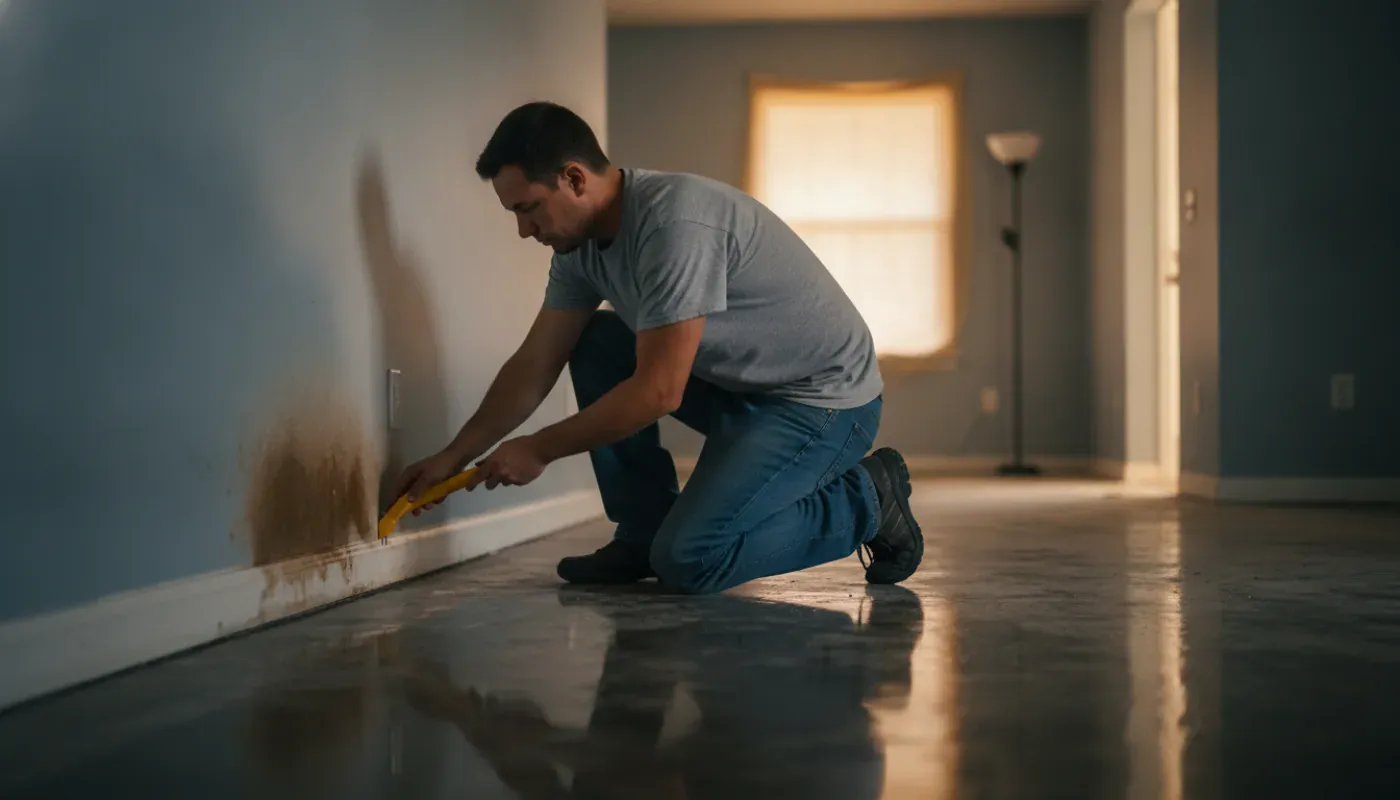
Visible growth is a late clue. Early growth can sit on the back of drywall, under a baseboard, or in the carpet pad while the painted face still looks normal. A musty odor in a closed room is often the earlier signal. That is especially true after the air conditioner has been running and the room feels dry to your hand.
Hidden materials can start the same 24-to-48-hour clock even when the paint looks fine. The painted face can look normal while the paper, pad, or framing behind it is still wet. Three things hide the start of growth:
- Paint and caulk can cover a damp face while the paper on the back of the drywall stays wet.
- A fan pointed at a wall can dry the surface and leave the cavity behind it damp.
- Furniture, toe-kicks, and built-ins block air from the exact spot the water reached.
That is why “I do not see anything” is not the same as “the materials dried in time.” iMold’s visual inspection looks for visible growth, moisture conditions, and water-damage patterns. It may include moisture-meter and thermal-camera checks when they fit the concern.
That visit is not a lab test, and it is not a promise that hidden mold is absent. The mold inspection service page explains the difference between those services. The visit itself is described in what happens during a mold inspection.
Climate can change how fast a room feels musty, but it is not the same question as this timeline. Southwest Florida stays warm for much of the year, and indoor air often holds more moisture than a heated northern house. The separate page on how climate affects mold growth covers temperature and humidity. Use it as background. Use this page for the clock after a leak.
What changes the pace in a Southwest Florida home
The 24 to 48 hour window is the EPA’s general guidance. Local water, materials, and indoor humidity decide whether your materials are still inside it.
Water category matters. Clean supply-line water is not the same as water from a drain, a dishwasher, or a storm that came in from outside. Any of them can keep materials wet long enough for growth. Contaminated water adds a cleanup problem that drying alone does not solve. iMold’s water damage services separate extraction and drying from later mold work for that reason.
The material that got wet matters as much as the clock. Hard surfaces can dry the same day. Paper, pad, and insulation can stay wet much longer.
- Tile and metal can be wiped and dried the same day if the water did not pass the seams.
- Carpet, pad, drywall paper, and insulation hold water. They can still be wet after the room smells fine.
- Wood framing can take longer to release moisture than the paint on top of it.
Air conditioning does not replace drying. A cold room can still hide a wet wall. If humidity stays high, or if the system was off during a trip, damp materials stay damp longer. Structural drying uses moisture readings to decide when materials are dry. That is a different job from pointing a box fan at a stain.
The structural drying page covers that work. If you cannot find where the water is still coming from, start with water leak detection instead of waiting to see a spot.
A slow drip under a sink can be more misleading than a burst pipe. The burst pipe is obvious, so people act. The drip wets a cabinet floor for days. By the time the wood looks swollen, the 48-hour window is already gone. The same pattern shows up after a roof leak that only appears during a hard rain. This pattern is common from Fort Myers through Cape Coral, Naples, and Bonita Springs.
What you can check before you open a wall
You do not need to cut drywall to learn whether the easy clues are already there. Stay out of standing water if you are unsure about power. Then walk the area in this order:
- Find the edge of the wet area. Look at baseboards, the bottom of cabinets, and the ceiling below an upstairs leak.
- Smell the closed room, then the open room. A musty odor that returns after you air the space out is a moisture clue.
- Press the carpet and the pad at the wall. If the pad is still wet, the surface being dry does not count.
- Look for bubbling paint, darkened drywall paper, or a stain that keeps returning after it fades.
- Note the date the water started and the date you think it was dry. That gap is the fact a technician needs.
Stop there if you would have to move a heavy appliance, enter a flooded room, or cut a wall to learn more. Those steps can spread wet material and hide the original pattern. Write down what you saw, take photos of the stain and any standing water, and keep the history for the visit.
A hardware-store humidity gauge can tell you about room air. It cannot tell you whether the back of the drywall is wet. If the gauge reads high and a wall still smells musty two days after the leak, get a visual look. That reading is not proof of a mold species.
iMold’s no-cost visual inspection and estimate are for this kind of uncertainty. “No-cost” applies to that visual look and the estimate. It does not mean sampling, lab work, or remediation is free. Ask before you add any of those. If the leak is still active, start with the emergency response page. Crews are available 24/7.
When to ask for a visual inspection instead of waiting
Wait-and-see is reasonable only when you dried a small, hard-surface spill the same day and nothing smells musty. Ask for a visual inspection when any of these are true:
- Materials stayed wet past 48 hours, or you do not know when they dried.
- The odor returns after cleaning, or a stain comes back.
- Water reached carpet pad, drywall, or insulation.
- Someone in the home has asthma and the room has been closed up since the leak.
- You are about to paint, install new flooring, or list the home.
Painting over a stain does not reset the clock. It covers the clue. If growth is already on a large area, or the water was from a drain or a storm, do not treat cleanup as a weekend project. The EPA says a very small patch on a hard surface can often be cleaned by the occupant.
Anything larger, or anything in a heating and cooling system, needs a different plan. iMold can explain that line during a visual visit and, when the work fits, outline remediation. The mold remediation process is separate from the inspection.
Insurance questions belong on a different page. Whether a carrier pays for drying or for mold is a policy question, not a growth-timeline question. Keep your photos and the date of the leak either way. If you want a local crew for the drying itself, start with the Fort Myers, Cape Coral, or Naples page. The work also covers the other Southwest Florida communities iMold already serves.
Third-party testing is a later decision. It can help when a buyer, an insurer, or you need independent data. It does not find the wet stud the way a moisture reading does. Start with the visual inspection when the question is whether this leak left something damp. Move to testing only when that visit leaves a specific question unanswered.
Schedule a no-cost visual mold inspection
Frequently Asked Questions
How long does it take for mold to grow after water damage?
The EPA says to dry wet materials within 24 to 48 hours to prevent growth. Mold can begin in that window if materials stay damp. Visible spots often show up later, so a normal-looking wall on day two does not prove the cavity is dry.
Will mold stop if the wall feels dry?
Active growth needs moisture. If the material is truly dry, spores do not keep growing there. A wall can feel dry on the paint and still be wet behind it, so feeling the surface is not a full check.
Does Florida humidity make mold grow faster after a leak?
Warm, humid air can keep materials damp longer, especially if the air conditioner was off or the room was closed. Humidity is a condition. The leak and the wet material are still what start the clock.
Should I clean a small spot myself?
The EPA says a patch smaller than about 10 square feet, on a surface you can reach, is often a cleanup the occupant can do once the water problem is fixed. A larger area, a drain backup, or mold in the air handler is a reason to call before you scrub.
Do I need a mold test on day two?
Usually no. On day two the useful question is whether materials are still wet. A no-cost visual inspection can look for moisture and visible growth. Testing is a separate step when someone needs lab data, not the first move after a fresh leak.
If water is still standing, request 24/7 emergency service first. If the water is gone but you are inside that 48-hour window, or past it, do not wait for a stain to decide. You can then schedule a no-cost visual mold inspection through the contact page. The visit explains whether the next step is drying, monitoring, or a separate remediation plan.