iMold provides 24/7 emergency service for water damage in Fort Myers and across Southwest Florida. If water is actively entering your property, or a room or building is wet, prompt action can help limit further damage while the source is addressed. So, what is water mitigation? It is the work of reducing ongoing water damage, removing water, and beginning appropriate drying and protection before the project moves into repairs and restoration.
Request 24/7 Emergency Service
The term can be confusing because people often use “mitigation,” “cleanup,” “drying,” and “restoration” as if they mean the same thing. They are connected, but each describes a different part of the response. Knowing the difference can help homeowners and property managers make practical decisions, ask better questions, and understand what may happen next.
What does water mitigation mean?
Water mitigation is the initial effort to prevent water damage from continuing or spreading. The exact work depends on what happened, what materials got wet, how far the water traveled, and whether the source has been stopped. It may include documenting visible conditions, removing standing water, moving or protecting contents, setting up drying equipment, and checking affected materials as they dry.
Mitigation is not simply wiping up a spill. Water can move beneath flooring, into wall cavities, or into other areas that are not obvious from the surface. A careful response considers the affected area as a whole, rather than assuming that a dry-looking surface means all nearby materials are dry.
Mitigation also does not mean that every wet material can be saved. A qualified restoration professional evaluates the conditions and determines the appropriate next steps. Some materials may be dried in place; others may need to be removed or repaired. The decision should be based on the observed damage and the work plan, not a one-size-fits-all promise.
How is mitigation different from restoration?
Mitigation focuses on controlling the immediate effects of water and supporting the drying process. Restoration is the broader effort to return the property to a usable condition. It may include cleaning, repairs, replacement of damaged materials, and rebuilding after the wet work is complete.
For example, after a supply-line leak, mitigation may involve extracting water and drying the affected area. Restoration could later include replacing damaged drywall, baseboards, or flooring. The boundary is not always a hard line: a project team may coordinate mitigation and repairs as connected stages. iMold provides rebuild and repair services as well as water damage work.
| Stage | Main purpose | Examples of work |
|---|---|---|
| Source control | Stop or limit the water entry, when possible | Shut off a fixture or arrange repair of the source |
| Mitigation | Reduce ongoing effects and start managing moisture | Water extraction, moving contents, setting drying equipment, monitoring |
| Restoration | Repair or replace damaged parts of the property | Drywall, flooring, baseboard, paint, or other repairs as appropriate |
This is a general comparison, not a fixed sequence for every job. The conditions, materials, and safety considerations at a property determine the actual scope. iMold describes its water damage service and response options on its water damage restoration page.
When is water mitigation needed?
Consider a professional assessment whenever water has affected building materials, has spread beyond a small surface spill, or has continued long enough that you cannot confirm the full extent. A leak behind a cabinet, water across flooring, a wet ceiling, or water that has entered a wall can be hard to assess from appearance alone. The right response depends on the source and the materials involved.
Act promptly when the source is still active, water is near electrical equipment, ceilings or floors appear unstable, or the water may be contaminated. Do not enter an unsafe area or handle water when there may be an electrical hazard. If you are uncertain about safety, leave the area and contact the appropriate emergency professional. For restoration help, iMold offers 24/7 emergency response.
Not every splash requires a restoration project. A small, clean spill on a nonporous surface that you can safely dry completely may be manageable with ordinary household cleanup. The key questions are whether water got into materials you cannot inspect, whether the source is controlled, and whether you can verify that the area is dry. If those answers are unclear, getting an assessment is a sensible next step.
The source can also shape the response. A slow leak under a sink may affect the cabinet and nearby flooring, while water entering from above can travel down into a ceiling or wall. Water that has contacted sewage or other contaminants calls for extra caution; do not handle it as if it were a clean spill. When describing the incident to a restoration professional, say where the water came from if you know, when you first noticed it, and whether it may have contacted anything hazardous. These details help frame the assessment without requiring you to make a technical diagnosis yourself.
It can be useful to think in terms of three questions: Has the water source been stopped? Which materials and spaces were affected? What evidence will show that the drying plan is working? A “yes” to the first question does not answer the other two. Water may have stopped flowing while damp materials remain, and a visible dry surface does not necessarily tell you what is happening behind it. A measured, documented plan helps turn an urgent situation into a sequence of decisions.
What happens during a mitigation visit?
The steps vary by property. A professional should explain what they observe, what they plan to do, and what remains uncertain. Common parts of a mitigation response include:
- Review the situation. The team asks about the water source, when it was noticed, and what actions have already been taken. They inspect accessible affected areas and look for signs that water may have traveled beyond what is visible.
- Address immediate concerns. The source needs to be stopped or controlled where possible. Any unsafe conditions should be identified before work proceeds. Restoration work does not replace repairs to the plumbing or other source of the leak.
- Document conditions. Photos, notes, and observations can help explain the affected areas and the work performed. A property owner can also keep their own timeline and records.
- Remove water and protect contents. Depending on conditions, water may be extracted and belongings moved or protected. A team should clarify how contents and surfaces will be handled.
- Set up drying and monitor progress. Drying equipment may be placed to manage moisture in affected areas. Follow-up checks help determine whether conditions are changing and whether the plan needs to be adjusted.
- Discuss repairs and next steps. Once the mitigation work is underway or complete, the team can explain what materials may need cleaning, removal, or repair and how restoration fits into the plan.
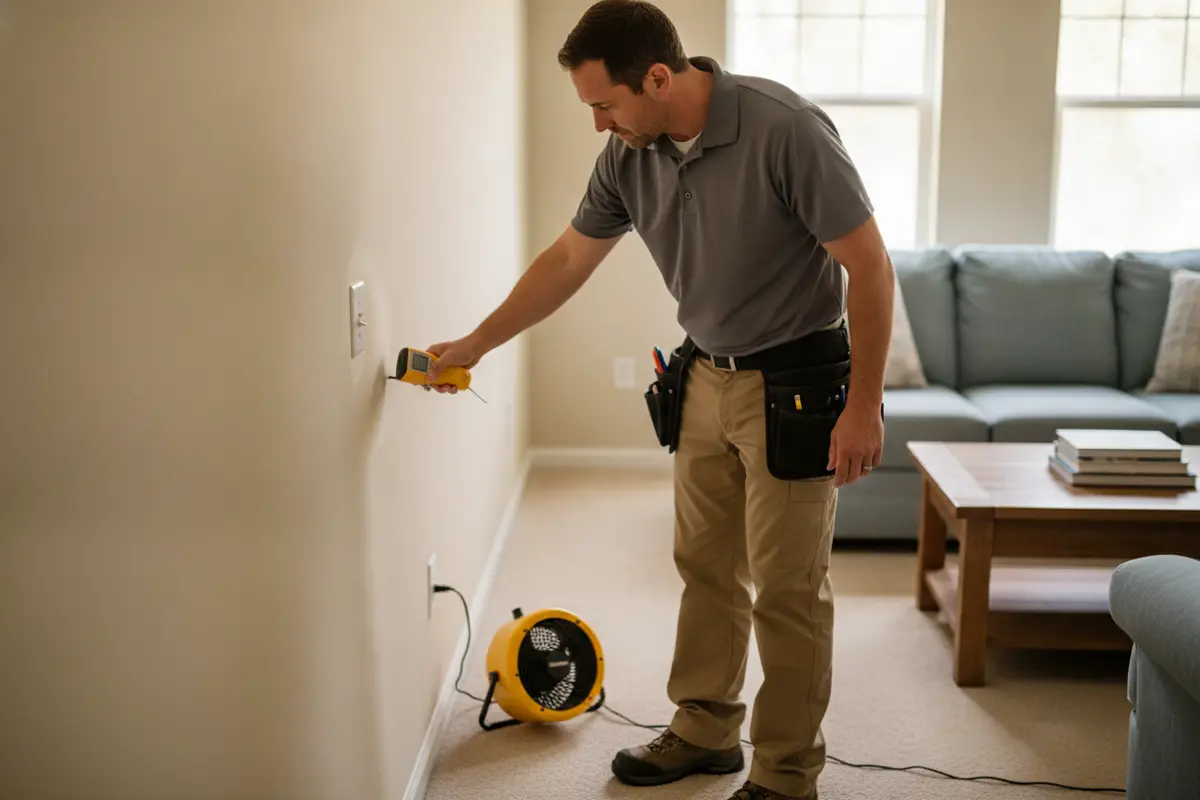
Drying is not just a matter of placing equipment and leaving it in a room. Ask what areas the equipment is intended to address, how access to the affected space will be maintained, and when the next progress check is expected. Keep walkways clear and do not unplug, move, or change equipment settings unless the project team has told you to do so. If you notice a new leak, water spreading, or a change in conditions, report it promptly. At the end of a visit, make sure you know whom to contact with questions and what the next scheduled step is.
In a business or shared building, coordinate access and communication with the people responsible for the property. Let occupants know which areas to avoid and how to report new water or safety concerns. A clear point of contact can reduce confusion while drying and repairs are underway.
The Ohio State University Environmental Health and Safety guidance on indoor flood cleanup and mold remediation describes prompt water cleanup as important for limiting property loss and preventing microbial growth. The document is a general reference, not a site-specific assessment. Conditions at an individual home or business still determine the appropriate response.
What can you do while waiting for help?
Put safety first. If it is safe and you know how, stop the water at its source. Do not touch electrical equipment or enter an area where the floor, ceiling, or water may present a hazard. Keep children and pets away from the affected area.
- Take photos or short videos of the affected area before moving items, if you can do so safely.
- Write down when you noticed the water and what you know about its source.
- Move small, dry belongings out of the affected area only if doing so is safe. Avoid carrying wet, heavy, or potentially contaminated items.
- Do not cover a wet area with rugs or place furniture back onto damp flooring.
- Keep receipts and records for emergency work and any related repairs.
- Ask your insurer how to report the loss and what documentation it needs. Coverage and claim decisions are made by the insurer; no contractor can guarantee approval.
For additional preparation and safety guidance, review iMold’s safety and preparedness resources. If the water has affected many rooms or a commercial space, avoid guessing at the drying plan based only on what is visible. A site assessment can identify questions to resolve before repairs begin.
How do you know what the work should include?
Ask for a clear explanation of the affected areas, the immediate priorities, and the next decision points. A useful work discussion should distinguish what has been observed from what still needs to be checked. It should also explain how the source of the water, drying, and repair work relate to one another.
Questions you can ask include:
- Which rooms and materials are included in the assessment?
- What evidence indicates that water may have moved beyond the visible area?
- What will be removed, moved, cleaned, or dried, and why?
- How will progress be checked, and who will explain the results?
- Which repairs are part of the current scope, and which are separate?
- What records or photos will be provided for my files or insurer?
When comparing proposals, look beyond a short label such as “water cleanup.” Compare the described work, affected locations, assumptions, and exclusions. Ask the provider to explain terms you do not understand before authorizing work. iMold has information about its restoration process and its approach to insurance claims. Coordination and documentation can help with communication, but the insurer determines coverage.
How can water mitigation connect to mold concerns?
Moisture that remains in building materials can create conditions for microbial growth. That is one reason to take water intrusion seriously and determine what got wet. It does not mean mold will always develop after a leak, nor can a brief visual check confirm the condition of every hidden space.
If you see or smell something that raises concern, or if dampness persists after a leak, have the affected area assessed rather than covering the surface or painting over it. The appropriate response can include finding and addressing the moisture source, evaluating impacted materials, and deciding whether cleaning, drying, or removal is warranted. iMold provides mold remediation services; third-party testing can provide independent verification when it is appropriate to the situation.
Mitigation and mold remediation are related but not interchangeable. Mitigation manages water damage and moisture conditions. Remediation addresses a mold concern using a work plan suited to the affected area. If both issues are present, the sequence and scope should be explained so that water control, drying, and any remediation are coordinated.
How should insurance fit into the response?
Contact your insurer promptly and follow its instructions for reporting the loss. Keep your own photos, dates, notes, and copies of estimates or invoices. Ask what documentation the carrier needs and whether it wants to inspect before certain repairs begin. Emergency steps to protect people and prevent additional damage may still be necessary, but document what you can safely document.
Restoration companies can help organize project documentation and communicate about the work. iMold works directly with carriers and uses Xactimate, but this does not promise that a claim will be approved or that every item will be covered. Your policy and the carrier’s review determine coverage. For general company information and customer feedback, see the iMold company overview and customer reviews.
Frequently asked questions
Does mitigation mean the entire property will be rebuilt?
No. Mitigation is aimed at controlling water damage and managing moisture. Repair or rebuilding is a separate part of restoration and depends on the observed damage and agreed scope.
Can I dry the area myself?
A small spill on a surface you can safely reach may be suitable for household cleanup. If water reached concealed spaces, spread across building materials, or presents any safety concern, get professional guidance rather than assuming fans or towels have addressed the full area.
Will mitigation guarantee that mold does not develop?
No one should promise that outcome without accounting for the conditions at the property. Promptly addressing water and evaluating affected materials can help manage moisture, but a property-specific assessment is needed when concerns remain.
Is mitigation the same as water extraction?
Extraction can be one part of mitigation. Mitigation may also include documenting conditions, protecting contents, drying, monitoring, and planning next steps.
Get a clear next step for water damage
When a property is wet, first make sure people are safe and stop the source if you can do so safely. Then get a clear assessment of the affected materials, the mitigation plan, and any repair needs. For water damage in Fort Myers, Cape Coral, Naples, and surrounding Southwest Florida communities, contact iMold for 24/7 emergency service and a practical next step.