iMold offers 24/7 emergency availability for property damage in Southwest Florida. If water is actively entering your home or business, first protect people and avoid electrical or structural hazards; then contact a restoration professional. When you have time to compare water damage restoration contractors, look beyond a fast promise. Ask how the contractor will identify affected materials, explain the work, document the project, and keep you informed.
Need help with water damage? Contact iMold for 24/7 emergency service or a free estimate.
The right contractor should be able to describe a clear process without pressuring you to make decisions before you understand the situation. This guide covers the questions that help you assess a contractor, what information to gather, and how to prepare for the next steps.
What should you look for in a water damage restoration contractor?
Start with basic qualifications and a clear explanation of the work. A contractor should be willing to identify who will assess the damage, describe the proposed response, and explain how progress and any changes will be communicated. Ask for the company’s licensing and insurance information and confirm that the credentials apply to the work being discussed. Relevant training and experience matter, but so does the ability to explain what those qualifications mean for your specific project.
Local experience can also be useful. Southwest Florida properties face water intrusion from a range of sources, including plumbing failures, roof leaks, and storms. A contractor familiar with the region should still assess your property rather than assume that every wet room or building needs the same plan. For more context on iMold’s local background and approach, see about iMold.
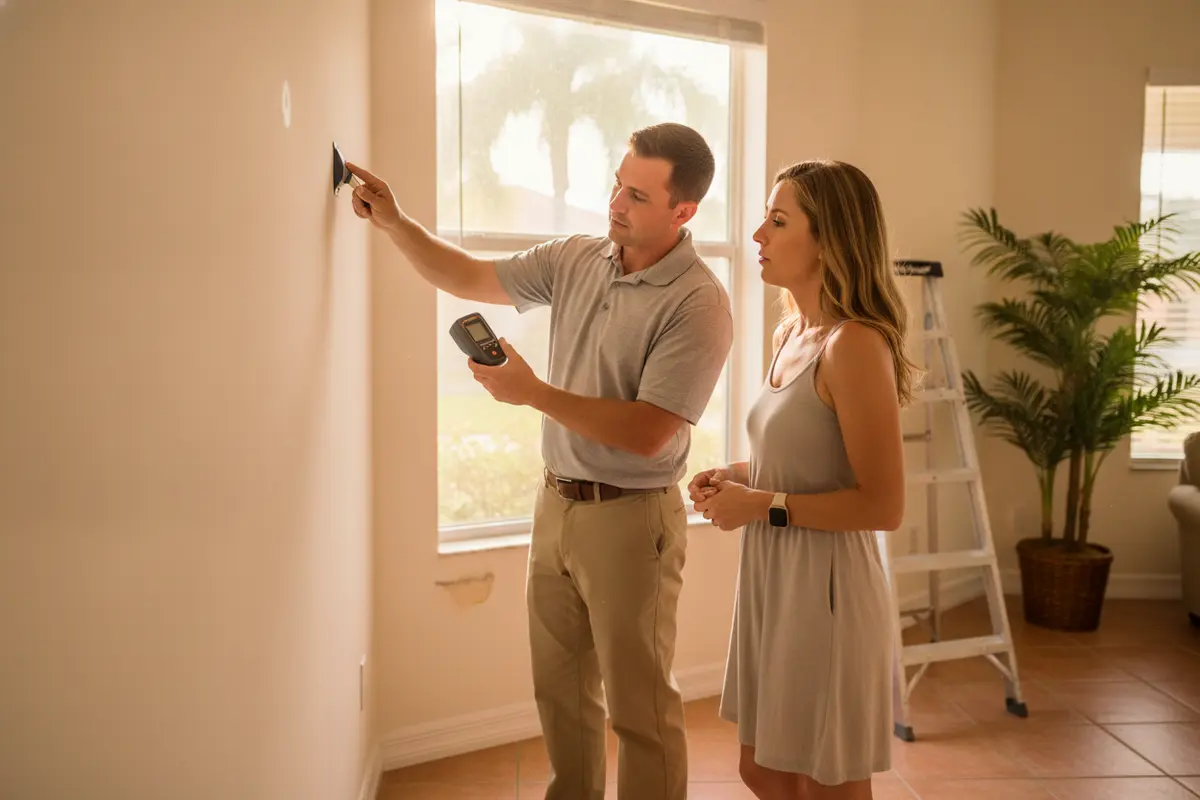
For example, a storm-related roof leak may leave a ceiling stain while moisture remains in insulation or a wall cavity. A contractor may use moisture meters or thermal imaging to check nearby materials before deciding whether the next step is drying, removal, or repair. That finding can change the scope, which is why a written explanation matters.
Listen for a practical, evidence-based conversation. A reliable professional should distinguish what is known from what still needs assessment. Be cautious of a contractor who makes sweeping claims before seeing the affected area, gives guarantees about a result that depends on conditions they have not inspected, or cannot explain why particular work is proposed.
What questions should you ask before work begins?
You do not need to know restoration terminology to make an informed choice. Ask the contractor to explain the plan in plain language. These questions can help you understand the scope and the working relationship:
- What areas and materials do you believe are affected? Ask what the assessment is based on and whether other areas may need checking.
- What is the immediate priority? Find out whether the source of water has been addressed and what steps are intended to limit further damage.
- What work do you recommend, and why? Ask for the purpose of each major step, including any removal, drying, cleaning, or repair.
- How will you track progress? Ask what observations or measurements will be used and how findings will be shared with you.
- Who will be my point of contact? Learn how to reach the project contact and how updates or decisions will be handled.
- What should I move, avoid, or leave in place? Get instructions for protecting belongings and keeping people away from unsafe areas.
- What is included in the written estimate or work authorization? Ask how the scope, exclusions, and approval of additional work will be recorded.
It is reasonable to ask for a written explanation you can review. If an answer is unclear, ask the contractor to restate it without jargon. Do not sign an authorization you do not understand. In an emergency, you may need immediate action to protect the property, but you can still ask what work is being authorized now and what decisions will come later.
How can you compare restoration plans fairly?
Comparing contractors is more useful when you compare the proposed work, not just a short summary or a headline price. A quote may describe different areas, assumptions, or services from another. Ask each company to clarify the same basics, then look at whether the scope is understandable and how the contractor will document changes.
| What to compare | Questions to ask | Why it matters |
|---|---|---|
| Assessment | Which rooms and materials were checked? What remains uncertain? | Helps you see whether the proposed scope reflects the observed conditions. |
| Work plan | What steps are proposed, and what is each step intended to do? | Lets you compare the substance of plans rather than labels alone. |
| Documentation | What notes, photos, or progress records will be provided? | Creates a clearer record for project decisions and discussions with your insurer. |
| Communication | Who is the contact, and how will changes or questions be handled? | Sets expectations for updates during a stressful, changing situation. |
| Estimate and authorization | What is included, excluded, or subject to approval if conditions change? | Clarifies the scope before work proceeds and helps prevent misunderstandings. |
Do not assume that two estimates are directly comparable because their totals or descriptions look similar. Ask for clarification when one plan includes work that another does not. A contractor should be able to explain its recommendations and tell you when more information is needed. Avoid choosing based only on the lowest number if the scope, documentation, or responsibilities are unclear.
What should a written restoration plan explain?
A written plan or work authorization should help you understand the current assessment and the proposed response. The exact documents vary by project, but look for a plain description of the affected areas, the work to be performed, and any important assumptions. Ask how the contractor will inform you if new conditions are found after work begins and how approval for a revised scope will be handled.
Water damage projects may involve more than visible water. The contractor should explain how it will assess affected materials and monitor progress, rather than relying on appearance alone. Ask what findings would change the plan and what milestones the team will use to discuss next steps. If the contractor recommends removal or repair, ask which condition supports that recommendation and whether the decision can be documented.
It is also helpful to clarify what is not part of the restoration work. Emergency mitigation, cleaning, and later repairs can be separate parts of a property recovery. Ask who is responsible for each part, whether additional trades are anticipated, and how the handoff will work.
Ask what the contractor expects from you during the work. Will anyone need access to rooms or utility areas? Should particular items stay out of the work zone? Find out how the team plans to protect unaffected areas and where equipment or materials may need to be placed. If occupants, customers, or staff need access to the building, discuss that early rather than assuming all spaces can be used as usual.
A project plan is not a promise that no new information will emerge. Water can travel beyond the point where it first appeared, and opening an area may reveal conditions that were not visible during the initial walk-through. Ask the contractor to contact you before expanding the agreed scope whenever practical, explain what was found, and document the reason for the recommendation.
Clear communication helps you make decisions as the facts develop. For a business property, consider who can authorize work, who should receive updates, and how the affected space will be managed while work is underway. Designate a point of contact who can answer access questions and share relevant building information. For a home, decide who in the household should receive project updates and keep children and pets away from restricted areas. These practical arrangements can prevent confusion without requiring you to manage technical work yourself.
iMold describes its broader restoration process and offers water damage restoration services for Southwest Florida property owners.
How do insurance and documentation fit into the decision?
Your insurer and your restoration contractor have different roles. Ask your insurance company how to report the loss, what policy or claim requirements apply, and what documentation it needs. Keep copies of claim communications and records you receive. Do not assume that an insurer has approved a particular scope simply because a contractor has discussed it with you.
Ask a prospective contractor how it documents the affected areas, work performed, and changes discovered along the way. Clear records can help you explain the condition and the work to your insurer, but coverage decisions are made under your policy and by your insurer. Avoid relying on anyone’s promise that a claim will be covered or paid in a particular amount.
iMold works with insurance carriers and uses Xactimate in its restoration operations. You can read more about its insurance claim support. For your own claim, contact your carrier directly with policy-specific questions and keep a dated record of conversations and documents.
What can you do while waiting for a contractor?
First, put safety ahead of cleanup. Keep people away from water near electrical equipment, sagging ceilings, or areas that seem structurally unsafe. If you cannot safely reach a shutoff or the source of the water, do not take risks. Contact the appropriate utility or emergency service when needed, and follow guidance from qualified professionals.
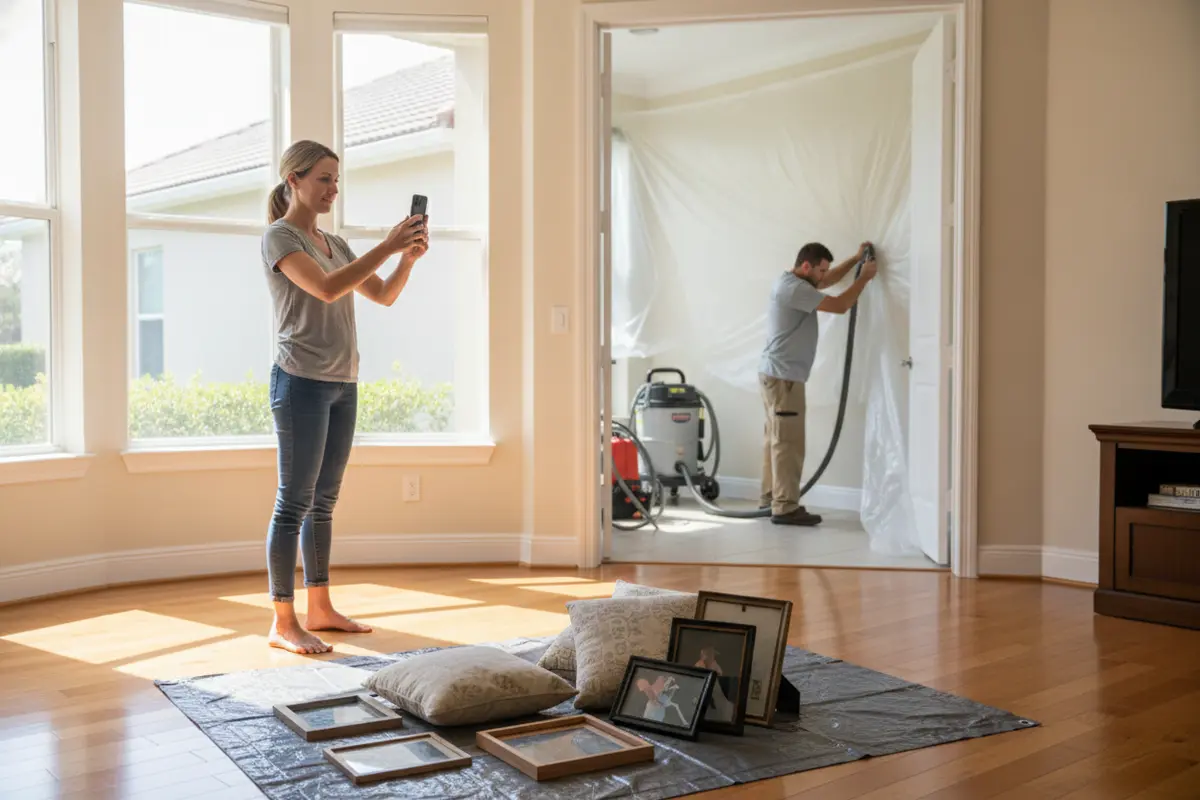
If it is safe, stop the water source or arrange for it to be stopped. Take photos or video of affected areas and damaged belongings before moving or discarding items, when doing so does not put anyone at risk. Make a brief note of when you first noticed the problem and what you have done so far. Save receipts for reasonable emergency expenses and follow your insurer’s instructions about documentation.
Move people and pets away from affected spaces. Avoid using household fans or equipment around standing water or electrical hazards. Do not begin cutting into walls or removing materials before you understand whether it is safe and whether your insurer or contractor needs to document the conditions. If the situation is active, see iMold’s emergency response information or steps to take after a pipe bursts.
Water and mold concerns can overlap, especially when damp materials remain. Do not assume that every water event has caused mold, but do take persistent moisture or a musty odor seriously and ask for an appropriate assessment. iMold offers a no-cost visual mold inspection and estimate; learn about its mold remediation services. For general information about mold, moisture, and indoor air quality, see the U.S. Environmental Protection Agency.
What happens after you choose a contractor?
Before work proceeds, confirm the immediate scope, how you will receive updates, and whom to contact with questions. Ask the project contact to explain any change in conditions and to document why the plan needs to change. Keep a copy of the estimate or authorization and note when you approve additional work. If you are unsure about a recommendation, ask for the reason and take time to understand it when the situation allows.
During the project, keep communication direct. Tell the contractor about areas you have noticed, previous leaks, or repairs that may be relevant. Ask for a summary of progress and what remains. When work is complete, ask what was done, whether any follow-up or separate repair is still needed, and what records are available. The goal is not to oversee every technical detail yourself; it is to know what is happening and where the project stands.
Reviews can offer useful context about other customers’ experiences, but they do not replace a project-specific assessment or written scope. You can read iMold customer reviews and visit the Southwest Florida service areas page to see where the company works.
Need help deciding what to do next? Contact iMold for 24/7 emergency service or a free estimate.
Frequently Asked Questions
Should I call a contractor before my insurance company?
If water is actively damaging the property, prioritize safety and prompt action to limit additional damage. Notify your insurer as soon as you can and follow its reporting instructions. Ask the restoration contractor what immediate work is proposed and keep a record of what is authorized.
Do I need more than one estimate?
When conditions allow, comparing plans can help you understand scope and communication. In an urgent situation, delaying reasonable steps to protect the property may not be practical. Whether you compare one or several contractors, ask for a clear description of the proposed work and clarify how changes will be approved.
Can a contractor guarantee that insurance will cover the work?
No contractor should substitute for your insurer’s coverage decision. Coverage depends on your policy and the facts of the claim. Ask the contractor for project documentation, and ask your insurance company about coverage, deductibles, and claim requirements.
What if I also notice a musty odor?
Tell the contractor what you have noticed and when. A musty odor does not by itself identify the source or extent of a problem, so ask whether further assessment is appropriate. If mold is a concern, a no-cost visual mold inspection and estimate may help you understand the next step.
Choosing water damage restoration contractors is easier when you can understand the assessment, scope, documentation, and communication plan. If water is still entering or the property may be unsafe, act on safety first and seek qualified help promptly.