When water reaches flooring, walls, ceilings, or enclosed spaces. The visible puddle is only the beginning of the assessment. iMold Cleaning and Restoration provides 24/7 emergency water-damage response across Southwest Florida. Helping homeowners and businesses move from extraction toward a documented restoration plan.
Complete structural drying services should include moisture assessment, water extraction, targeted air movement, dehumidification, material-specific decisions, and monitoring that confirms affected areas are dry. The EPA recommends combining extraction, dehumidification, and fans, while also checking hidden areas such as underflooring and wall cavities: EPA guidance.
The right provider does more than place equipment and leave it running. Ask how the scope will be measured, adjusted, documented, and connected to repairs, insurance coordination, and final verification. Those details provide a practical way to compare options before work begins.
What Should Structural Drying Services Include?
A complete structural drying service is more than removing visible water or placing a few fans in a wet room. It is a controlled response that identifies where moisture traveled, removes it from affected materials and cavities, and verifies conditions before the property moves into repair. The right scope should match the source of the water, the building materials involved, and whether the property is residential or commercial.
Assessment before equipment placement
The provider should inspect the affected area, identify potential hidden moisture, and document the condition of floors, walls, ceilings, cabinets, and contents. A surface that feels dry may still hold moisture below flooring or inside a wall cavity. The U.S. Environmental Protection Agency advises checking underflooring and evaluating wallboard based on swelling and seam condition rather than assuming every material should be removed.
Extraction, controlled drying, and monitoring
Depending on the situation, the work may include water extraction, air movement, dehumidification, and adjustments as readings change. EPA guidance identifies extraction, dehumidifiers, and fans as core responses for wet carpet and backing. A professional service should also explain where equipment will be placed, what areas it is addressing. And how progress will be measured. iMold uses industrial extraction equipment, high-velocity air movers, and commercial dehumidifiers as part of its emergency response capabilities.
Material decisions and a documented handoff
Drying is only one part of a complete plan. The provider should explain which materials can be restored, which require removal, and what repairs or cleaning may follow. For a business, this documentation supports decisions about safe reoccupation and continuity. The EPA notes that professional assistance may be needed to dry an area quickly and thoroughly when the size of the loss or available resources makes do-it-yourself work impractical. For a closer look at the technical sequence, review structural drying after water damage, then compare providers by their assessment, monitoring, and documentation practices rather than equipment claims alone.
How to Compare Structural Drying Services in Southwest Florida
When water reaches flooring, walls, cabinets, or other building materials, compare the scope of work rather than the equipment list alone. A useful provider should explain what was assessed, how moisture will be tracked, and what happens after the drying phase. The right choice can differ between a small, isolated spill and a loss involving concealed cavities or several materials.
| Evaluation factor | Extraction-only help | Equipment rental or self-directed drying | Monitored professional structural drying |
|---|---|---|---|
| Assessment | Focuses on removing visible standing water. The full affected area may not be mapped. | Relies on the property owner to identify materials, moisture paths, and safety concerns. | Begins with an assessment of affected materials, moisture conditions, and accessible or concealed areas. |
| Equipment | May remove surface water without providing a complete drying setup. | Provides equipment, but placement and adjustments depend on the user’s understanding of airflow and humidity. | Combines extraction, air movers, and commercial dehumidification as conditions require. |
| Hidden-moisture checks | Usually limited unless specifically requested. | May be difficult without moisture meters, thermal imaging, or experience interpreting readings. | Uses measurements and appropriate inspection methods to check walls, floors, cavities, and other risk areas. |
| Documentation | May provide a basic receipt or service note. | Records are generally the owner’s responsibility. | Documents findings, equipment, readings, adjustments, and conditions relevant to insurance and repair decisions. |
| Safety and next steps | May not address electrical, material, or indoor-environment concerns beyond extraction. | Requires the owner to recognize hazards and decide when materials need repair or replacement. | Includes safety-focused recommendations and a clearer handoff to cleaning, repairs, or reconstruction when needed. |
For Southwest Florida properties, ask whether the company can coordinate the complete path from water removal through verified drying and repair planning. A service that measures conditions and explains its findings gives homeowners and businesses better information than a setup based only on visible dampness.
Which Equipment and Measurements Matter?
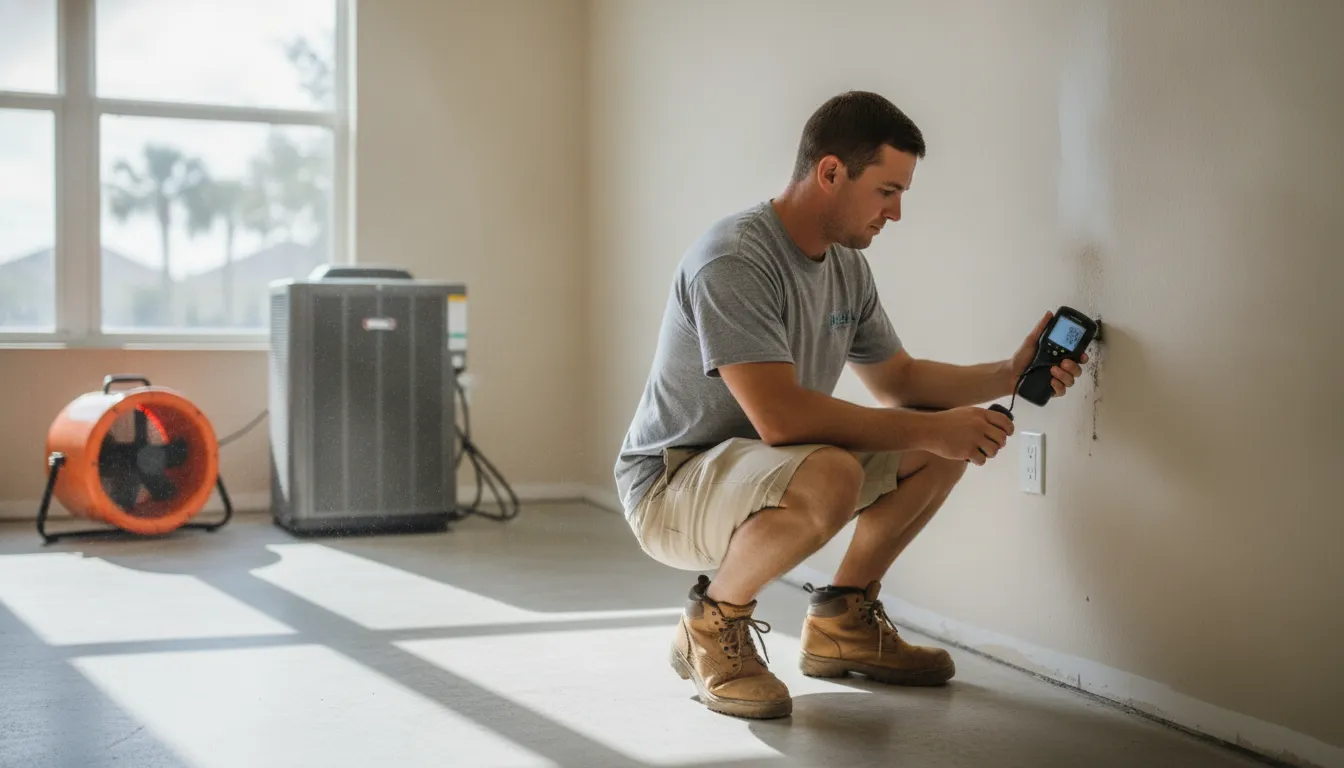
Good drying decisions come from measurements, not from how dry a surface feels. A professional should use moisture meters to check affected building materials and compare readings with unaffected areas. That helps identify whether drywall, flooring, trim, or other porous materials still hold moisture below the visible surface.
Humidity readings add another layer of context. If the indoor air remains humid, materials may continue absorbing moisture even after standing water is removed. Thermal imaging can help locate temperature differences that suggest concealed moisture or areas that need closer inspection. It does not replace direct moisture testing, but it helps guide the inspection toward walls, ceilings, floors, and other hard-to-see spaces.
The equipment should match the measurements and the structure. EPA guidance supports using extraction to remove water, dehumidification to reduce ambient humidity, and fans to accelerate evaporation. Read the EPA drying guidance for the underlying recommendations. Air movers create controlled airflow across wet materials, while dehumidifiers remove moisture from the air so that drying can continue.
At iMold, emergency vehicles carry industrial-grade extraction equipment, high-velocity air movers, and commercial dehumidifiers. The team also uses thermal imaging and industrial drying systems as part of its mitigation approach. The important question is not whether a provider owns equipment, but whether technicians place it based on documented readings and adjust it as conditions change.
Ask how often readings are taken, which materials are tested, and what documentation you will receive. A clear record supports informed decisions about drying, repairs, and insurance coordination.
Call 877-771-1699 for 24/7 water damage services
What Does a Complete Drying Plan Check?
A thorough plan is more than placing fans in the wettest room. It connects the water source, building materials, measurements, equipment, and next-stage repairs. Use these checks when comparing structural drying services:
- Source and safety. The provider should identify where the water came from and whether the source is still active. Water categories depend on the source and its chemical or biological contamination, so electrical hazards, unsafe areas, and contaminated water require appropriate controls before drying begins.
- Affected materials. The assessment should identify flooring, wallboard, insulation, wood, contents, and other materials that may need different decisions. EPA guidance notes that wallboard may be dried in place when seams remain intact and there is no obvious swelling. Swollen wallboard or compromised seams may need removal and replacement. Wet insulation may also require replacement.
- Hidden moisture. Look beyond visible staining. The plan should address underflooring, wall cavities, cabinets, and areas where water can travel out of sight. EPA specifically advises checking whether underflooring is dry and ventilating wall cavities when possible.
- Equipment placement. Extraction should remove standing water, while dehumidification and air movement support evaporation and moisture control. Equipment belongs where it serves the affected materials, not simply wherever there is open floor space.
- Monitoring and adjustments. Ask how moisture readings, humidity, temperature, and affected areas will be checked. A complete plan should change as conditions change, rather than treating equipment placement as a one-time decision.
- Documentation. Request a clear record of affected areas, readings, equipment, material decisions, and site visits. This gives the property owner and insurer a common basis for evaluating the work.
- Repair handoff. Drying is not the same as rebuilding. For commercial properties, the CDC recommends evaluating water- and wind-damaged facilities before deciding whether to restore and reopen. Then thoroughly drying, repairing, cleaning, and restoring salvageable materials to safe function: CDC facility guidance.
How Long Can Structural Drying Take?
There is no responsible one-size-fits-all answer. Structural drying may take longer when water has reached several rooms, flooring layers, wall cavities, insulation, or wood framing. The original water source also matters. A limited supply-line leak presents a different challenge from storm intrusion, an ongoing plumbing problem, or water that may carry contaminants.
Materials affect the schedule as well. Concrete and dense wood can hold moisture after surfaces feel dry, while carpet backing, drywall, insulation, and upholstered contents may require different decisions. EPA guidance notes that wallboard may sometimes be dried in place when seams are intact and there is no obvious swelling. Wet insulation, or swollen and damaged wallboard, may need removal rather than continued drying. See the EPA water-damage guidance for material-specific considerations.
Humidity, ventilation, building temperature, and the amount and placement of equipment also influence progress. Extraction removes standing water, while air movers and dehumidifiers help manage moisture in the air and materials. A professional team adjusts that setup as conditions change instead of treating equipment placement as a fixed formula.
Most importantly, completion should be based on moisture readings and documented comparisons, not a calendar deadline or a dry-looking surface. Monitoring can reveal moisture beneath flooring or inside cavities and helps determine when the affected structure is ready for repair. If water intrusion is active, iMold offers 24/7 emergency water damage response throughout Southwest Florida.
What Should Homeowners and Businesses Ask Before Hiring?
When water damage affects a home or business, the right provider should offer more than equipment delivered to the property. Ask questions that reveal whether the company can assess the full scope, document its work, and guide the property toward a safe handoff.
What qualifications and experience do you bring?
Confirm that the provider is licensed, bonded, and insured. Ask which technicians will perform the assessment and whether the company has relevant certifications for the work involved. For example, iMold can identify its credentials as State Certified General Contractor (CGC1540205) and State Certified Mold Remediator (MRSR2170). Local experience also matters. A Southwest Florida provider should understand the construction types, humidity, and weather conditions common in Fort Myers and surrounding communities.
What exactly will you inspect and document?
Ask whether the scope includes visible and concealed moisture, affected walls and flooring, insulation, cabinets, and other materials. A professional should explain how moisture readings, humidity measurements, equipment placement, and progress checks will be recorded. Do not accept visual dryness as the only proof that drying is complete. Ask what readings or other criteria will support the final decision.
How will you coordinate the work and the claim?
For a business, ask how the plan will limit disruption and identify areas that can safely remain in use. For a homeowner, ask who will explain changes when the inspection reveals additional affected materials. It is also reasonable to ask whether the provider offers insurance coordination for restoration work. Coordination can simplify documentation, but it does not guarantee that an insurer will cover every service.
What happens after drying?
Before work begins, ask how you will receive the scope, updates, moisture records, and final documentation. Ask who will explain remaining repairs and the next stage of restoration. iMold’s questions to ask a restoration company guide can help you prepare for that conversation. Clear answers, consistent communication, and a documented handoff are useful signs that a provider is managing the property, not simply running machines.
When Is Professional Structural Drying the Right Choice?
A small, isolated spill on a nonporous surface may be manageable with prompt cleanup. Professional structural drying becomes the safer choice when water is still entering, several materials are wet, or the source is uncertain. The difference is not simply removing visible water. It is identifying where moisture traveled, controlling humidity, and verifying that affected materials are dry enough for the next repair decision.
Situations that call for a professional assessment
- Active intrusion: A burst supply line, storm entry, overflowing appliance, or other ongoing source needs to be stopped and assessed before drying can be effective.
- Multiple or absorbent materials: Water can move into flooring, wallboard, insulation, cabinets, and underflooring. EPA guidance notes that wallboard may sometimes be dried in place when it remains intact, while swelling, damaged seams, or wet insulation can change the plan.
- Concealed moisture: Dampness behind walls, beneath flooring, or inside cabinets may not be visible. Moisture readings and thermal imaging can help identify areas that deserve closer attention.
- Uncertain water source: If you cannot confidently identify the source or water quality, avoid disturbing the area until a qualified restoration professional can recommend appropriate precautions.
- Commercial disruption: A wet office, retail space, or other facility may need an organized evaluation before reopening. The CDC recommends evaluating damaged facilities and thoroughly drying, cleaning, repairing, and restoring salvageable materials.
iMold Cleaning and Restoration provides 24/7/365 emergency response from its Fort Myers base, serving communities throughout Southwest Florida. Coverage extends across the region, but response timing can depend on location, conditions, and current demand. The team can coordinate assessment, drying, documentation, and the transition into repairs without treating every property as though it has the same scope.
When water may have reached building materials or business operations, getting an informed assessment early can reduce guesswork about what should happen next.
Call 24/7 Emergency Service at 877-771-1699
Frequently Asked Questions
What is applied structural drying?
Applied structural drying is the controlled removal of moisture from building materials, contents, and concealed areas after water intrusion. A complete service combines extraction, air movement, dehumidification, moisture measurements, and monitoring. The goal is not simply to make surfaces feel dry, but to verify that affected materials are ready for the next repair decision.
How long does the structural drying process take?
There is no responsible fixed timetable for every property. The duration depends on the amount and source of water, affected materials, weather, ventilation, building construction, and how well equipment performs. A professional should adjust the plan based on repeat moisture and humidity readings rather than removing equipment because a surface looks dry.
Can water-damaged hardwood floors be dried without replacement?
Sometimes, but the answer depends on the type of wood, the extent of saturation, swelling, cupping, and conditions below the flooring. The technician should measure the floor and surrounding materials, inspect concealed moisture, and document whether controlled drying is realistic. Replacement may be necessary when materials are significantly damaged or cannot be restored safely.
Can I stay in my home while the drying equipment runs?
That depends on the affected area, the water source, equipment placement, noise, electrical conditions, and whether safe access can be maintained. Ask the restoration professional to explain which rooms are usable, whether circuits need to be isolated, and what precautions occupants should follow. Do not operate or move drying equipment without guidance.
How do I choose a water restoration company?
Look for a licensed, bonded, and insured provider that explains the scope, uses appropriate measurements, documents progress, and communicates the repair handoff. Ask about insurance coordination, credentials, and who will verify the final drying condition. For active water intrusion in Southwest Florida, iMold offers 24/7 emergency service and serves the surrounding region.
Get Started With the Right Drying Support
A clear assessment can help you understand what needs to be dried, monitored, and restored after water intrusion. If you need guidance for a property in Southwest Florida, iMold Cleaning and Restoration can help you choose the next practical step. Whether that means requesting a free estimate or addressing an active emergency.
Request a free estimate or 24/7 emergency water damage response