If you are researching mold removal Fort Myers homeowners can rely on, start by looking beyond the visible spot. Mold growth is connected to moisture, so a useful plan considers where water entered, what materials are affected, and how the work area will be protected. iMold provides 24/7 emergency availability and no-cost visual inspections and estimates in Southwest Florida.
Request a no-cost visual inspection
What should you do when you first notice possible mold?
Do not scrub or disturb a large, spreading, or hidden area before the source and scope are understood. Scrubbing can spread debris, while painting over a stain does not correct a moisture problem. If there is active leaking, arrange to stop the water safely and protect belongings without entering an unsafe area.
Make a short record of what you see: the room, approximate size, odor if present, and whether the area feels damp. Note recent leaks, roof or plumbing work, appliance overflows, or flooding. Photos taken from a safe distance can help you describe changes over time. Avoid pulling off baseboards or opening a wall to investigate; that can disturb materials and make the repair harder to plan.
For an urgent leak or active water intrusion, iMold offers 24/7 emergency restoration availability. Do not delay a safety issue while collecting a perfect record. Your first priority is to avoid electrical hazards, unstable ceilings, contaminated water, or other immediate dangers. If you cannot safely reach a shutoff, leave the area and contact the appropriate emergency professional.
Why does moisture investigation come before removal?
Visible growth is only one clue. Moisture may come from a plumbing leak, a roof opening, water that moved under flooring, or persistent condensation. The correct repair depends on finding and addressing the source. Otherwise, damp materials can remain and the problem may return.
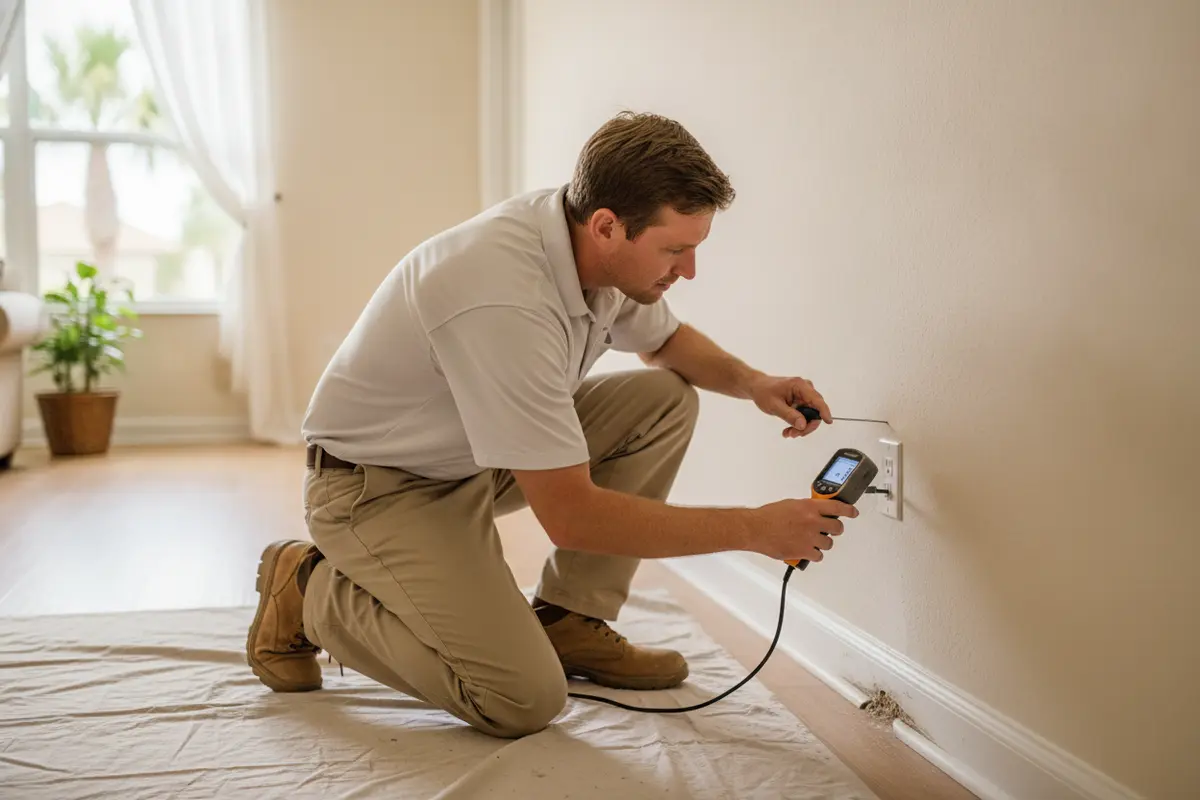
A professional assessment may include a visual review of affected and nearby areas and moisture measurements where appropriate. The purpose is to understand the conditions and define a work plan, not to assume that every mark is mold. Third-party testing can provide unbiased verification when it is appropriate to the project. It is a transparency tool, not a barrier to getting help.
The U.S. Environmental Protection Agency explains that moisture control is central to mold control and recommends drying wet materials promptly. See the agency’s guidance on mold cleanup in your home. This is useful general guidance, not a substitute for evaluating a specific building or deciding how damaged materials should be handled.

For context on professional services in the area, see Fort Myers mold removal and the overview of mold remediation services.
How can you prepare for an inspection?
A few details can make the visit more useful. You do not need to diagnose the problem or move every item. Instead, make the affected area accessible when it is safe, keep children and pets away from a visibly affected space, and share what you know about recent water events. Leave opening walls, lifting flooring, and removing contaminated items to a planned approach.
- Write down when you first noticed the stain, odor, or dampness.
- List any known leak, overflow, roof issue, or previous repair and the date it happened if known.
- Point out rooms on the other side of the wall or above and below the affected area.
- Take clear, dated photos from a safe distance, without disturbing the material.
- Make a note of belongings or business operations that may need protection during work.
For example, a homeowner may see a small ceiling mark after a rain event. The mark alone does not establish how far moisture traveled. The inspection conversation should cover the roof or attic above it, nearby insulation and framing as accessible, and whether the surface remains damp. A different case, such as a slow cabinet leak, may call for attention to the cabinet base, adjacent flooring, and the plumbing source. The point is to connect visible evidence with a plausible water path before selecting removal or repair steps.
How does a mold-removal project usually proceed?
The exact scope depends on the materials and conditions found, but a well-planned job follows a sequence. Work should protect unaffected parts of the property and address moisture as well as affected materials. iMold describes its overall approach as Assess, Contain, Extract, Remediate, and Restore; the work details are tailored to the property.
- Assess: Review the reported area, visible conditions, moisture clues, and nearby materials to define the work.
- Plan containment: Determine how to separate the work zone and reduce the movement of dust and debris into other spaces.
- Prepare and protect: Move or cover belongings as appropriate and establish safe work practices for the materials involved.
- Remove or clean affected materials: The decision depends on the material and its condition. Some items may be cleaned; materials that cannot be appropriately restored may need removal.
- Address moisture: Correct the water source and dry materials as appropriate to the situation, so the remediation plan does not ignore the cause.
- Clean the work area: Use suitable methods and filtration for the project, then review the area and remaining materials.
- Verify and communicate: Review completed work and use independent testing when appropriate to provide an unbiased check.
- Restore: Repair removed finishes and return the area to service after the moisture issue and remediation work are addressed.
Containment is not a one-size-fits-all plastic barrier. The project plan should reflect the location, materials, access, and the need to keep occupants away from work. A contractor should explain what areas are included, what will be protected, and what repairs may follow. In an occupied home, that might mean planning the work around a bedroom or kitchen entrance. In a business, it may mean clarifying which rooms stay open and how staff should route around the work zone.
Ask how changes will be handled if concealed damage is found. Opening a wall may reveal a larger wet area, a separate leak, or materials in better condition than expected. A careful plan records the original scope, explains new findings, and seeks agreement about the next step rather than leaving the owner to infer what changed.
How do cleaning and removal decisions differ?
Porous materials and hard surfaces do not respond the same way. A sound, cleanable surface may be treated differently from a material that has absorbed moisture or is damaged. The table below is a general comparison; an inspection determines what is suitable for a particular property.
| Material or condition | Typical consideration | Useful question to ask |
|---|---|---|
| Hard, intact surface | May be a candidate for careful cleaning, depending on condition and access. | How will the surface be cleaned and checked? |
| Wet or damaged porous material | May require removal if it cannot be effectively restored. | What finding makes removal necessary? |
| Area with active moisture | The water source must be addressed as part of the plan. | How will the source be identified and corrected? |
| Hidden or extensive suspected growth | Scope and containment may require additional assessment before disturbance. | What is included, and how will adjacent spaces be protected? |
Ask for the reason behind a material decision. If removal is proposed, understand what is affected, how the boundary was determined, and what will happen to the exposed area. If cleaning is proposed, ask how the method fits the material and how the work will be reviewed. Clear explanations are especially helpful when multiple rooms or finishes are involved.
What should you ask before work begins?
A clear conversation helps you understand both remediation and any later repairs. Ask the provider to explain the work area, sequence, protection measures, and how changes in scope will be discussed. Confirm who is responsible for addressing the moisture source and whether reconstruction is included or planned separately.
- Which rooms and materials are included in the written scope?
- What steps will protect unaffected parts of the home or business?
- What items should occupants move, and which should remain for the crew?
- How will progress and any unexpected conditions be communicated?
- Is post-work verification appropriate, and who performs it?
- What repairs are needed after remediation, and who coordinates them?
- How will the work area be reviewed before it is returned to normal use?
Property owners dealing with water intrusion may also want to review water damage restoration, since drying and mold concerns can be linked. If repairs are part of the plan, learn about rebuild services. For insurance questions, iMold works directly with carriers and uses Xactimate; the insurance claim information page outlines the related process.
What should you expect from an inspection in Fort Myers?
Southwest Florida homes and businesses can experience leaks, flooding, and humidity-related moisture concerns. Local conditions make it especially useful to identify the source rather than focus only on a stain or odor. An inspection should give you a plain-language explanation of observed conditions and a recommended next step, whether that is further evaluation, moisture correction, remediation, or repair.
iMold has served Southwest Florida for 28 years and offers 24/7 emergency service, mold remediation, water damage work, and reconstruction. The company is licensed, bonded, insured, and IICRC certified. Its no-cost visual inspection and estimate let you discuss the conditions and options before deciding how to proceed. You can read customer reviews or learn more about the restoration process.
For a visit, prepare specific questions rather than trying to arrive at a diagnosis. Ask what was observed, what remains uncertain, what actions are recommended first, and whether any work is urgent for safety or moisture control. If you own a commercial property, also ask how access, business hours, and occupant communication will be handled. For a home, clarify which rooms may be temporarily unavailable and whether personal items need to be moved.
How can you keep a repaired area from getting wet again?
After the source is addressed and remediation is complete, prevention is mainly about noticing water early and correcting recurring conditions. Check under sinks and around appliances periodically. Look at ceilings and walls after a known leak or roof repair. Keep gutters and drainage paths in working order and ensure that bath and kitchen exhaust fans vent as intended. These steps do not replace repairs to a leak, but they can help you notice a new issue sooner.
In humid weather, pay attention to persistent condensation on cold surfaces and dampness in closets or other areas with limited air movement. If a room repeatedly feels damp, do not rely on fragrance or a fresh coat of paint to cover the clue. Identify whether moisture is entering, condensing, or remaining in materials, then address that condition. Where water damage has occurred, ask what drying or monitoring steps are appropriate before finishes are closed or replaced.
Keep a simple record of completed repairs, dates, and any follow-up observations. If a stain returns, compare its location and appearance with earlier photos and contact the appropriate professional. A record helps distinguish a resolved incident from a new leak and makes it easier to describe the history accurately.
Frequently asked questions
Can I clean a small patch myself?
A small area on an appropriate, intact surface may be manageable, but first consider the source and whether the material is damaged. Avoid disturbing extensive growth, hidden areas, or materials that may be unsafe to handle. If it returns or moisture remains, get the area assessed.
Does every suspected mold issue need laboratory testing?
No. The need for testing depends on the question that needs answering and the project circumstances. When independent verification is useful, third-party testing can add an unbiased perspective. A provider should explain why it is or is not being recommended.
Will remediation include rebuilding the wall or floor?
That depends on the scope. Remediation may require removal of some finishes, while reconstruction restores those areas afterward. Ask for the written plan to distinguish cleanup, moisture correction, and repairs.
What if the damage is connected to an insurance claim?
Document what you can safely observe and contact your carrier about claim requirements. iMold coordinates with insurance carriers and uses Xactimate for project documentation. You can ask how the scope and records will be shared during the process.
Get a clear next step for suspected mold
When you are unsure what a stain or musty area means, a careful inspection can help clarify the moisture source, affected materials, and practical options for your Fort Myers property.