iMold provides 24/7 emergency service for water and mold concerns in Naples. With 28 years of local operation, more than 900 Google reviews at 4.9 stars, and services from emergency response through reconstruction, the team can help property owners understand what mold remediation in Naples, FL may involve. A no-cost visual mold inspection and estimate can help clarify the next step.
Get 24/7 emergency help or schedule a no-cost visual inspection
What can lead to a mold concern in a Naples property?
Mold growth is linked to moisture. Before planning cleanup, it is important to look for how water entered or where dampness is lingering. In homes and commercial buildings, possible sources include a plumbing leak, an appliance supply line, water from a roof or window leak, an air-conditioning condensate problem, or water left after an earlier incident. A musty odor, discoloration, bubbling paint, or a soft section of drywall can be a reason to investigate, but a visible mark alone does not show the full extent or source.
In Southwest Florida, air conditioning and indoor humidity are part of the building picture. A clogged condensate drain, a sweating pipe, or a poorly ventilated area may keep a small space damp. Water can also travel behind baseboards, beneath flooring, or into a wall cavity, so the wettest-looking spot is not always the only place that needs attention. It is useful to trace the path from the suspected source rather than treating only the visible surface.
Do not assume that every dark spot is mold, or that a clean-looking surface means the area behind it is dry. Avoid disturbing suspect material while you are deciding what to do. If there is active water intrusion, address the water problem promptly and keep people away from unsafe areas. For water extraction and drying needs, see iMold’s water damage services.
What happens during an assessment?
An assessment starts with the history and the building conditions. Be ready to describe when you first noticed a stain or odor, whether it has changed, and what repairs or leaks have happened nearby. If you know where a shutoff, air handler, or plumbing access is, that context can help the inspection. Photos you have already taken can also show whether the condition is spreading. Do not open walls or remove materials just to prepare for the visit.
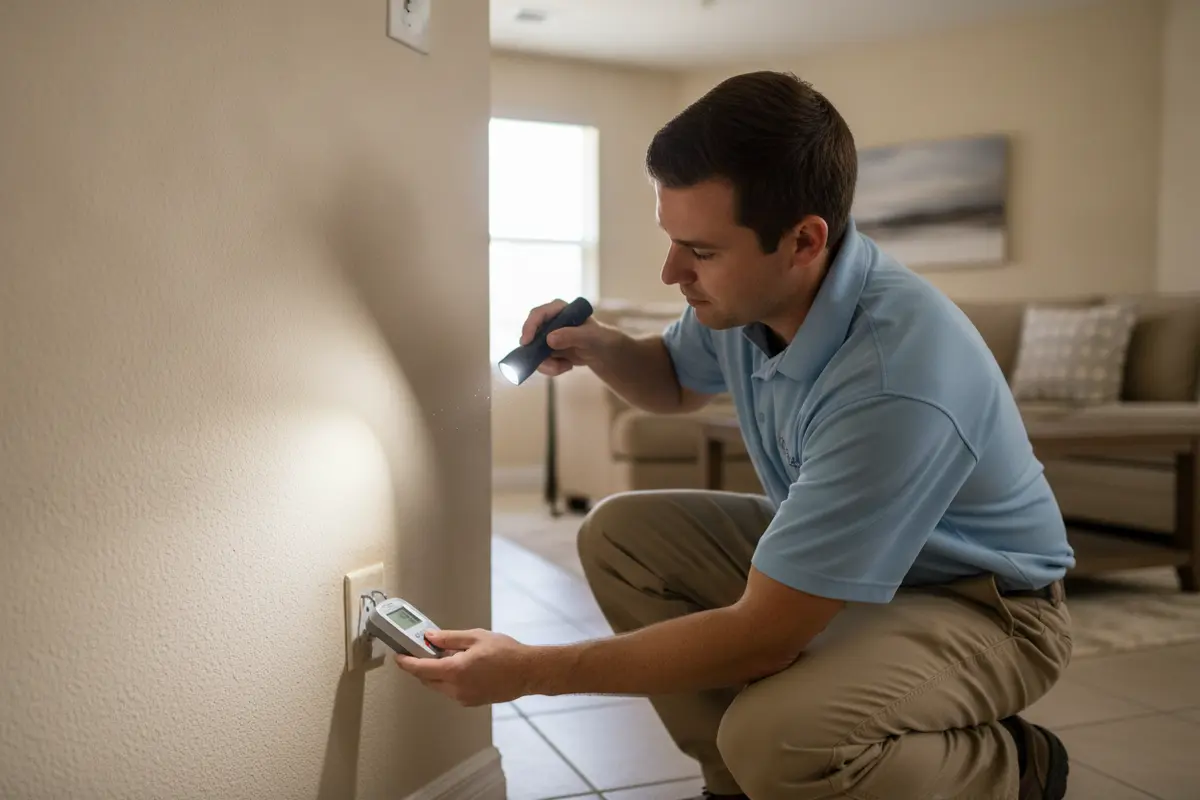
A visual inspection can identify visible conditions and help determine whether more evaluation is appropriate. The professional may look at nearby rooms, building materials, and likely moisture pathways, and use suitable tools to check conditions. An inspection is not the same as a laboratory test and cannot establish every hidden condition. When independent verification is appropriate, third-party mold testing can provide an unbiased perspective; it is a transparency step, not a barrier to remediation.
Ask what was observed, what areas remain uncertain, and what action is recommended to address the moisture source. A useful scope should distinguish the water problem from the cleanup and any repair work that may follow. For an overview of the company’s approach, read iMold’s restoration process. iMold offers no-cost visual mold inspections and estimates, so property owners can discuss observed conditions and next steps without a charge for that visit.
How do containment and remediation protect the work area?
When remediation is needed, the work plan should reflect the affected materials and the way the space is used. Containment separates the work zone from unaffected areas and helps limit the spread of dust and debris during removal and cleaning. The crew may protect surfaces, control access, and use appropriate air filtration and personal protective equipment. The exact setup depends on the property and scope; no single arrangement fits every room or building.
Tell the project team about occupants, pets, sensitive operations, or rooms that must remain accessible. For a business, discuss hours, shared corridors, customer access, and any critical equipment before work begins. For a home, plan where family members can stay while a room is isolated. Keep the agreed boundaries in place, and do not remove barriers or enter the work zone unless the team says it is safe.
Remediation addresses affected materials and visible growth while also requiring attention to moisture. Depending on what is affected, porous materials may need controlled removal, while other surfaces may be cleaned using an appropriate method. Painting over a stain or applying a household product does not resolve a continuing leak or confirm that hidden materials are clean. Ask the contractor to explain what is being removed, what can remain, and how the work area will be cleaned at the end.
iMold describes its process as Assess, Contain, Extract, Remediate, and Restore, supported by a seven-step mold process. The steps give property owners a framework for understanding how an initial observation connects to the work and the repair handoff. iMold is licensed, bonded, and insured, and its stated credentials include State Certified Mold Remediator (MRSR2170) and State Certified General Contractor (CGC1540205).
Before work starts, make sure you understand which areas are included and how access will be controlled. Ask where the containment boundary will sit, how workers will move materials out, and what steps are planned to keep unaffected rooms protected. If the affected space connects to a hallway or shared work area, discuss how the route will be managed. These practical details matter in a condominium, a home with limited room to relocate, or an occupied business. The crew should explain any preparation expected of you and identify items that should stay out of the work zone. If conditions change after materials are opened, ask how the revised scope will be explained and documented before the next phase proceeds.
How does remediation connect to drying and repairs?
Cleanup is only one part of resolving a moisture problem. If water remains in building materials, the source has not been corrected, or damaged materials are left unrepaired, the property may still need attention after remediation. Drying and repair planning should be coordinated with the work so that the affected area can be returned to service in a sensible order.
A typical handoff may include confirming the source has been addressed, checking that affected areas are ready for the next phase, and identifying materials that need rebuilding. The scope might involve drywall, baseboards, flooring, or other finishes, depending on what was affected. Ask which tasks are included in the remediation plan and which belong to restoration, and who is coordinating the sequence. This helps avoid confusion about whether a surface was cleaned, removed, dried, or replaced.
For a project that needs repairs after mitigation, review iMold’s rebuild services. Its specialty cleaning services cover other property cleaning needs. The goal is a clear transition from managing the moisture and affected materials to putting the space back together, without treating cosmetic work as a substitute for resolving the cause.
What should you do before a remediation visit?
Simple preparation can make the conversation more useful without disturbing the area. Keep notes about the timing and any known water event. If it is safe, take a few photos from a distance and record which rooms or surfaces seem affected. Move personal belongings away from the area only if doing so does not require touching suspect materials or entering a restricted space. Do not run fans across visible growth or start demolition on your own.
- Write down when the concern started and whether it has changed.
- Share known leaks, plumbing repairs, roof work, or air-conditioning issues.
- Note rooms that need to stay accessible and any scheduling needs.
- Keep children and pets away from damaged or restricted areas.
- Ask how the scope, containment, moisture source, and repair handoff will be explained.
If water is actively entering the property, contact an emergency restoration provider rather than waiting for a routine appointment. iMold offers 24/7 emergency response. For an industry resource on inspection, cleaning, and restoration, visit the Institute of Inspection, Cleaning and Restoration Certification (IICRC). General industry information is not a substitute for an assessment of a specific property.
How can you compare the next steps?
The right next step depends on whether there is active water, visible suspect growth, or a need to repair an area after the source is controlled. This table can help organize the conversation. It is not a do-it-yourself diagnosis or a substitute for a site-specific scope.
| Situation | Useful next step | What to clarify |
|---|---|---|
| Water is actively entering or a room is wet | Contact 24/7 emergency service and limit access to unsafe areas | Where the water is coming from, what needs immediate protection, and how drying will be handled |
| A stain, odor, or suspect growth is present but no active leak is known | Arrange a no-cost visual inspection and estimate | What was observed, whether moisture is present, and whether further evaluation is appropriate |
| Remediation is proposed | Review the written scope and work-zone plan | What is contained, cleaned or removed, how moisture is addressed, and what remains outside scope |
| Cleanup is complete but finishes are damaged | Discuss the restoration handoff and repair scope | Which materials need rebuilding and what must be confirmed before finishes are installed |
For a property-specific estimate, speak with the team about the conditions observed rather than relying on a generic checklist. iMold also works directly with insurance carriers, uses Xactimate, and has preferred vendor status with major insurers. Coverage and claim decisions are made by the insurer and depend on the policy and circumstances; a restoration conversation is not a promise of coverage. The insurance claims information page can help explain the coordination process. Keep copies of photos, written scopes, and communications for your records.
How should Naples property owners choose a provider?
Choose a provider who explains the observed conditions in plain language, describes how moisture will be handled, and gives you a clear scope before work proceeds. Ask how the team will protect areas outside the work zone, what the plan says about removal and cleaning, and how questions or changes will be documented. Confirm that the company is appropriately licensed and insured for the work. A provider should be able to explain when third-party testing could be useful and how the results would inform the plan.
Local familiarity can matter because the provider needs to work in the property’s actual context, but location alone is not a substitute for a clear process. iMold serves Naples and other Southwest Florida communities. Find the Naples service area information and learn more about the team through its company background. You can also read customer feedback on the iMold reviews page.
Frequently Asked Questions
Does a visual inspection confirm what is behind a wall?
No. A visual inspection can identify visible conditions and guide next steps, but it does not reveal every hidden area or confirm all materials. If more information is needed, the professional can explain whether further evaluation or independent testing is appropriate.
Should I clean a small patch before the inspection?
It is usually better not to disturb suspect material before discussing it with a professional, especially if the moisture source is unknown or the condition may extend beyond the visible patch. Take a photo from a safe distance, note when you noticed it, and ask for guidance.
Will mold remediation include rebuilding the damaged area?
Not necessarily. Remediation and reconstruction are related but distinct parts of a project. Ask for a clear written scope that identifies cleanup, drying, removal, and repairs, and how the transition between phases will be coordinated.
Can insurance pay for mold remediation?
Coverage depends on the policy, cause of damage, and the insurer’s decision. Document what happened and contact your carrier with coverage questions. iMold can coordinate with carriers and provide project documentation, but cannot guarantee a claim outcome.
Request a no-cost visual inspection and estimate
Get a clear next step for your Naples property.
Whether you have active water, a persistent odor, or a damaged wall after a leak, a no-cost visual inspection and estimate can help you understand what was observed and what should happen next. Contact iMold for 24/7 emergency service or to schedule a visit in Naples.