

iMold is available 24/7 for emergency restoration needs. When comparing a mold remediation company, you need more than a promise to clean a visible spot: you need a clear explanation of what may be causing the problem, how the work will be contained, and what happens after removal. Southwest Florida property owners also need a team that understands local moisture conditions and can respond when water damage is part of the issue. iMold provides no-cost visual mold inspections and estimates, along with restoration support in the region.
Request a no-cost visual inspection and estimate
What should a mold remediation company help you understand?
A useful first conversation should clarify the concern and the next decision, not pressure you into a particular scope. A company should listen to what you have observed, ask when and where it appeared, and explain what it can and cannot determine through a visual assessment. If there has been a leak, storm intrusion, or persistent dampness, share that history too. The visible area may not tell the whole story about how moisture reached the material.
Ask the company to explain its recommended next steps in plain language. That may include an inspection, moisture assessment, containment, removal of affected material, cleaning, drying, or repairs, depending on the property and findings. A responsible plan should connect the work to the observed conditions rather than assuming every home has the same problem.
Florida’s Department of Health explains that molds are types of fungi and notes the state’s mold assessor and remediator licensing framework. You can review its Florida mold information as background while discussing qualifications and scope with a provider.
How can you compare mold remediation companies?
Compare the clarity of the answers, the proposed work, and how the company communicates—not just the first line of a quote. Ask each provider to describe what was observed, what remains uncertain, what work is proposed, and how the team will protect unaffected areas. If two proposals differ, ask what findings or assumptions account for the difference.
| What to compare | Questions to ask | What a clear answer includes |
|---|---|---|
| Evaluation | What did you observe, and what needs further assessment? | Findings are separated from assumptions, with any limits explained. |
| Work scope | Which materials or areas are included, and why? | The areas and tasks are described in writing, along with exclusions. |
| Containment and cleanup | How will the work area and nearby contents be managed? | The plan explains how affected areas will be separated and cleaned. |
| Moisture source | What should happen about the water or moisture source? | The plan identifies any known source and explains the needed next step. |
| Completion | How will you explain that the agreed work is complete? | You receive a description of completed work and any remaining actions. |
| Insurance | What records may help me discuss the loss with my carrier? | The provider explains available documentation without promising coverage. |
Look for answers that are specific to your property. A broad statement such as “we will take care of everything” is not a substitute for a written scope. Likewise, a quote should not leave you guessing about which rooms, materials, or follow-up tasks are included. If you have questions about the sequence, ask the company to walk through its restoration process before work begins.
What should a written remediation plan include?
The exact scope depends on the conditions found. Still, you should be able to understand the plan before agreeing to it. Ask for the affected areas, the general tasks, any access or preparation needed, and the steps for addressing the moisture source. The company should also explain how the work area will be managed and what kind of cleanup is included.
- Observed conditions: Which locations and materials prompted the recommendation?
- Work boundaries: What is included, and what is not included in the proposed work?
- Protection measures: How will workers manage the work area and nearby belongings?
- Moisture control: Is there a leak or other source that needs attention in addition to removal?
- Communication: Who will answer questions if conditions change or more work is proposed?
- Closeout: What information will you receive about the work completed and any recommended repairs?
Some projects uncover conditions that were not visible at the start. Ask how the company will document a change, explain its effect on the scope, and get your approval before proceeding. This helps keep decisions understandable as the work develops.
How can you assess the clarity of a proposed scope?
Before comparing totals, read each proposal line by line and check whether the providers are describing the same work. One plan may include removal and cleaning in a specific room, while another may include additional material removal or follow-up work. If the scope is not comparable, the numbers alone cannot tell you which plan fits the findings. Ask the providers to identify differences in work areas, preparation, cleanup, and tasks that may be handled by someone else.
It can help to turn a verbal explanation into a short written checklist. For example, note the affected room, the material being addressed, the planned containment approach, the known moisture source, and any separate repair needed. Then ask the company to confirm whether your notes match its recommendation. This simple check can reveal misunderstandings before furniture is moved or work starts.
Also ask what would happen if the team finds a different condition after opening an area. A clear answer explains how the new finding will be documented, who will discuss it with you, and whether you will review a changed scope before additional work proceeds. You should have a practical way to ask questions throughout the project, not only at the initial estimate.
Why does the moisture source matter?
Cleaning or removing affected material does not, by itself, address water that continues to enter or collect in the area. A complete response considers how moisture got there and what needs to change to reduce the chance of recurring dampness. The cause might be an active plumbing leak, roof or window intrusion, or another source that needs a separate repair. The right next step depends on the property and the inspection findings.
If water damage is part of the situation, ask whether mitigation and drying need to happen alongside mold-related work. iMold also provides water damage restoration, so property owners can discuss connected restoration needs in one conversation. For urgent water intrusion, review the company’s 24/7 emergency response information and explain what is happening when you call.
Do not cover a damp or visibly affected area before you understand the condition. If the moisture source is known and safe to address, take reasonable steps to stop additional water from entering. Avoid disturbing materials if you are unsure what is involved. A professional can help determine the appropriate next action.
What should you ask about inspection and testing?
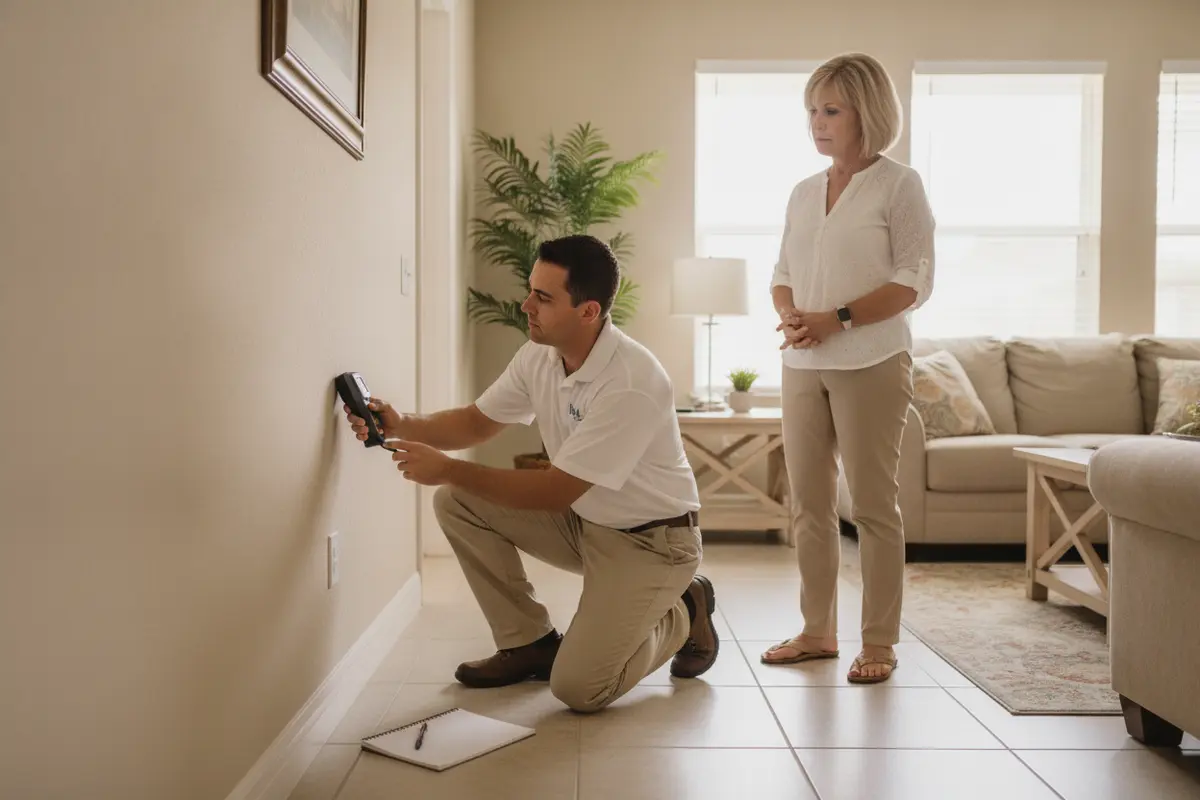
A visual inspection can help identify visible conditions and guide a discussion about possible next steps. It does not automatically answer every question about hidden areas or the exact type of material present. Ask what the inspection covers, what it cannot establish, and whether additional evaluation is recommended. You should understand the reason for any suggested testing and who will perform it.
Third-party testing can provide an additional, independent perspective when testing is appropriate. Ask how the results would inform the plan, who will interpret them, and whether testing is intended before work, after work, or for another purpose. Testing is a tool for answering a defined question; it should not be presented as a hurdle without explaining its value.
iMold offers no-cost visual mold inspections and estimates. During a conversation, describe the affected location, when you first noticed it, any related water event, and whether the condition has changed. These details help the team understand the concern and discuss a practical next step.

How should you prepare before the assessment?
You do not need to diagnose the problem before asking for help. A few observations can make the first conversation more useful:
- Note the locations. Write down which rooms or surfaces are affected and when you first noticed them.
- Describe recent water events. Mention leaks, storm water, appliance issues, or repairs that may be relevant.
- Take photographs if practical. Images can help you remember how the area looked, especially if conditions change before the visit.
- Keep relevant records. Save repair notes, maintenance records, and communications with your insurance carrier.
- List your questions. Include concerns about access, contents, work boundaries, documentation, and communication.
Keep people away from work areas once work begins, and follow the instructions provided by the restoration team. If anyone in the household has a health concern, consult a qualified healthcare professional about personal health questions. A remediation provider can address the property work but should not replace medical advice.
How should a household or business plan for the work?
Think through how the affected area is used each day. In a home, consider whether the work area contains items you need for cooking, sleeping, or caring for children or pets. Ask the provider what should be moved, what can remain in place, and whether the team needs a clear path to the area. Do not move or handle material if you have been told to leave it undisturbed; ask for guidance first.
Businesses may also need to consider staff access, customer areas, deliveries, and continuity of operations. Share any schedule constraints early, and ask whether the work area can be separated from spaces that remain in use. A plan should make clear which areas are affected and what access restrictions apply. The details will depend on the property, scope, and conditions, so avoid assuming that another business’s project timeline or setup will be the same.
For either setting, designate one person to receive updates and keep copies of the written scope, photos, estimates, and change approvals together. This makes it easier to confirm what was agreed, share relevant information with an insurer or property manager, and follow up on any remaining repairs.
How do insurance discussions fit into the process?
Coverage depends on the policy and the specific circumstances, so no restoration company can promise what an insurer will approve. Contact your carrier to understand reporting requirements and ask what documentation it needs. Keep copies of photos, estimates, work descriptions, and relevant communications. Ask the restoration provider what records it can supply to support your discussion.
iMold works with insurance carriers and uses Xactimate for claims documentation. That can help organize information about the proposed work, but your insurer makes coverage decisions under your policy. For more background, see iMold’s information on mold and homeowners insurance claims.
What makes local experience useful?
Southwest Florida homes and businesses can face water intrusion and moisture concerns in different ways. A provider familiar with the area may be better positioned to understand the context you describe and coordinate restoration needs when more than one service is involved. Local knowledge does not replace a property-specific assessment, so still ask for a clear explanation of what the team found and recommends.
iMold has served the region for 28 years and provides mold remediation, water damage restoration, and reconstruction support. The company reports more than 900 Google reviews with a 4.9-star average rating. You can read about the team on the iMold company page, review its customer feedback, and check its Southwest Florida service areas to see whether your community is included.
Choosing a company is a meaningful decision, especially when damage interrupts normal use of a property. Take time to understand the proposed work, ask direct questions, and keep your records together. For general answers to common service questions, visit the iMold FAQ.
Learn more about mold remediation services
Frequently Asked Questions
How do I know whether I need a mold remediation company?
Consider an assessment when you see visible mold-like growth, notice a persistent musty odor, or have had water intrusion followed by ongoing moisture concerns. A professional can evaluate the property and explain whether remediation or another step is appropriate. A visual observation alone does not confirm every hidden condition.
Should I ask for an inspection before agreeing to remediation?
Yes. Ask what the company observed, what the inspection can establish, and why it recommends the proposed scope. If further evaluation or testing is suggested, ask what question it is meant to answer and how the results may affect the plan.
Does homeowners insurance cover mold remediation?
Coverage varies by policy and circumstances. Contact your insurance carrier, review the policy, and ask what documentation is required. Keep records and do not rely on a contractor’s estimate as a guarantee of coverage.
Can water damage and mold remediation be handled together?
They may be connected when moisture has affected building materials. The provider should explain which services are needed based on the assessment and whether the source of water requires separate repair. Ask for the tasks and work areas to be clearly described.
Get clear answers about your property
If you have a mold concern or water damage in Southwest Florida, start with a clear description of what you have observed and ask what the next step should be. iMold is available 24/7 for emergency needs and offers no-cost visual mold inspections and estimates.

