In Cape Coral, a small leak, storm-related intrusion, or lingering indoor moisture can create a mold concern before the damage is easy to see. Waterfront homes and Florida humidity make prompt assessment especially important, but the right response is calm, methodical, and focused on finding the moisture source.
For trusted mold remediation cape coral fl, choose a licensed local team that responds 24/7. Reaches the immediate service zone in about 30 minutes, and spans assessment through restoration. The collaboration starts with a no-cost visual inspection and estimate.
iMold has served Southwest Florida continuously for 28 years and handles mold remediation, water damage, and rebuilding under one roof. The company also serves Lee County as part of its broader restoration services in Southwest Florida. Start by understanding why Cape Coral properties can be especially vulnerable, then consider the signs that call for professional help.
Get a free visual mold inspection in Cape Coral and find out what is really happening in your home.
Why Do Cape Coral Homes Face High Mold Risk?
Cape Coral’s subtropical environment creates several conditions that can support mold growth when moisture enters a home. Warm temperatures, humid air, frequent heavy rain, and water exposure around canals and waterfront properties all make moisture control important. A roof leak, plumbing problem, storm surge. Or slow-drying building material can leave behind damp areas that are easy to overlook, especially inside walls, beneath flooring, or around cabinets.
Waterfront living does not mean a home will develop mold, but it does mean homeowners should respond promptly when a property becomes wet. Air conditioning, ventilation, dehumidification, and fast drying all matter. If moisture remains trapped after a storm or leak, a musty odor, discoloration, or recurring humidity may signal that a professional inspection is warranted. Our restoration services in Southwest Florida are designed to address connected problems, from water damage through remediation and restoration.
Hurricanes and major floods can make the situation more complex. Water may affect drywall, insulation, flooring, furniture, and other porous materials at the same time. The CDC notes that cleaning mold after a small leak or major flood can present health and injury risks. So homeowners should use care rather than rushing into extensive cleanup. People with asthma, COPD, or compromised immune systems should not stay in a moldy home or be present while it is being cleaned. Review the CDC’s mold cleanup guidance before attempting any work, and consult the EPA’s mold cleanup resources for additional flood-recovery information.
In some hurricane or flood situations, temporary relocation may be appropriate while a home is assessed and cleaned. That decision depends on the condition of the property and the needs of the people living there. It is not a reason to panic. It is a practical way to reduce exposure while the moisture source and affected materials are evaluated.
When a leak, flood, or storm leaves your Cape Coral property wet, iMold offers 24/7 emergency service and a 30-minute response promise in its immediate service zone. A no-cost visual mold inspection and estimate can help clarify the next step, whether that means targeted drying, further assessment, or professional remediation.
What Mold Problems Affect Cape Coral Waterfront Properties?
Waterfront living brings distinctive moisture patterns into Cape Coral homes. Canal-front construction, wind-driven rain, plumbing leaks, and air-conditioning systems that work hard in a humid climate can all leave damp materials behind. Mold may then develop where it is easy to miss, including inside HVAC components, above ceilings, in attic or crawl spaces, and behind walls.
Where hidden growth often starts
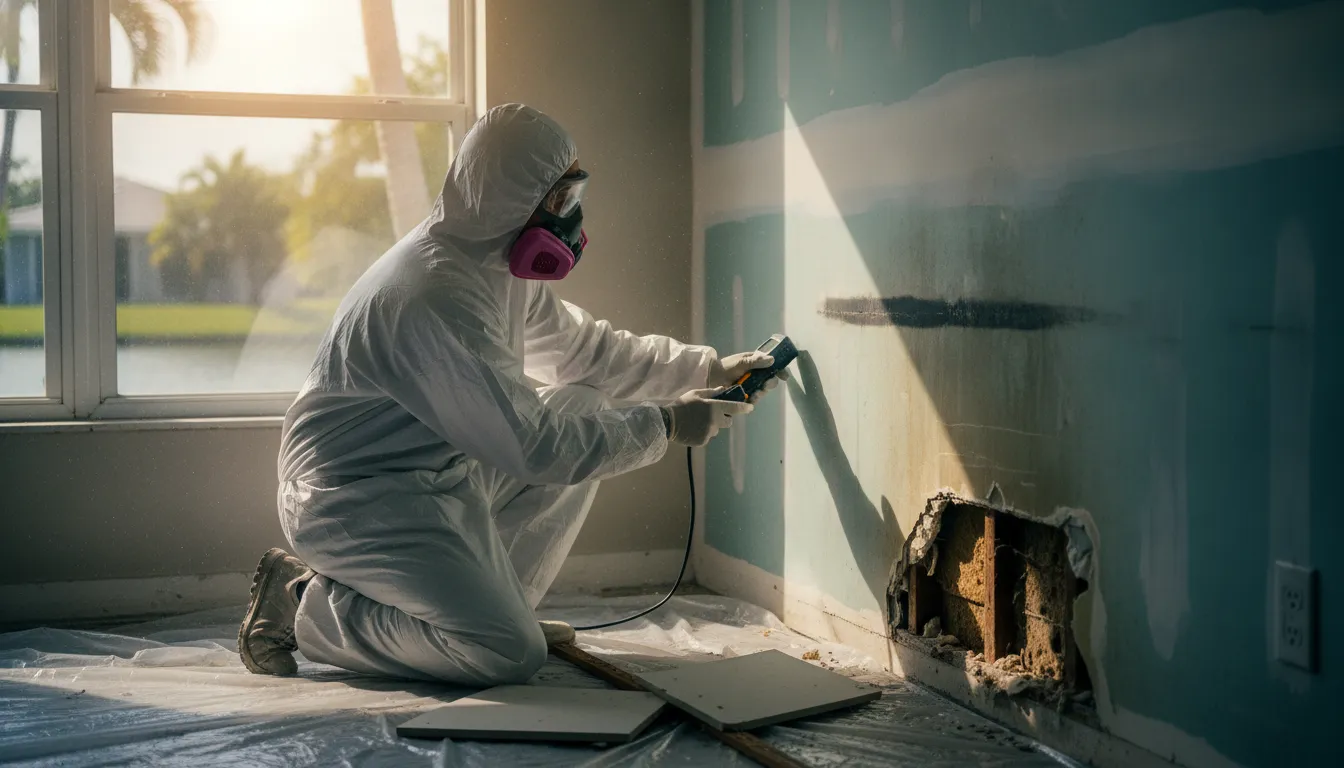
Drywall, baseboards, and subflooring are especially vulnerable after a leak or flooding event. A wall can appear dry on the surface while moisture remains behind the finish. Baseboards may swell or discolor, while damp subflooring can continue affecting flooring and nearby framing. In attics and crawl spaces, limited access makes it harder to spot growth early. HVAC-related mold concerns also deserve attention because the system can distribute particles through occupied rooms if moisture is not corrected.
Poor ventilation adds another layer. Bathrooms, laundry areas, closets, and tightly enclosed mechanical spaces may not release moisture effectively. When warm, humid air repeatedly meets cooler surfaces, condensation can keep materials damp long enough for mold to establish. The visible patch is not always the full problem. Finding and correcting the moisture source matters as much as cleaning what can be seen.
When a small cleanup is not a DIY project
A homeowner may be able to address a small, isolated area after fixing its moisture source. But larger or hidden growth calls for a more controlled approach. Removing moldy drywall, opening wall cavities, disturbing insulation, or cleaning HVAC-related contamination can spread particles and expose the person doing the work. The CDC recommends an N95 respirator, protective goggles, and gloves for mold cleanup. People with asthma, COPD, or compromised immune systems should not remain in a moldy home during cleaning.
| Factor. | Small DIY cleanups. | Professional remediation. |
|---|---|---|
| Size of affected area. | Small, isolated surface growth. | Large areas or growth behind walls and materials. |
| Moisture source. | Fixed and confirmed dry. | Hidden leaks, flooding, or recurring humidity. |
| Materials involved. | Non-porous surfaces only. | Drywall, subflooring, insulation, and HVAC. |
| Protective gear. | N95, goggles, and gloves. | Professional containment and controlled removal. |
| Verification. | None. | Optional third-party mold testing. |
Bleach also requires care. If it is used, the CDC says to use no more than one cup per gallon of water. Provide fresh ventilation, and never mix bleach with ammonia or another cleanser. That guidance does not turn a concealed or extensive problem into a safe weekend project. Professional remediation can assess affected materials, contain the work area, remove damaged contents appropriately, and address moisture before restoration begins.
For added transparency, iMold uses third-party mold testing for unbiased verification. That independent perspective can help confirm whether the work achieved its intended result. If water damage extends beyond one room, restoration services in Southwest Florida can coordinate the drying, remediation, and rebuilding needs as one project.
Recognizing When You Need Mold Remediation in Cape Coral, FL
Mold problems do not always begin with a large, obvious patch. In a Cape Coral home, a small leak, lingering moisture, or recurring condensation can create conditions that deserve attention before the damage spreads. Act promptly when you notice one or more of these signs:
- A persistent musty odor: A damp, earthy smell in a room, closet, or HVAC area can point to hidden moisture or growth behind materials.
- Visible mold growth: Spots, staining, or fuzzy growth on drywall, trim, ceilings, cabinets, or belongings should not be ignored or disturbed unnecessarily.
- Water stains: Brown, yellow, or discolored areas on ceilings and walls may indicate a current leak or previous water intrusion that was never fully dried.
- Recurrent condensation: Moisture that repeatedly collects around windows, air-conditioning components, bathrooms, or poorly ventilated spaces can support ongoing mold growth.
These signs do not determine the full extent of a problem by themselves. A professional can identify moisture sources, assess affected materials, and explain the safest next step. The Centers for Disease Control and Prevention advises using appropriate protection during mold cleanup and notes that people with asthma. COPD, or compromised immunity should not remain in a moldy home during cleaning. If the affected area is extensive, concealed, or connected to water damage, professional remediation is the responsible choice.
How the iMold Way guides the response
iMold uses a structured five-step approach designed to move a property from assessment through recovery:
- Assess: Inspect the visible concern, moisture conditions, and potentially affected areas.
- Contain: Limit the spread of dust and mold particles to unaffected parts of the home.
- Extract: Remove standing water or excess moisture when water damage is part of the problem.
- Remediate: Clean, remove, and treat affected materials using appropriate methods and equipment.
- Restore: Repair the property and return the space to a safe, usable condition.
Read the safe mold remediation process to see how these stages fit together. For urgent water or mold concerns, iMold offers 24/7 emergency service and a 30-minute response promise in its immediate service zone. Homeowners can also schedule a free visual mold inspection and estimate before deciding how to proceed.
Why Florida licensure matters
Florida regulates mold assessors and remediators under Sections 468.84 through 468.8424 of the Florida Statutes. The Florida Department of Health directs homeowners to review these requirements when they have questions about mold-related licensure. iMold is a licensed Florida Mold Remediator. MRSR2170, and a Florida State General Contractor, CGC1540205. Those credentials give Cape Coral homeowners a clear starting point when choosing qualified help for a property moisture problem.
Why Do Lee County Homeowners Trust Local Mold Experts?
When a Cape Coral property needs mold work. Credentials and accountability matter as much as response time. iMold Cleaning and Restoration has operated continuously in Southwest Florida for 28 years. Serving homes and businesses throughout Lee County and the surrounding region. That local history means the team understands the practical demands of restoring properties after leaks, storms, humidity, and other moisture events.
iMold is a licensed, bonded, and insured contractor with more than 35 certified professionals. Its team holds seven IICRC credentials: WRT, ASD, MRS, AMRT, FSRT, OCT, and CCT. The company is also a Licensed Mold Remediator under MRSR2170 and a Florida State General Contractor under CGC1540205. Florida provides specific statutory guidance regarding mold assessor and remediator licensure, and homeowners can review the state’s mold resources through the Florida Department of Health.
Those qualifications support a complete response rather than a narrow cleanup. iMold can coordinate mold remediation, water damage restoration, specialty cleaning, and reconstruction through one restoration team. Homeowners looking for professional mold remediation can move from assessment to containment, extraction, remediation, and restoration without having to coordinate every phase alone.
Reputation backed by transparent communication
Customer experience is another useful trust signal. iMold has more than 900 Google reviews with a 4.9-star rating. Reviews cannot replace a proper assessment, but a consistent public record can help property owners evaluate how a restoration company communicates and follows through during a stressful event.
Insurance questions are handled as part of that communication. iMold works directly with insurance carriers and uses Xactimate for damage documentation and estimating. Its insurance coordination support can help organize the information your carrier needs, while keeping the property owner informed about the work being considered. Coverage depends on the policy and the circumstances, so the team should not promise an insurance outcome before reviewing the loss.
For additional transparency, iMold uses third-party mold testing for unbiased verification when appropriate. Independent testing gives property owners another way to evaluate conditions and remediation results. Together, documented qualifications, local experience, public reviews, insurance coordination, and independent verification give Lee County homeowners a clearer basis for choosing help when mold appears.
Ready to address mold in your Cape Coral home? Request your no-cost inspection and estimate now.
Frequently Asked Questions
Do I need to leave my house during mold remediation?
It depends on the affected area, the work being performed, and the people in the home. If you have asthma, COPD, or a compromised immune system, the CDC advises staying out of a moldy home and avoiding the cleanup process. Ask your remediation team whether temporary relocation is appropriate while containment and removal are underway.
Will homeowners insurance cover mold remediation in Cape Coral?
Coverage depends on your policy and the source of the moisture. Mold connected to a covered water loss may be handled differently from long-term maintenance issues. iMold can work directly with insurance carriers. Document the damage, and prepare estimates in Xactimate, while your insurer makes the coverage decision.
Should I get mold testing before remediation?
Testing is not required for every situation. But it can help clarify what is present and provide an independent reference point. iMold uses third-party testing when appropriate. So results offer unbiased verification rather than a barrier to safe, necessary work.
How much does mold remediation cost in Cape Coral?
There is no reliable one-size-fits-all price. The appropriate scope depends on the affected materials, moisture source, containment needs, and restoration work. A free visual mold inspection and estimate can help identify the next step without committing you to a specific dollar amount.
Schedule Your Free Mold Inspection in Cape Coral
A clear next step can help you understand the source of a mold concern and plan the right response for your home. The iMold team can listen to what you have noticed, answer your questions, and explain available options without pressure.
Call 877-771-1699 now to schedule your free visual mold inspection and estimate.