When you are worried about a musty smell, a past leak, or a suspicious patch on a wall, one practical question comes first: how much does a mold inspection cost? The answer depends on what you need assessed and whether the visit includes sampling or laboratory analysis. In Southwest Florida, it also helps to distinguish a no-cost visual inspection and estimate from a paid inspection or testing service. Knowing what each option includes can help you choose a useful next step without paying for work you do not need.
Request a no-cost visual mold inspection
What does a mold inspection include?
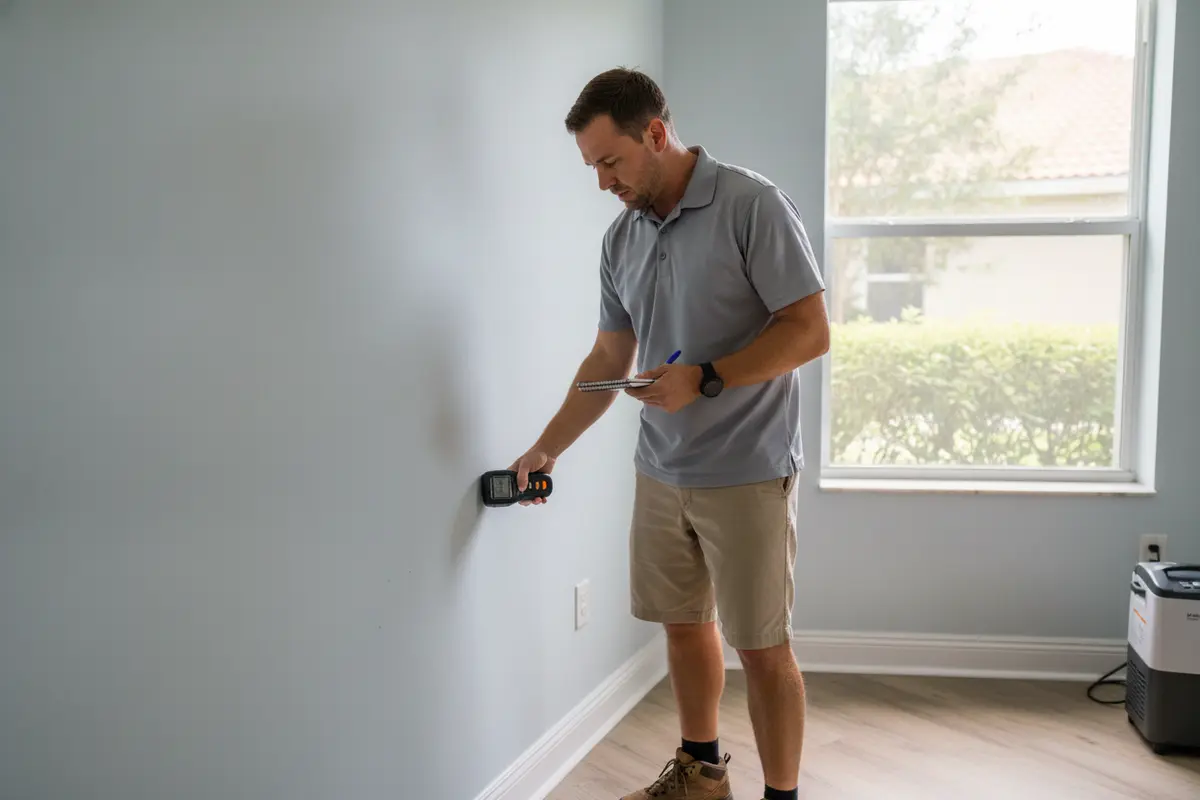
An inspection is an assessment of a property for signs of mold and the conditions that may support its growth. Depending on the service and the concern, an inspector may ask about the history of leaks, look for visible growth, note musty odors, and check areas where moisture could be present. A visual assessment is not the same as laboratory testing. It can help identify concerns and discuss an appropriate path, but it does not by itself identify every mold type or prove that hidden mold is absent.
The scope matters because two services described as a “mold inspection” may not include the same tasks. Before scheduling, ask what areas will be assessed, whether moisture readings or other tools are included, whether samples are collected, who handles laboratory analysis, and whether you will receive written findings. For details about mold remediation services, review the service information separately from an inspection quote.
How much does a mold inspection cost?
There is no single reliable price that applies to every property and service. The cost depends first on the scope: a visual assessment is different from a visit that includes air or surface samples, lab analysis, or a detailed written report. The size and layout of the property, the number of areas to assess, access to those areas, and the questions you want answered can also affect the work involved. Ask for a specific written scope and quote rather than relying on a general range as though it were a guaranteed price.
Some published price comparisons give broad estimates for mold testing, but a testing estimate should not be treated as the price of every inspection. Testing and visual assessment are not interchangeable. A test result may answer a particular question about a sample; it does not automatically explain the source of moisture or what repair work is needed. Conversely, a visual assessment may help identify visible conditions without including lab analysis. Make sure you know exactly which service is being quoted. A Florida professional association’s mold testing cost comparison also notes that testing costs vary with inspection complexity. That is a comparison of testing, not a guaranteed quote for your home or a standard price for every visual inspection. Treat it as background only and confirm all fees and included work directly with the provider.
| Option | What it may include | Questions to ask about cost |
|---|---|---|
| Visual assessment | Review of visible conditions, moisture concerns, and reported history | Is the visit no-cost? Which areas are included, and will you receive written findings? |
| Assessment with sampling | Visual review plus selected air or surface samples, depending on the plan | Are collection, lab fees, and result interpretation included in the quote? |
| Focused follow-up | Additional assessment of a specific area or unresolved concern | What question will this visit answer, and what is excluded? |
| Remediation estimate | Proposed work to address identified mold or moisture conditions | Is this a separate scope from inspection or testing, and what work is covered? |
At iMold, a free visual mold inspection and estimate are available. “Free” applies to that visual inspection and estimate; it should not be read as a promise that sampling, laboratory work, or remediation is also free. Ask the company to clarify any costs before agreeing to additional services. For broader questions about how the company approaches a project, see iMold’s process.
What can change the scope and price?
- Number of areas: A single room with a clear concern is a different scope from several rooms or multiple floors.
- Access: A tight closet, enclosed utility area, or space that cannot be safely accessed may need a different plan than an open room.
- Type of concern: A visible spot, a persistent odor, a recent plumbing leak, and a recurring moisture issue are different starting points.
- Sampling: If testing is proposed, ask what type of sample is planned, how many locations it covers, and what the lab fee includes.
- Documentation: Confirm whether the quote includes a written report, photographs, or a verbal discussion only.
- Follow-up: Find out whether a return visit or additional samples would be a separate charge.
These are useful questions to compare scopes, not a formula for predicting a fixed amount. A clear quote should explain the proposed work and any exclusions in plain language. If you are comparing providers, request the same basic information from each so you can compare like with like.
For example, imagine one quote covers a visual check of a bathroom after a small supply-line leak, while another includes several samples and a written laboratory report. The second may cost more because it includes more work, but that does not make it the better fit automatically. Ask what decision the added work will help you make. If the concern is a visible patch and the immediate question is whether moisture remains, an assessment focused on that area may be a sensible starting point. If a particular indoor air or material question remains unresolved, discuss whether testing would provide useful information.
Property size alone does not tell you what should be inspected. A larger home may have a concern limited to one location, while a smaller property may have a leak history affecting more than one area. Explain the problem rather than assuming the provider needs to test every room. A well-defined concern helps the inspector discuss boundaries, likely access needs, and what would trigger a recommendation for a broader assessment.
Also distinguish the inspection from any repair proposal. An inspection describes observed conditions and possible next steps; remediation work is a separate scope. Before authorizing work, ask what areas will be addressed, what materials or contents are included or excluded, how the moisture issue fits into the plan, and what documentation you will receive when the work is complete. This keeps an assessment price from being confused with the cost of resolving a larger property issue.
Should you choose a visual inspection or mold testing?
Start with the question you need answered. If you see a visible concern or have a history of water intrusion, a professional visual assessment can help identify conditions to address and discuss next steps. If there is a specific reason to identify what is in an air or surface sample, testing may be discussed as part of a tailored plan. Testing is not automatically necessary in every situation, and it should not be presented as a substitute for understanding and correcting a moisture source.
Ask the provider to explain why a test is being recommended, what the result can and cannot tell you, and whether the result would change the recommended action. Also ask who collects the sample and who interprets it. iMold uses third-party mold testing for unbiased verification when testing is part of the plan. Its mold inspection and testing information can help you frame questions before you decide.
If there is active water intrusion, do not let a debate over testing delay addressing the leak or water source. For water-related concerns, learn more about water damage restoration. The goal is to choose a proportionate next step based on what is happening at the property.
How can you compare inspection quotes?
Ask each provider to describe the service in writing. A lower number may reflect a narrower scope, while a higher quote may include samples, lab work, or reporting. Neither number tells the full story on its own. Use this checklist to make a practical comparison:
- Define the concern. Share where you noticed growth, odor, or moisture, and when it began. Mention any known leak or repair.
- Confirm the areas. Ask which rooms or building areas the visit covers and whether inaccessible areas are excluded.
- Separate assessment from testing. Have the provider list any samples, lab fees, or follow-up work as separate line items.
- Ask for the deliverable. Confirm whether you will receive written findings and what those findings will cover.
- Clarify the next step. Ask what happens if the assessment finds a moisture problem or visible growth. An inspection quote is not automatically a remediation quote.
- Check credentials and insurance. Verify relevant qualifications and ask who will perform the work.
For an estimate involving mold work, ask how the proposed scope addresses containment, removal, and restoration where applicable. iMold’s public credentials include State Certified Mold Remediator (MRSR2170) and State Certified General Contractor (CGC1540205). You can review its licenses and registrations and learn about its insurance claims support. Coverage and claim decisions depend on the policy and circumstances; discuss your specific claim with your insurer.
What should you do before the inspection?
You do not need to disturb suspected mold to prepare. Instead, write down what you have noticed and gather useful background:
- When the odor, spot, or dampness first appeared.
- Any known plumbing leak, roof leak, overflow, or prior water event.
- Which rooms seem affected and whether the concern changes over time.
- Any repairs or drying work already completed, if known.
- Questions you want answered about assessment, sampling, documentation, and next steps.
Avoid scraping or sanding suspect material just to get a closer look. Do not cover up a damp area before the source is understood. If water is actively entering or spreading, focus on safety and stopping the source when it is safe to do so, then contact an appropriate restoration professional. You can also review iMold’s emergency response information for urgent property concerns.

Does insurance cover mold inspection or testing?
Coverage depends on the policy, the cause of the damage, exclusions, and the facts of the claim. Do not assume that an inspection or test will be reimbursed. Before authorizing work, contact your insurer or agent to ask what documentation is needed and whether the carrier has instructions for assessment or sampling. Keep records of the water event, communications, and any work performed.
iMold works with insurance carriers and can help with claim-related documentation, but the insurer makes coverage decisions. For context, read about mold and homeowners insurance claims. Get the scope and payment responsibility clarified before proceeding with optional testing or other work.
Frequently Asked Questions
Is a visual mold inspection free at iMold?
iMold offers free visual mold inspections and estimates. Ask what the visit includes and whether any requested testing, lab analysis, or additional service would have a separate charge.
Does every mold inspection include a lab test?
No. A visual assessment and a sampling service are different scopes. Ask whether samples will be collected, what they are intended to answer, and whether lab costs are included.
Can a test tell me where moisture is coming from?
A sample may provide information about the material or air sampled, but it does not by itself locate or fix a leak. The property conditions and moisture source need to be considered as part of the assessment.
Should I get several quotes?
Comparing quotes can help, especially when they describe the same areas, samples, documentation, and follow-up. Compare the written scope, not just the total amount.
What if I have active water damage?
Address immediate safety concerns and the water source as soon as practical. Contact a restoration professional about the water damage rather than waiting to decide whether laboratory mold testing is needed.
Get a clear next step for your property
The best answer to “how much does a mold inspection cost” starts with knowing what service is being priced. Ask whether the visit is visual or includes testing, confirm what the quote covers, and request clear answers before approving extra work. Southwest Florida property owners can contact iMold for a no-cost visual mold inspection and estimate, with additional services discussed separately when appropriate.
Contact iMold to discuss your concern
If water is actively affecting your property, prompt attention to the source and a clear assessment can help you decide what to do next.