If you are asking how long does water damage restoration take, the honest answer is that there is no single schedule for every property. Timing depends on where water traveled, which materials were affected, what can be dried in place, and whether repairs are part of the job. iMold provides 24/7 emergency service in Southwest Florida, so you can ask about the next practical step when water damage needs attention.
Contact iMold about water damage
Why is there no single restoration timeline?
A small, promptly addressed leak and a long-running leak are different projects. Water may affect only a visible patch, or it may move under flooring, behind cabinets, into wall cavities, and into contents. A stain or wet surface is useful information, but it does not always show the full boundary of affected material. Assessment and monitoring help clarify what the project actually includes.
Another source of confusion is the word “restoration.” One person may mean removing water and drying the affected area. Another may mean returning a room to use after drywall, trim, flooring, or cabinetry has been repaired. Those are separate milestones. A team might finish drying before reconstruction is scheduled or completed, so ask which milestone an estimate refers to.
The source and type of water, material layers, access to the area, and decisions about removal can also shape the sequence. An estimate made before an inspection is necessarily preliminary. Treat it as a working plan: ask what is known, what still needs checking, and what conditions could change the schedule. A useful estimate explains the process rather than promising an unsupported finish date.
What stages shape the schedule?
Most water damage work can be understood as a sequence of decisions and tasks. The exact order may vary, and some planning can happen in parallel, but each stage has a purpose.
- Initial assessment and planning. The team reviews the reported source, visible damage, affected rooms, access, and immediate concerns. They identify what needs attention first and what further checks may be useful. If water appears in a room far from the suspected leak, mention it; that detail can help guide the inspection.
- Control the source and address immediate conditions. Work cannot move forward effectively if water is still entering the property. Stop the source only if it is safe to do so, and share what you know about the plumbing, appliance, roof, or other suspected cause. If the source is uncertain, tell the team rather than assuming it has stopped.
- Water removal. Where standing water is present, extraction is an early task. The amount of water, the affected rooms, and access to them influence the work. Removing visible water is an important step, but it does not by itself establish that underlying materials are dry.
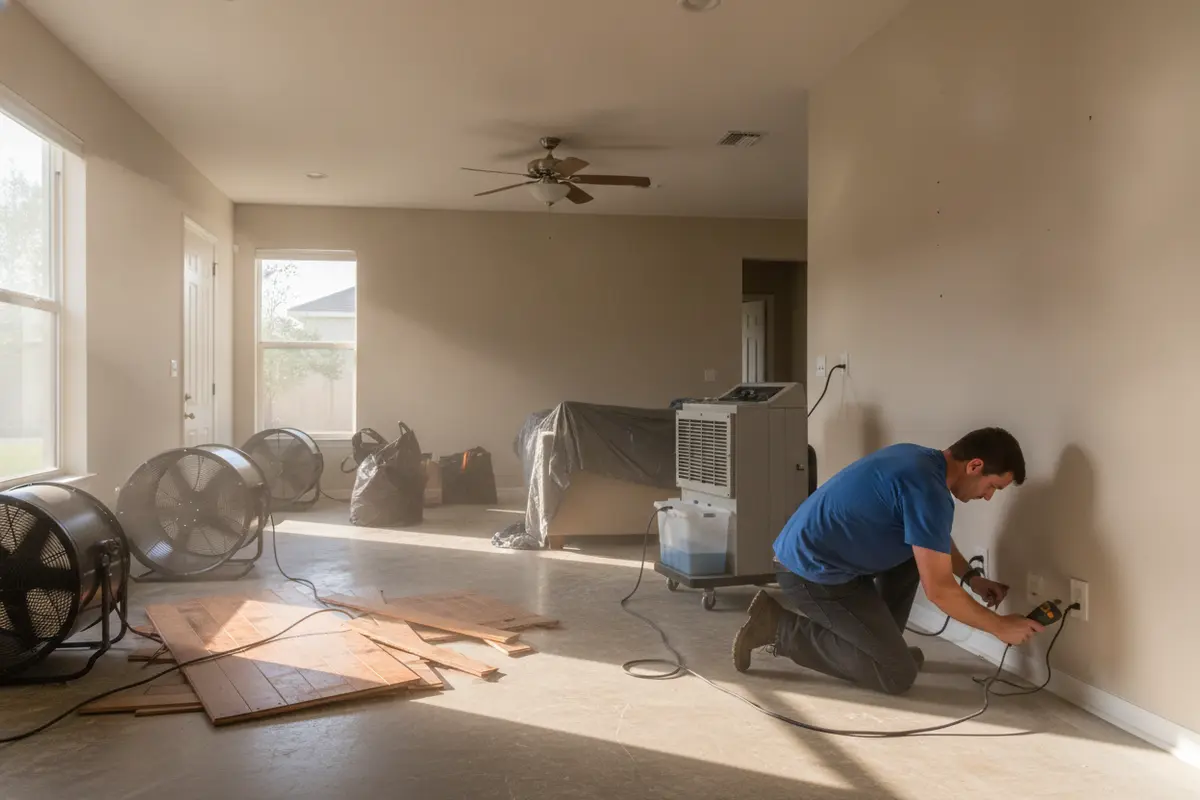
- Drying and monitoring. Air movement and dehumidification may be used to help affected materials reach appropriate conditions. The team checks the area over time. Material type and depth matter: a floor surface can feel dry while moisture remains below it or inside an assembly.
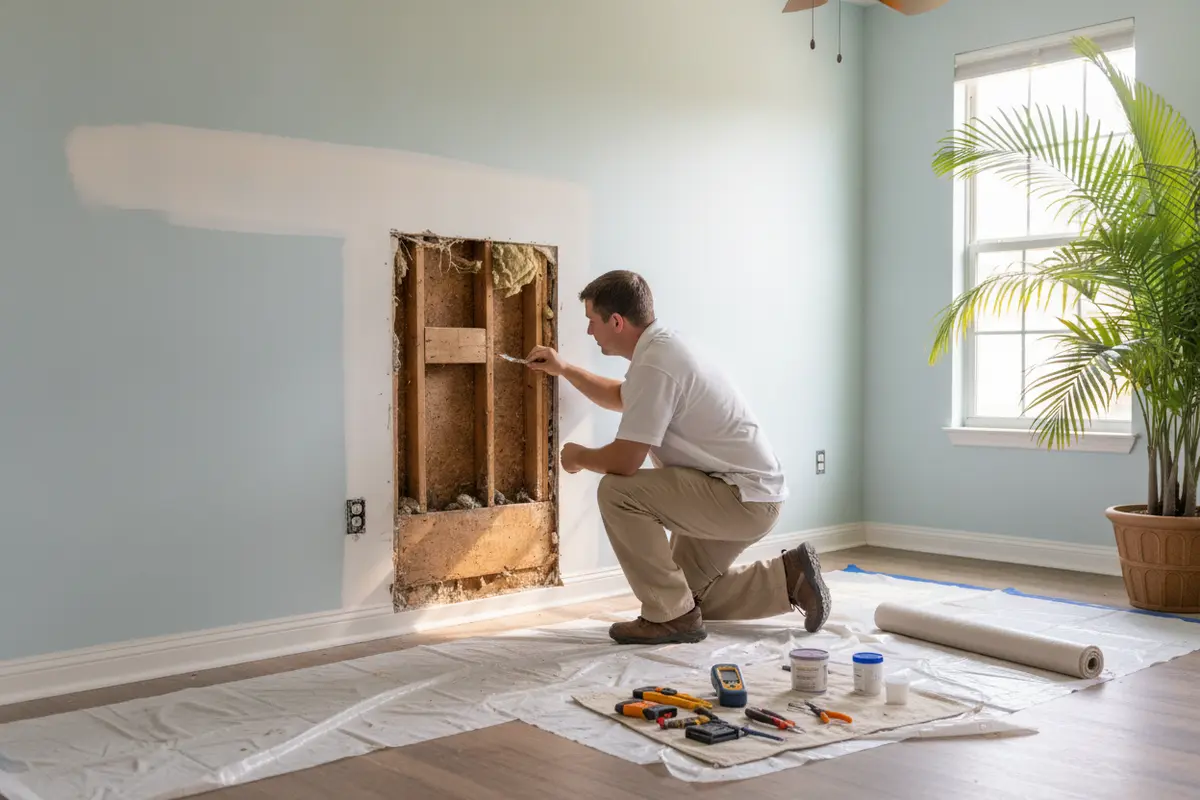
- Selective removal and preparation. If a material cannot reasonably remain or needs to be opened for access, removal and preparation may be included. The plan should explain what is proposed, where, and why. The work can uncover additional affected areas that were not visible at the beginning.
- Repair and reconstruction. After the area is ready, repairs may restore components such as drywall, flooring, trim, or cabinets. Scope, approvals, and appropriate material availability affect the order and timing of this phase.
These stages are related, but not interchangeable. For example, a repair plan may be discussed while drying is underway, yet installation should be sequenced around the conditions of the affected area. Ask what needs to be true before each transition. The iMold process overview can provide additional context about planning and work stages.
How do the stages compare?
| Phase | Main purpose | What may change the timing | Question to ask |
|---|---|---|---|
| Assessment | Define affected areas and initial work plan | Access, concealed spaces, and new findings | What is confirmed, and what remains uncertain? |
| Water removal | Remove standing water | Water volume, number of rooms, and access | Has visible standing water been removed? |
| Drying and monitoring | Bring affected materials toward appropriate conditions | Material type, moisture extent, and readings | How will progress and completion be determined? |
| Removal and preparation | Open or remove material that cannot remain, then prepare the area | Inspection findings, protection, and disposal needs | What is being removed, and what is the reason? |
| Reconstruction | Repair affected parts of the property | Scope, approvals, and suitable materials | Which repairs remain after drying? |
What can make water damage restoration take longer?
When work takes longer than an early estimate suggested, ask for the specific reason and the next milestone. Several common issues can change a schedule:
- Water moved out of sight. Moisture under a floor or inside a wall may not be visible at first. Further checks, or opening an area, can reveal a larger scope than the original surface damage suggested.
- More rooms or materials are involved. Each added space may need to be assessed, made accessible, monitored, and included in the repair plan. A leak near a kitchen, for example, may affect flooring that continues into a nearby room.
- Different materials respond differently. A hard surface, porous material, and layered assembly do not behave alike. Drying decisions should reflect the affected materials and monitoring, rather than a visual impression alone.
- The source remains active or unclear. If water continues to enter or the cause has not been addressed, conditions can change while work is underway. Tell the project team about any new dampness or recurring leak.
- Some materials need removal. Removal may require protecting nearby areas, creating access, handling debris, and preparing surfaces before repairs can begin. It is reasonable to ask which finding led to that recommendation.
- Repair scope or approvals change. Newly found damage, insurance review, decisions about replacement materials, and project approvals can affect the reconstruction sequence. Keep questions about coverage separate from questions about physical drying progress.
- Access is limited. Contents, occupied rooms, pets, or business hours can affect where equipment goes and when teams can work. Sharing those constraints early may help the team plan around them.
- Safety precautions are needed. The condition and source of water influence how an area should be approached. If the team needs to limit access or take additional precautions, ask what that means for occupants and for the sequence.
A helpful update names the obstacle, the affected area or decision, and the next action. “We need another check in the hall flooring before we can confirm repairs” gives you something specific to follow up on. “It will take longer” does not.
How should you interpret drying progress?
Drying progress is more than whether a surface looks dry or feels comfortable underfoot. Moisture can remain in concealed or layered materials. Teams may use equipment and repeat checks to understand whether conditions are changing and whether the affected area is ready for the next stage. Ask which areas are being monitored, what information guides the decision, and how you will be told when the drying phase is complete.
Clarify what “drying complete” means for your project. It usually marks readiness to move to the next step, not necessarily the moment a room is fully repaired or ready for normal use. If the work includes removing and replacing flooring, for example, completion of drying and completion of that floor repair are distinct milestones.
Do not switch off, unplug, or move drying equipment unless the project team says it is appropriate. If noise, heat, access, or power use is creating a problem, report it and ask whether there is a safe adjustment. Describe the concern and its timing; the team can explain how an adjustment may affect the plan.
What should you do while waiting for help?
Put personal safety first. If water is near electrical outlets or equipment, avoid entering the area and seek appropriate help. Do not walk through standing water when you are unsure it is safe. Stop the source only if you can do so safely. If the situation is urgent, use iMold’s emergency response information to learn about its 24/7 service.
Once immediate safety concerns are addressed, make a simple record without delaying action. Take photographs from a safe place, note when you first noticed the problem, and write down what you know about its source. Keep relevant receipts and communications together. Move unaffected belongings only if doing so is safe; avoid moving items through water or into another area that may also be affected.
Avoid cutting into walls, pulling up flooring, or removing building materials without appropriate guidance. Those actions can affect access, safety, and the project record. If you are making an insurance claim, contact your carrier and ask which records or approvals it needs. iMold uses Xactimate for claims documentation and works with carriers; the insurance company makes coverage and claim decisions. The insurance claims information is a starting point for understanding that coordination.
If water damage raises a concern about mold, iMold offers no-cost visual mold inspections and estimates. A visual inspection is not the same as laboratory testing; where testing is considered, third-party testing supports unbiased verification. For general information on moisture and mold in buildings, the U.S. Environmental Protection Agency provides resources at EPA.gov.
How can you help keep the work moving?
Good preparation cannot eliminate every delay, but it can prevent avoidable back-and-forth. Before the assessment, gather what you know: when the problem began, the suspected source, which rooms changed, and whether the source has been stopped. You do not need to diagnose the damage. Accurate observations are more useful than a guess about what is behind a wall.
- Point out staining, dampness, unusual floor changes, or odors, including signs in rooms away from the original leak.
- Tell the team about access limits, occupants, pets, work hours, or spaces that need to remain usable.
- Ask what belongings should be moved and what should remain available for assessment.
- Agree on where equipment can go and raise noise, heat, or access concerns promptly.
- Ask how moisture progress will be checked and which milestone allows the next stage to begin.
- Keep brief notes of decisions, approvals, questions, and promised updates.
- Report renewed water or a newly affected area as soon as you notice it.
When comparing work plans, compare scope and sequence, not just an end date. Check whether the plan includes assessment, water removal, monitoring, any proposed removal, and reconstruction—or only some of those steps. Ask what is excluded, what assumptions the estimate uses, and how a change in findings will be explained. The water damage restoration service page explains the related service, and the home repair services page may help when reconstruction is part of the scope.
How do drying, mitigation, and repairs fit together?
Mitigation addresses immediate conditions and helps prepare the affected area for what follows. Drying focuses on affected materials and is checked as work proceeds. Reconstruction replaces or repairs materials that were removed or damaged. Because those are different kinds of work, a property can be past active drying while repair work remains.
Ask the person coordinating the project to name the current phase and the next one. For instance: “We are monitoring the affected floor today; once the readings and other checks support moving ahead, what repair decisions remain?” This is more useful than asking only, “When will everything be done?” It separates progress that has already occurred from decisions still ahead.
Work may sometimes be phased so that unaffected areas remain accessible, depending on the layout, safety, and scope. If a kitchen, hallway, or business area is affected, ask what can remain in use, what should stay clear, and whether the work sequence can accommodate normal routines. Do not assume a room is ready to use just because equipment has been removed. The restoration services overview provides context on iMold’s broader capabilities.
What questions should you ask about the timeline?
A focused conversation turns a broad estimate into a plan you can follow. Keep these questions handy and ask for updates when an answer changes:
- Which rooms and materials are included in the assessment?
- What is confirmed, and what needs additional checking?
- Has the source been addressed, or does that still need attention?
- What happens first, and what needs to be completed before the next stage?
- How will drying be monitored, and what indicates that the area is ready?
- Will any material need to be opened or removed? What finding supports that step?
- Does the current schedule include repairs, or does it end when drying is complete?
- What approvals, material choices, or decisions could affect the repair sequence?
- What records does my insurer need, and who can provide the project documentation?
- Who should I contact if new water appears or conditions change?
Ask for a next update date or milestone if the schedule is still uncertain. A clear plan can say what is expected, what remains unknown, and what information will resolve that uncertainty. If the plan changes, request the reason, revised sequence, and any action needed from you.
Frequently Asked Questions
Can water damage restoration be finished in one day?
Some limited tasks may be completed quickly, but a full project can include assessment, extraction, monitored drying, removal, and repairs. The affected materials and scope determine what can reasonably be completed in a day. Ask whether a one-day estimate refers to a specific task or the entire restoration process.
Can I stay in my home during restoration?
That depends on which areas are affected, safety conditions, utilities, and the work underway. Ask which spaces can remain in use, which should be avoided, and whether equipment or repair work will affect access. A project team can explain conditions at your property; a general timeline cannot answer that question for every home.
Should I turn off drying equipment at night?
Follow the project team’s instructions and ask before turning equipment off, unplugging it, or moving it. If noise or another concern affects your household, tell the team so you can discuss whether there is an appropriate adjustment and how it could affect monitoring.
Does insurance determine how long restoration takes?
Insurance review can affect approvals and repair decisions, while physical work depends on the damage, drying progress, and project scope. Keep your carrier informed, ask what documentation it needs, and request updates about both the restoration work and any pending decisions.
Get a clear next step for your property
A dependable timeline is built from an assessment, clear milestones, and updates as the affected areas and repair needs become known. iMold provides 24/7 emergency service in Southwest Florida, from initial water damage response through repair planning. Contact the team to discuss what is happening at your property and ask which next step fits the situation.
Request help with water damage
Understanding the difference between drying and finished repairs can make an uncertain process easier to track, one milestone at a time.