iMold offers 24/7 emergency availability for property damage concerns. When water, mold, fire, or storm damage affects your property, choosing a home restoration company can feel like one more urgent decision. A little preparation helps the first visit stay focused: the professional can understand what happened, identify immediate concerns, and explain the next steps. For mold concerns, no-cost visual mold inspections and estimates are available.
What should you do before a home restoration company arrives?
Start with safety, then preserve the facts. You do not need to clean or repair everything before the visit. A clear account of what happened and what you have already done is more useful than a hurried attempt to make the area look better.
- Address immediate hazards. If you suspect a fire, electrical danger, structural instability, or another immediate threat, leave the affected area and contact the appropriate emergency service or utility provider. Do not enter a space that feels unsafe. If water is near electrical equipment, do not step into it or handle equipment; get qualified help.
- Stop the source only if it is safe. For a plumbing leak, you may be able to shut off a local valve or the main water supply if you can reach it safely. Do not climb onto a damaged roof or approach downed wires to stop water entry.
- Keep people and pets away from affected areas. Avoid disturbing wet, sooty, or visibly mold-affected materials. Close doors if practical, and avoid moving items through clean areas when doing so could spread residue or moisture.
- Make a brief timeline. Note when you first noticed the issue, what caused it if known, whether it is continuing, and any prior repairs or drying efforts. Include the rooms or business areas involved.
- Gather available records. Keep relevant receipts, maintenance notes, prior inspection findings, and insurance information together. You do not need to resolve coverage before asking for an assessment.
- Make a safe route to the affected area. Clear ordinary clutter from hallways or doorways only when it is safe and does not require moving contaminated or damaged materials.
If you are unsure whether a step is safe, leave it for trained responders. iMold describes its emergency restoration services as available around the clock. You can also review its water damage restoration services to understand the type of help that may apply.
What information should you document?
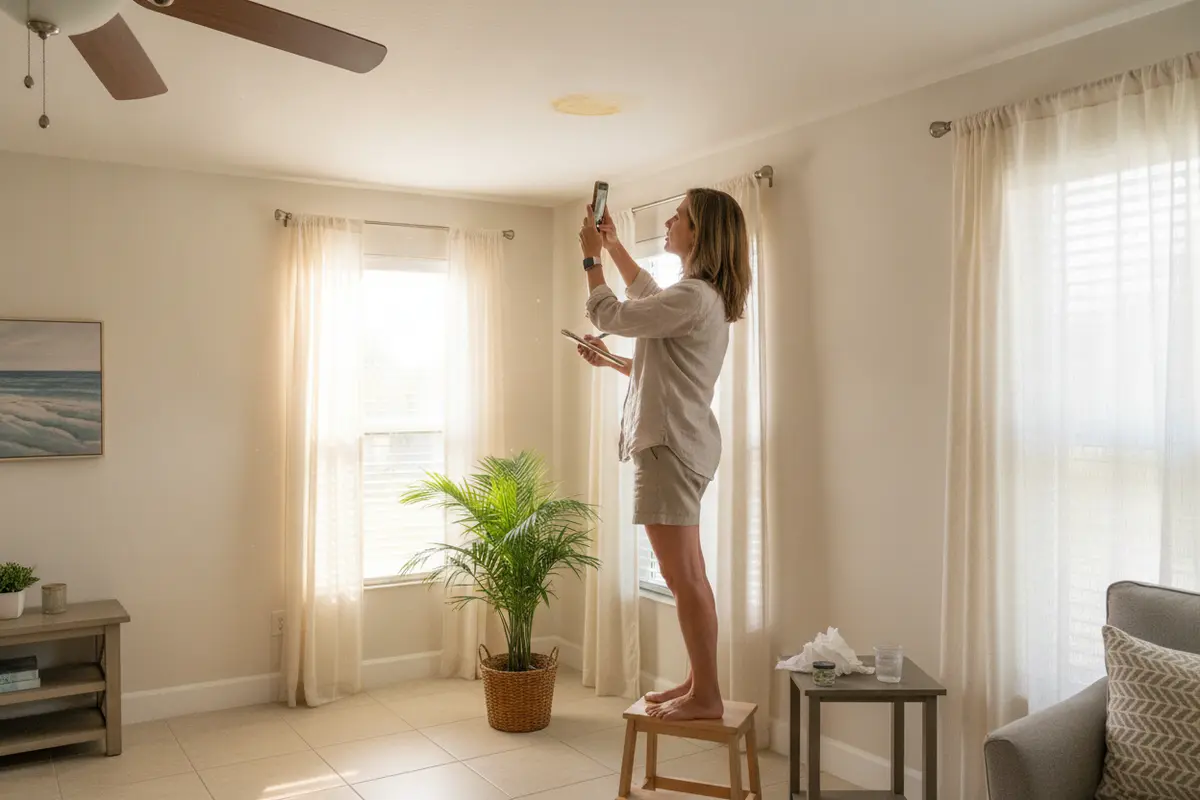
Record what you can without delaying urgent help or exposing yourself to a hazard. Photos and notes can help you explain the conditions you observed and track changes. Do not move debris or remove materials just to get a better picture.
- Take wide photos of each affected room, then closer images of visible damage, if the area is safe to enter.
- Photograph water lines, stains, damaged finishes, or affected belongings before they are moved.
- Write down when the event began or was discovered, and whether water, smoke, or another source is still active.
- List rooms and belongings that appear affected. Mark observations separately from assumptions about the cause.
- Keep copies of communications, receipts for emergency steps, and any claim reference details you already have.
Keep original image files when possible and avoid editing them in a way that obscures the conditions. Share copies with the restoration professional or insurer when appropriate. Documentation does not determine whether a claim is covered; your insurance policy and carrier determine that. For questions about how restoration work and claims interact, iMold provides information about mold damage insurance claims.
What happens during the first professional visit?
A useful first visit is an information-gathering step, not a promise that every repair can be completed immediately. The professional should listen to what you observed, look at accessible affected areas, and explain what can be assessed now and what may require follow-up.
The visit may include a discussion of the likely source and timeline, a visual review of affected rooms and materials, and questions about prior work or ongoing moisture. Depending on the situation, the company may explain whether further evaluation, moisture measurements, containment, drying, cleanup, or reconstruction needs to be considered. The actual work plan depends on conditions found at the property.
Ask the visitor to distinguish what they observed from what they suspect. For mold concerns, ask what a visual inspection can and cannot establish. iMold uses third-party testing for unbiased verification when testing is appropriate; testing should be explained as a way to provide additional information, not as an automatic hurdle. Learn more about mold remediation services and the company’s restoration process.
Take notes as the professional explains the findings. If multiple rooms or types of damage are involved, ask which issues need attention first and why. A clear sequence can help you understand immediate stabilization, assessment, remediation, and repair without confusing those stages.
What should you ask before work begins?
Before authorizing work, make sure you understand the proposed scope and how updates will be handled. A reputable professional should be willing to explain the plan in ordinary language and answer reasonable questions. You can use this checklist during the visit:
- What damage did you observe, and which areas still need assessment?
- What is the recommended first step? Is any urgent action needed to protect the property?
- What work is included in the proposed scope, and what is not included?
- Will the plan involve drying, removal, cleaning, remediation, or reconstruction? What determines whether each step is needed?
- How will contents and unaffected areas be protected while work takes place?
- What preparation, access, or utility arrangements do you need from me?
- Who is my point of contact, and how will changes or new findings be communicated?
- What documentation will I receive, and when should I expect the written scope and estimate?
- What should I do if the damage changes or I notice a new concern?
Ask for the written estimate and work description before approving non-emergency work. The City of Chicago’s home repair guidance says a written repair statement should be prepared before work and describes cost details to include; requirements can vary by jurisdiction, so check applicable local rules. See its home repair guidance. For fire and water restoration, Connecticut’s consumer guidance also recommends checking that you can re-enter the home and seeking recommendations when choosing a contractor. Those are useful questions to raise, though local processes and circumstances differ: Connecticut guidance on hiring restoration contractors.
iMold coordinates with insurance carriers and uses Xactimate for documentation. This may help with project communication, but it does not decide coverage or guarantee payment. Read the proposed scope, ask the insurer about policy questions, and keep your own copies of documents. You can review iMold’s frequently asked questions or information about financing options if you want to understand available payment discussions.
How can you compare restoration plans?
If you are considering more than one provider, compare the plans on their scope, explanation, and documentation rather than on a single headline figure. When the property has active damage, prioritize appropriate safety and stabilization; do not delay urgent steps just to collect paperwork. For work that can wait, ask providers to describe the same areas and tasks so you can compare like with like.
| What to compare | Questions to ask | Why it matters |
|---|---|---|
| Assessment | Which areas were inspected, and what remains unknown? | Shows whether the plan addresses the full observed problem or needs another assessment. |
| Scope of work | Which tasks, rooms, and materials are included or excluded? | Clarifies what the proposed work actually covers. |
| Sequence | What happens first, and what findings could change later steps? | Helps you understand how immediate protection, cleanup, and repairs relate. |
| Documentation | What written plan, estimate, photos, or progress updates will I receive? | Gives you a record to discuss with the contractor and insurer. |
| Communication | Who is the contact, and how will changes be approved? | Reduces misunderstandings during a project. |
Do not assume two proposals cover identical work just because they use similar labels. One may address only initial mitigation while another includes additional work; ask each provider to explain the difference. Be cautious about signing a document you do not understand or authorizing a broader scope than you intend. Take time to read the terms, ask for clarification, and retain a copy.
How should you prepare your household or business?
Once a visit is scheduled, tell the company about access needs and any practical constraints. If the property is occupied, identify who can answer questions and approve decisions. For a business, consider which rooms, equipment, or operations need special coordination, and whether a manager should join the walk-through.
Keep children and pets away from the work area during the assessment. If the damage affects an entry, a shared corridor, or a room you need to use, mention that before the inspection begins. Ask whether the professional needs access to utility shutoffs, the attic access, or other locations, but do not enter unsafe spaces to prepare them. Share known concerns about fragile belongings or areas that should not be disturbed.
For property damage involving fire, smoke, or a compromised roof, discuss safe access and temporary protection rather than attempting risky repairs yourself. iMold’s approved services include covering damaged roofs with tarps after a fire. Visit the fire damage restoration page for service information. The appropriate response depends on the condition of the structure and the hazards present.

What should you expect after the visit?
Before the professional leaves, confirm the next step and who is responsible for it. That might be a written estimate, additional assessment, insurer discussion, or a proposed schedule. Ask when you should follow up if you have not received the information. If new damage appears, or an active leak continues, contact the appropriate professional promptly rather than waiting for a routine update.
Review all written documents carefully. Make sure they identify the affected areas, planned tasks, exclusions or assumptions, and how additions to the scope will be handled. Ask how the company will document progress and what decisions require your approval. If anything differs from what you discussed, request a correction or explanation before authorizing it.
Restoration may involve distinct stages. Mitigation addresses immediate conditions; remediation or cleanup addresses affected materials; and reconstruction returns spaces to usable condition. The scope varies with the event and what the assessment finds. iMold offers restoration services across property damage needs, with a full-service approach from emergency response through reconstruction. The company has operated in Southwest Florida for 28 years and is licensed, bonded, and insured. Its team has more than 900 Google reviews at a 4.9-star average.
Request a no-cost visual mold inspection or estimate
Frequently Asked Questions
Should I clean up before the restoration company arrives?
Do only what is safe and necessary to prevent an immediate hazard or stop an accessible water source. Avoid disturbing damaged materials or entering unsafe areas. Take photos from a safe location and explain what has already been done.
Do I need to file an insurance claim before scheduling an assessment?
You can ask a restoration professional to assess the property without first deciding whether to file a claim. Coverage questions belong with your insurer and depend on your policy. Keep records of the damage, communications, and any work you authorize.
What should I bring to a mold inspection?
Bring any timeline, photos, prior reports, and notes about leaks, odors, or visible changes. A no-cost visual inspection can identify visible concerns, but it does not establish every condition behind a wall or in an inaccessible area. Ask what the inspection covers and whether further evaluation or third-party testing is appropriate.
Can I approve emergency work before receiving a full estimate?
When immediate action is needed, ask the provider to explain the urgent task, its limits, and what documentation will follow. For non-emergency work, request and review the written scope and estimate before authorizing it. If you are uncertain about a document or insurance obligation, ask the provider or insurer to clarify.
Get clear answers before the work begins
A prepared visit gives you a better basis for deciding what happens next. Focus on safety, share the facts you have, ask for a written scope, and make sure you understand who will communicate with you. When you need help in Southwest Florida, iMold’s team can discuss the situation and the appropriate next step.