

Flood damage restoration southwest florida starts with a different problem than a burst pipe. Stormwater, surge, or rising water can enter from outside, carry debris, and sit in floors and walls long after the street looks clear. A useful recovery plan covers safety, documentation, water removal, drying, cleaning, and the repairs that follow. iMold’s flood damage team can inspect the property and explain that sequence before cleanup hides the evidence.
Quick answer: Start only when the building is safe. Photograph the loss, remove standing water, dry the structure with measured airflow and dehumidification, then clean or remove materials that stayed wet. Repairs come after the building is dry. Coverage depends on the policy, not on a general promise.
Ask iMold for a free flood damage inspection.
What Does Flood Damage Restoration Southwest Florida Involve?
Short answer: Floodwater usually comes from outside the building. An indoor loss usually starts at a pipe, appliance, roof, or HVAC part. Both need fast drying. Floodwater is more likely to bring soil, sewage, or chemicals, so the cleaning plan and the insurance conversation can change.
Depth alone does not tell you the risk. A few inches across a slab can wick into drywall, cabinets, and insulation. Water that sat overnight is a different job from water found the same hour. The source, the path, the time, and the materials all belong in the first assessment.
Southwest Florida adds its own pressure. Heavy rain, poor drainage, and coastal surge can hit Lee, Collier, Charlotte, Sarasota, and Manatee counties in the same week. A home on a slab and a raised condo can need different access and drying plans even when the water looks the same.
| Question | Flood damage | Indoor water loss |
|---|---|---|
| Usual source | Stormwater, surge, heavy rain, or rising water. | Pipe, appliance, roof, or HVAC failure. |
| Early risk | Contamination, debris, and electrical hazards. | Hidden moisture and fast material damage. |
| Insurance path | Often a separate flood policy. | Often the homeowners or commercial policy. |
| Main work | Removal, cleaning, drying, then rebuild decisions. | Extraction, drying, cleaning, and repair. |
If the loss started inside the building, the broader water damage restoration guide is the better starting point. This page stays with outdoor flood recovery.
What Does the Flood Damage Restoration Timeline Look Like?
Short answer: The work moves from safety and photos to water removal, drying, cleaning, and repair. Steps can overlap. No honest timeline is fixed before someone sees the property.
iMold’s recovery work follows that order, with updates as moisture readings change. The goal of the first visit is to stabilize the building and write a scope, not to guess a finish date.
- Make the site safe. Stay out of standing water near power, a sagging ceiling, or unknown contamination. Follow local emergency orders after a storm.
- Document the scene. If entry is safe, photograph rooms, water lines, wet materials, and the likely entry point before items are moved.
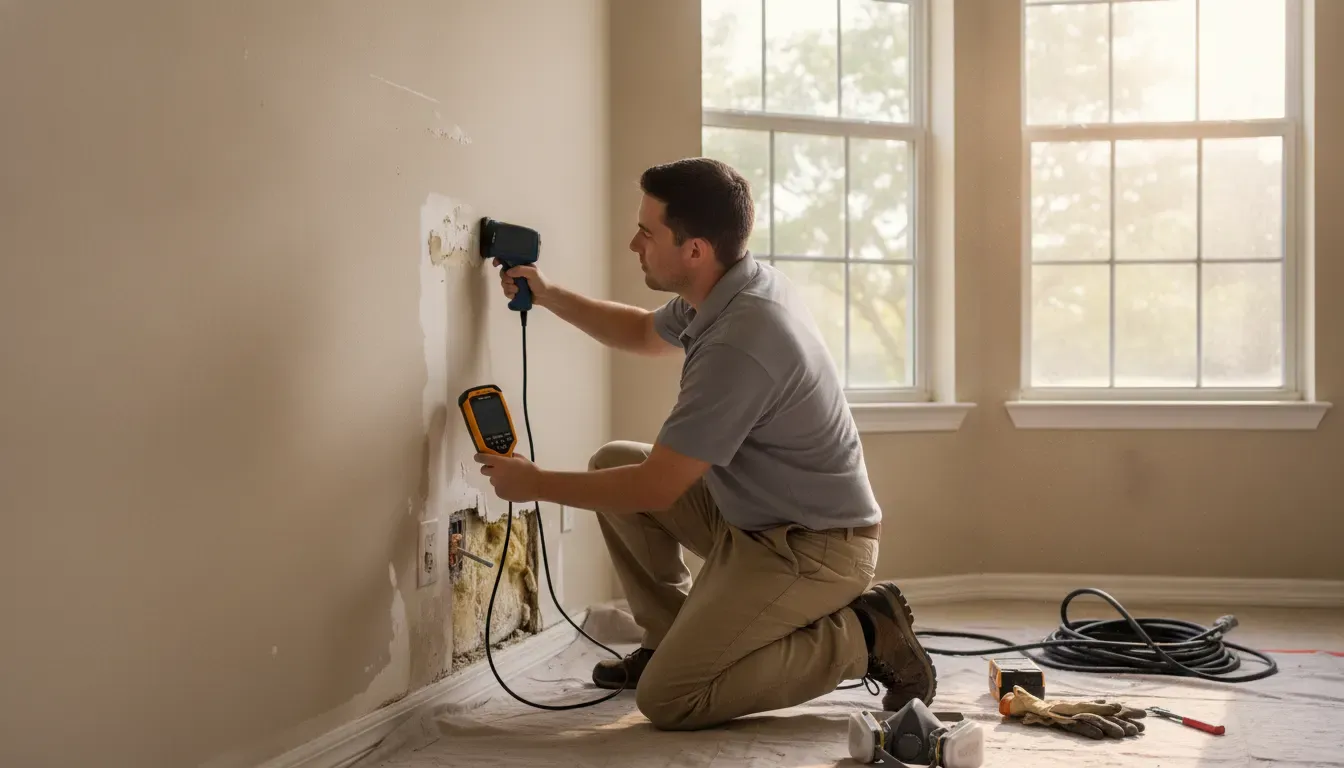
- Map the wet areas. A crew checks visible damage and uses moisture meters, and thermal imaging when it helps, to find water behind finishes.
- Remove standing water. Pumps and extractors clear floors. Contents are moved, protected, or set aside for a cleaning decision.
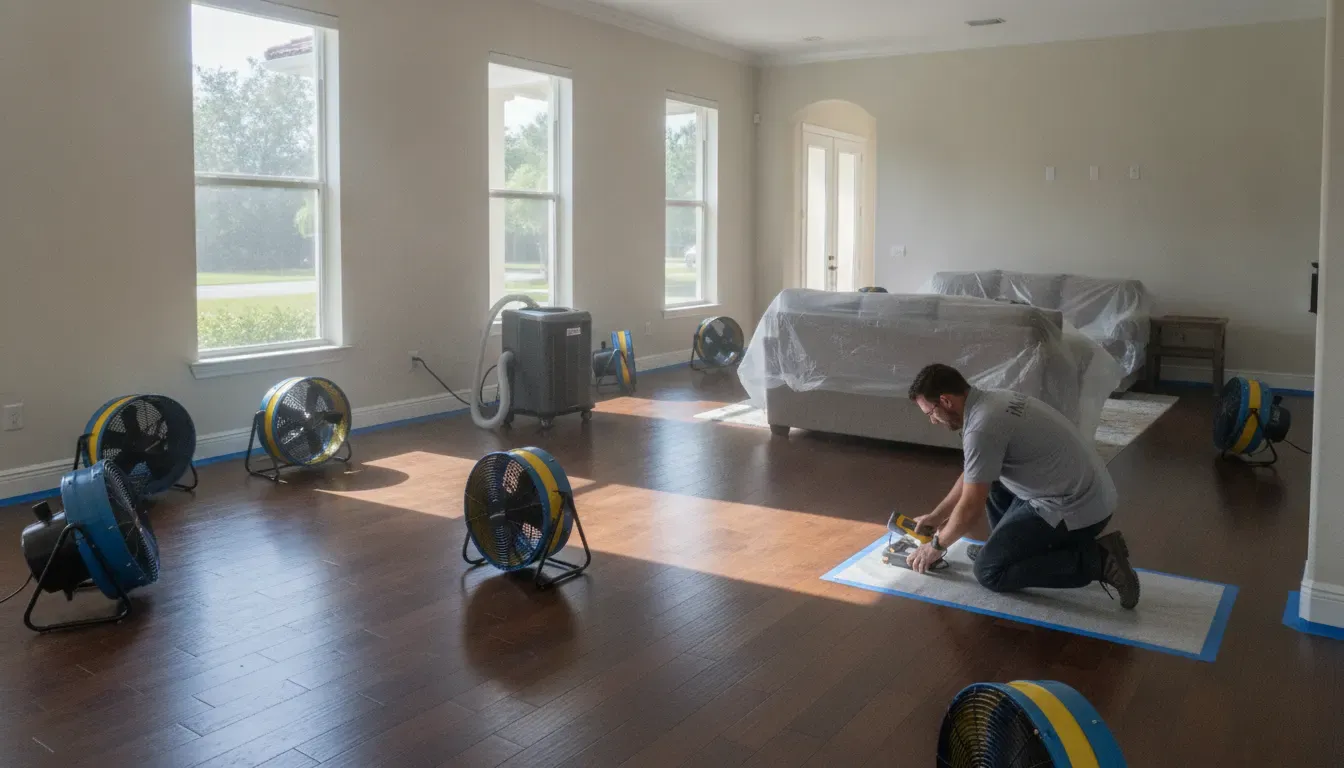
- Dry with readings. Air movers and dehumidifiers run while daily readings show whether floors, walls, and cavities are actually drying.
- Clean or remove materials. The water category and the exposure time decide what can be cleaned and what should come out.
- Repair after dry. Drywall, flooring, baseboards, and cabinets are repaired or replaced once the drying record supports that work.
A small room may move through extraction and setup in one visit. A soaked ground floor may need several drying days before anyone opens a wall. Commercial sites are often phased so part of the building can keep operating. Ask which rooms are in scope, where equipment will sit, and which work waits on a dry reading.
How Does Drying Stop a Flood From Getting Worse?
Short answer: Drying is extraction, airflow, dehumidification, and repeat measurements. A floor that feels dry can still hide moisture in the layers under it.
Drywall, insulation, wood floors, plaster, and cabinets do not dry at the same speed. Equipment is placed for the wet assembly, not for the whole house at one setting. iMold uses air movers, dehumidifiers, moisture meters, and thermal imaging. The crew logs each reading so the next step follows the numbers.
Wet drywall, carpet, wood, and furniture get harder to save the longer they stay wet. Dry fast, but do not treat speed as proof that mold will or will not grow. If you already see mold, clean the visible growth gently before fans spread it. People with asthma, a weak immune system, children, and pregnant people should stay out of moldy cleanup.
Power matters too. Keep fuel generators outside, away from doors and windows, because of carbon monoxide. If floodwater reached the air handler or ducts, leave that system off until it is checked. The American Red Cross flood safety guide also says not to walk or drive through floodwater. iMold’s structural drying service covers the equipment, the monitoring, and the dry standard.
Which Materials Can Be Saved After Flooding?
Short answer: Hard, cleanable surfaces often can be saved. Porous items that soaked up dirty water often cannot. The call depends on the water, the material, and how long it stayed wet.
Tile, metal, glass, and solid wood can sometimes be cleaned after the loose soil is removed. Carpet pad, wet insulation, and paper-faced drywall that took on contaminated water are common removal items. Cabinets may be saved when only the toe kick got wet, and they may need replacement when the box is swollen.
Sort first. Throw away what you cannot clean and dry. Clean what remains with water and detergent before any disinfectant. Disinfectants do not work through dirt, and many are not meant for unfinished wood or fabric. Do not mix bleach with other cleaners.
Bag debris before it is carried through clean rooms. Keep a simple list of what was discarded and why. That list helps the owner and the carrier later. For the first hours after you find water, the after-water-damage checklist covers the immediate safety steps. Material decisions still belong in the restoration scope.
What Affects Flood Damage Restoration Cost in Florida?
Short answer: There is no single price. Water depth, contamination, materials, contents, drying time, demolition, and repairs all change the scope. A written inspection is more useful than a generic online number.
iMold does not publish a flat flood price because two homes with the same water line can need different work. One may need extraction and a dry-out. Another may need wet insulation removed before drying can finish. Hidden damage found after a wall is opened should be explained and added to the file, not treated as a surprise.
iMold offers a free inspection and written estimate. The team can document the loss with photos, moisture readings, and Xactimate estimates for the claim file. That support does not guarantee that a carrier will pay. If a payment plan would help, ask about current financing options during the estimate. Do not assume a plan or a discount applies until someone confirms it for your job.
Does Flood Insurance Cover the Restoration Work?
Short answer: Maybe. Most standard homeowners policies do not cover flood. A National Flood Insurance Program policy, or a private flood policy, is a separate contract. Building coverage and contents coverage are often bought separately and can have separate deductibles.
FloodSmart, the NFIP’s public guide, says a residential building policy can cover up to $250,000 and a contents policy up to $100,000. Commercial building and contents coverage can each go up to $500,000. Those are program maximums, not a promise of what your policy will pay. Your declarations page controls the limit, the deductible, and what is excluded.
Report the loss to the carrier and ask what emergency work is allowed before you throw items away. The Consumer Financial Protection Bureau lists that call as the first recovery step, then aid applications and a call to the mortgage servicer if payments are at risk. Keep photos, receipts, readings, and notes.
Wind-driven rain, roof leaks, surge, and a plumbing failure in the same storm may be reviewed as different causes. iMold can organize the restoration record for that conversation. The company is licensed and insured, including State Certified General Contractor CGC1540205 and State Certified Mold Remediator MRSR2170. License numbers do not decide coverage.
Read the water damage insurance explainer for the difference between a typical water claim and a flood claim. Then confirm the answer with your own carrier.
How Does iMold Respond Across Southwest Florida?
Short answer: iMold handles assessment, extraction, drying, documentation, and the handoff to repairs. The team is based in Fort Myers and serves Southwest Florida, including Lee, Collier, Charlotte, Sarasota, and Manatee counties. Call for the response window at your address.
The company has spent 28 years on mold and water damage work in this region and offers 24/7 emergency service. A dispatcher can tell you whether to wait outside, what to photograph, and when a crew can arrive. After a regional storm, timing depends on road access and how many properties are affected.
Drying is not always the end. Some jobs move on to mold remediation, contents cleaning, drywall, flooring, or a larger rebuild. iMold’s rebuild services can continue from the documented scope. You do not have to retell the loss to a new contractor.
Reach iMold’s 24/7 emergency response team.
Frequently Asked Questions
How fast should floodwater be removed?
As soon as the building is safe to enter. Wet drywall, carpet, and furniture get worse every day they stay wet. Speed still does not override electrical, structural, or contamination hazards.
Can I dry a flooded room with household fans?
A fan can help a small, clean, shallow loss after the water is gone. It is a poor plan for contaminated floodwater, wet insulation, or water inside walls. Those jobs need extraction, dehumidification, and moisture readings.
How long does flood damage restoration take?
Extraction may start the day of the visit. Drying often takes several days and depends on materials and readings. Repairs start after the dry standard is met and the scope is clear. A date promised before inspection is a guess.
Does every flooded home get mold?
No. Mold needs moisture and time. Fast extraction, cleaning, and complete drying lower the chance. If you already see growth, clean it gently and keep fans off until that step is done so spores are not blown through the house.
What should I keep for the insurance file?
Keep photos, short videos, receipts, the estimate, moisture readings, and messages with the carrier. Do not discard wet items until the carrier says what it needs, unless the item is a safety hazard.
What Should You Do in the First Day After a Southwest Florida Flood?
Short answer: Protect people first, record the loss second, and call for help third. Do not spend the first day tearing out walls before anyone has seen the water line.
Shut off power only if you can do it from a dry location. If the panel is wet, leave it alone and wait for the utility or a qualified electrician. Move photos, medicine, and documents up and out of the water if you can do that without walking through a flooded room.
Write down when you first saw the water and where it seemed to enter. A door threshold, a weep hole, a garage joint, and a bath fan are different entry points, and the entry point changes the repair. Note whether the water was clear, muddy, or had a sewage odor. That note helps the crew set the cleaning level.
Skip these common mistakes:
- Do not run the air conditioner if the air handler or ducts were under water.
- Do not bleach a muddy wall and call it clean. Dirt has to come off first.
- Do not throw away carpet, cabinets, or contents until you have photos and the carrier’s instructions.
- Do not place a generator in a garage, even with the door open.
If roads are open and the building is safe to enter, a same-day inspection beats a room-by-room guess. iMold can send an estimator for a free inspection and leave the next step in writing. During a regional storm, ask dispatch for the current arrival window. Do not assume a normal response time.
If you want a person to walk the loss with you, call iMold. The team can inspect at no cost, explain the scope in plain language, and help you move from standing water to a documented repair plan.

