A sewage backup is more than an unpleasant plumbing problem. Once contaminated water enters a Fort Myers home or business, it can spread through flooring, drywall, belongings, and hidden cavities while creating immediate health and electrical hazards. Sewage backup cleanup in Fort Myers should start with safety, not a household mop. Here is what to do first, what may need to be discarded, and how professional water damage restoration limits the damage.
Get 24/7 sewage backup cleanup in Fort Myers from iMold.
Quick answer: Keep people and pets away from the affected area, avoid contact with standing water, and do not operate electrical equipment in or near it. If the source is safe to stop, shut it off without entering contaminated water, document the damage, and call a qualified restoration team. Sewage-contaminated water can carry pathogens, so removal, cleaning, drying, and disposal require more than routine housecleaning.
Why is a sewage backup a Category 3 emergency?
Sewage is treated as Category 3, or grossly contaminated, water because it may contain human waste, pathogens, and other harmful contaminants. The EPA’s flood cleanup guidance explains that sewage can pose a significant health threat and that fast response helps protect people, limit property damage, remove harmful substances, and return the building to a dry condition. The risk increases when contaminated water soaks into porous materials or spreads beyond the original room.
A sewage backup also creates hazards that are easy to underestimate. Water can reach electrical outlets, appliances, HVAC components, subfloors, and wall cavities. It can leave behind odor and contamination even after the visible water is gone. Drying the surface alone does not prove that the structure is clean or ready for repairs.
- Do not walk through standing water if electricity may be present.
- Do not let children, pets, or unprotected occupants enter the area.
- Do not use a household vacuum, fan, or shop vacuum on contaminated water.
- Do not track sewage into clean rooms with shoes, clothing, or equipment.
- Do not mix bleach, ammonia, or other cleaning products.
What health risks can sewage exposure create?
Exposure can happen through skin contact, splashes to the eyes or mouth, inhalation of contaminated droplets, or touching contaminated surfaces and then touching the face. The CDC’s sewage-exposure guidance recommends appropriate protective equipment, careful handwashing after handling waste or removing PPE, worker training, and prompt medical attention if illness develops. Homeowners should avoid direct contact and leave cleanup to trained professionals when sewage has entered the structure.
Possible concerns include gastrointestinal illness, skin irritation, eye irritation, respiratory irritation, and infection through cuts or open wounds. People who are pregnant, very young, older, immunocompromised, or managing chronic health conditions should be especially cautious and should follow their healthcare provider’s advice after exposure. This article is not medical advice. If someone has had a significant exposure or develops vomiting, diarrhea, stomach cramps, fever, breathing trouble, or other concerning symptoms, contact a medical professional or local health authority.
Health risk is not limited to the first few minutes. Contaminants can remain on flooring, baseboards, tools, fabrics, and other surfaces. That is why professional sewage cleanup focuses on controlled removal and decontamination rather than simply covering odor with fragrance.
What should you do immediately after a sewage backup?
The safest first steps are simple, but they matter. If the backup is active and the shutoff can be reached without entering contaminated water, stop the source. Otherwise, leave the area and call for help. Do not attempt to make the room usable before its electrical and structural conditions have been assessed.
- Protect people and pets. Close off the affected room and keep unprotected people away.
- Stay clear of electrical hazards. Do not touch outlets, appliances, cords, or switches while standing in water.
- Stop the source only if it is safe. If the cause is a plumbing or sewer issue, contact the appropriate plumber or utility provider.
- Document before moving items. Take wide and close photographs, record the date, and save damaged-item information for your insurer.
- Call a restoration professional. Ask for an assessment that addresses contamination, moisture in building materials, contents, and insurance documentation.
Do not begin demolition based only on what is visible. Removing the wrong material can spread contamination, while leaving saturated flooring or drywall in place can extend the damage. A restoration assessment should identify where water traveled and which materials can be cleaned, dried, or safely removed.
What materials should never be kept after sewage contamination?
Some porous materials absorb contaminated water deeply and cannot be reliably cleaned in place. Whether a specific item is salvageable depends on the type of material, the exposure, the time since the backup, and the extent of penetration. A professional can separate potentially salvageable contents from materials that should be removed and documented for disposal.
| Material or item | Why it needs careful evaluation |
|---|---|
| Carpet and pad | Fibers and padding can retain contaminated water and odor below the surface. |
| Upholstered furniture and mattresses | Porous cores are difficult to clean and dry completely after sewage exposure. |
| Drywall, insulation, and other porous building materials | Contamination can travel behind the visible surface and remain in hidden cavities. |
| Cardboard, paper goods, and heavily saturated textiles | These materials absorb water quickly and may not be safely restorable. |
| Hard, nonporous surfaces | They may be candidates for controlled cleaning and decontamination, but must still be evaluated. |
Do not discard everything without documenting it, especially when an insurance claim may be involved. Photograph items in place, keep a simple inventory, and ask the restoration team what should be removed, cleaned, or retained. Never place contaminated materials in a clean room while sorting them.
Read the full water damage restoration guide for Southwest Florida before cleanup begins.
How does professional sewage backup cleanup work?
Professional cleanup is a controlled sequence designed to protect occupants, stop the spread of contamination, and return the structure to a dry, documented condition. At iMold, the approach fits the established iMold Way: Assess, Contain, Extract, Remediate, and Restore.
1. Assess and document
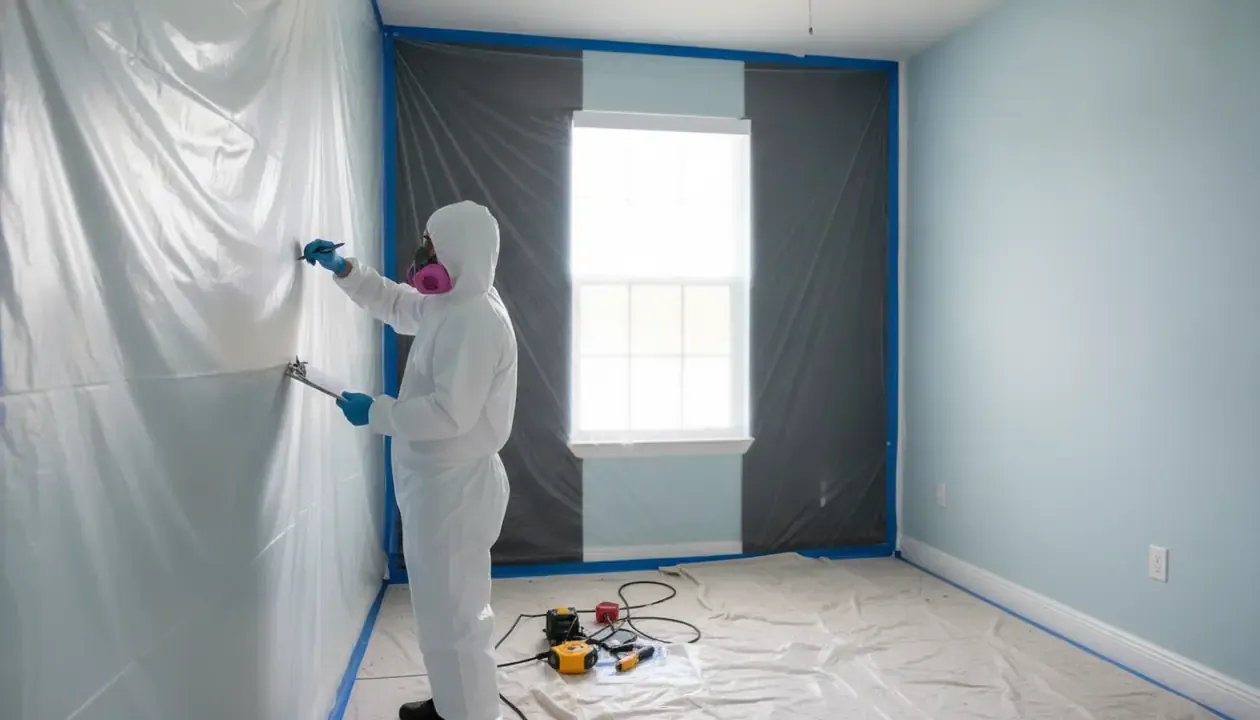
Technicians identify the source, affected rooms, water path, material types, and potential electrical or structural concerns. Moisture meters, thermal imaging, photographs, and written documentation help reveal moisture that is not visible and create a useful record for the property owner and insurer.
2. Contain the affected area
The team establishes controlled access and protects unaffected parts of the property. The exact containment approach depends on the building and the spread of contamination. The goal is to keep people, clean surfaces, and equipment from becoming part of the problem.
3. Extract water and remove unsalvageable materials
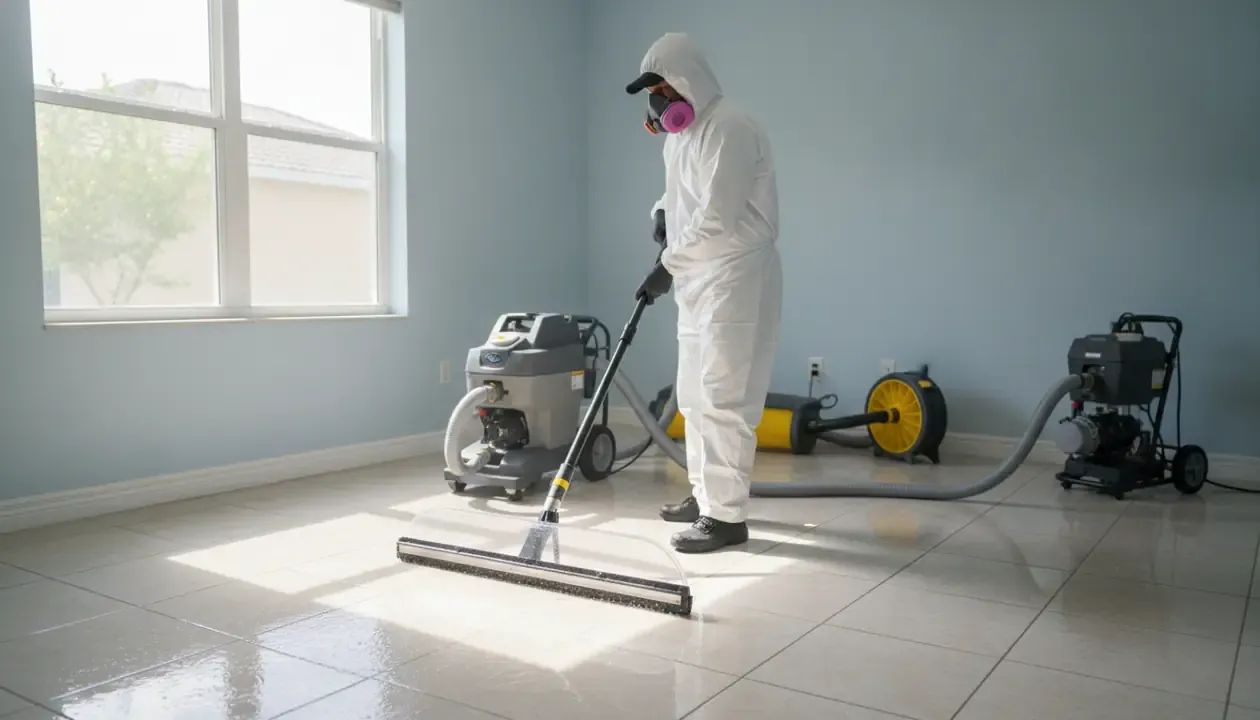
Commercial extraction equipment removes contaminated water more efficiently than household tools. Materials that cannot be safely cleaned are removed in a controlled manner. The scope is based on the actual exposure, not on a generic checklist.
4. Clean, decontaminate, and dry
Hard surfaces are cleaned using appropriate professional methods, while air movement and dehumidification address moisture left in the structure. The team monitors moisture in flooring, walls, cabinets, and other affected components rather than relying on touch. Odor treatment follows source removal and cleaning, not the other way around.
5. Restore and verify
Once the affected areas are clean and dry, iMold can coordinate the next restoration steps, including repairs and reconstruction when appropriate. Final moisture readings, photographs, and documentation help show what was completed and what remains. Insurance coordination can also help the owner communicate with the carrier and adjuster.
When should Fort Myers property owners call iMold?
Call as soon as sewage has entered the structure, especially when the source is active, the affected area is large, the water has reached flooring or walls, or anyone has had direct exposure. iMold provides 24/7 emergency service and a 30-minute response promise for the immediate service zone. Response timing can depend on the exact location, conditions, and access, so the safest step is to call and describe what happened.
iMold serves Fort Myers, Cape Coral, Naples, and communities across Southwest Florida. The team can assess a residential or commercial property, address water removal and structural drying, coordinate insurance documentation, and help plan reconstruction when the cleanup is complete.
- Fort Myers emergency restoration team for local response and service information.
- Cape Coral water damage restoration for property owners in Cape Coral.
- Naples water damage restoration for properties in Naples and nearby areas.
Licensed, bonded, and insured restoration support can make a major difference after a sewage backup. iMold brings 28 years of local experience, IICRC-certified professionals, and a full-spectrum path from emergency response through restoration. The goal is not just to remove visible water. It is to make the property safer, drier, cleaner, and ready for the next repair decision.
Schedule professional sewage backup cleanup and water damage restoration in Fort Myers.
Frequently Asked Questions
How much does sewage backup cleanup cost in Fort Myers?
There is no responsible one-size-fits-all price. A professional quote depends on the affected rooms, contamination path, materials, contents, extraction, drying, cleaning, and repair scope. iMold can assess the property and provide a custom estimate while helping document the loss for insurance.
Can carpet be cleaned after a sewer backup?
Sometimes a limited section may be evaluated, but sewage exposure can reach the carpet pad and subfloor. The decision depends on the material, saturation, time, and contamination. Do not shampoo or move contaminated carpet through clean areas before a professional assessment.
What is the best way to clean up a sewer backup?
The safest approach is to keep people away, avoid electrical and direct-contact hazards, document the damage, and use a trained restoration team for extraction, material evaluation, cleaning, drying, and verification. Routine household cleaning does not address hidden moisture or contamination in porous materials.
How long does sewage backup cleanup take?
The duration depends on the source, the amount of water, building materials, hidden moisture, contents, and repairs. A restoration professional can set a project plan after inspection. Drying should be measured with moisture readings rather than declared complete because a surface feels dry.
Does insurance cover sewage backup cleanup?
Coverage depends on the policy, the source of the loss, endorsements, exclusions, and the facts of the claim. Photograph the damage, avoid unnecessary disposal before documentation, notify the carrier, and ask the restoration team what records will help support the claim. iMold works directly with carriers and uses Xactimate documentation for restoration claims.
Need immediate help after a sewage backup? Call iMold at 877-771-1699 for 24/7 emergency service.