When water, mold, storm damage, or another property emergency affects your Southwest Florida home or business, restoration contractors can help stabilize the property and map the path from damage to repair. Start with a company that is available 24/7. Fast attention helps protect the property while you gather information and make a sound decision.
The right restoration contractors should be licensed, insured, experienced with your type of damage, and able to document the work from assessment through completion. Look for clear written estimates, a defined restoration plan, practical insurance support, and communication you can rely on. In Southwest Florida, it also helps to choose a team familiar with local homes, businesses, weather events, and permitting needs.
A restoration contractor may coordinate several distinct stages, from stopping active damage and drying affected areas to addressing mold concerns and rebuilding damaged spaces. Understanding that role makes it easier to compare providers and ask useful questions before work begins.
What Is a Restoration Contractor?
A restoration contractor helps return a property to a safe, usable condition after water intrusion, mold, storm damage, fire, or another covered loss. The work is more involved than removing visible debris or replacing a damaged wall. A qualified contractor evaluates what happened, identifies affected materials, controls the source, documents the work, and coordinates the sequence from immediate stabilization through final repairs.
For homeowners, businesses, and property managers, that coordinated role matters because damage can extend behind walls, beneath flooring, or into contents that appear unaffected. In Southwest Florida, humidity also makes timely moisture assessment and drying important. The contractor should explain what is known, what still needs testing, and which work belongs in the current phase.
Mitigation and drying come first
Mitigation means limiting additional damage after an incident. Depending on the situation, it can include stopping or isolating the water source. Extracting standing water, protecting contents, removing materials that cannot be saved, and setting up controlled drying. Drying is not simply running a fan. Restoration professionals use moisture readings and appropriate equipment to verify that affected building materials are moving toward acceptable dry conditions.
The U.S. Environmental Protection Agency advises drying water-damaged areas and items within 24 to 48 hours to help prevent mold growth. Read the EPA’s moisture-control guidance for the underlying principle: controlling moisture is central to controlling indoor mold.
Remediation addresses contamination or affected materials
Remediation is the controlled process of addressing mold or other identified contamination. It may involve determining the moisture source, establishing containment, removing affected materials, cleaning contents, and verifying the result. Testing can help establish a baseline before work and provide independent clearance verification afterward. Remediation should not be presented as a cosmetic spray-and-wipe service. The plan should match the affected area, materials, source, and verification needs.
Reconstruction completes the restoration
Once mitigation and remediation are complete, reconstruction replaces or repairs building components such as drywall, insulation, flooring, cabinetry, or finishes. A restoration contractor may manage this phase directly or coordinate it with qualified trades.
Drying and cleaning address immediate damage. Reconstruction restores the property’s function and appearance.
iMold describes its service model as combining water damage restoration, mold remediation, reconstruction, and specialty cleaning. Its documented process is organized as Assess, Contain, Extract, Remediate, and Restore. That full-scope approach can reduce handoffs. Written estimates, progress photos, moisture readings, and insurance documentation help keep the project understandable from the first assessment through the final repair.
How Do You Compare Restoration Contractors?
When property damage occurs, the lowest initial estimate is not always the clearest value. Compare restoration contractors by the evidence they provide, the work they can manage, and the plan they use to move the property from assessment to a documented restoration. A dependable company should explain what happens next in plain language, identify what is known versus what still needs inspection, and give you a practical point of contact.
Start with these six questions. Is the company properly licensed, bonded, and insured? Does its scope match the loss, including drying, mold remediation, contents cleaning, and reconstruction when needed? Will it document conditions with written estimates, photos, and moisture readings? How often will the team communicate? Can it coordinate insurance documentation without promising that a carrier will cover every item? Finally, does the proposed restoration plan show how the work will be verified before the project closes?
For example, iMold publicly identifies its State Certified General Contractor (CGC1540205) and State Certified Mold Remediator (MRSR2170) credentials, along with IICRC credentials including WRT, ASD, MRS, AMRT, FSRT, OCT, and CCT. These are useful details to verify, not simply marketing labels. You can also review the company documentation through its licenses and certifications page.
| Comparison area | What to verify | Why it matters |
|---|---|---|
| Licensing | Current licenses, insurance, bonding, and relevant technical credentials. | Confirms accountability and training for the work proposed. |
| Scope | Assessment, mitigation, remediation, contents, and reconstruction boundaries. | Reduces handoffs and makes missing work easier to identify. |
| Documentation | Written estimate, line items, photos, moisture readings, and change records. | Creates a clear project record for decisions and insurance review. |
| Communication | Named contact, update schedule, and explanation of next steps. | Helps you make timely decisions during a disruptive event. |
| Insurance support | Carrier coordination and Xactimate-based documentation, without coverage promises. | Separates documented work from the insurer’s coverage decision. |
| Restoration plan | Defined sequence, verification points, and final restoration responsibilities. | Shows how the property will be returned to a usable condition. |
Look for a plan that connects each phase instead of treating cleanup as the finish line. iMold describes its process as Assess, Contain, Extract, Remediate, and Restore. Its documented services also include written estimates, Xactimate insurance documentation, and progress updates with photos and moisture readings. When water is involved, ask how structural drying will be measured and confirmed. A contractor should be able to explain the equipment, readings, and decision points rather than simply saying the area is dry.

For Southwest Florida properties, a local service area and full-scope capability can also simplify coordination. iMold combines water damage restoration. Mold remediation, reconstruction, and specialty cleaning under one service model. That does not remove the need to read the estimate. It gives you a clearer question to ask: which parts of the work will this team complete, and which parts require another provider?
Review water damage restoration services and request a clear plan for your property.
What Should You Do First After Water or Mold Damage?
When water intrusion or suspected mold appears, focus first on safety and stopping additional damage. A calm sequence also gives restoration contractors the information they need to assess the property accurately. Use these steps for a leak, appliance failure, storm-related intrusion, or visible mold concern.
- Protect people and pets. Keep children and animals away from standing water, damaged areas, and any unstable materials. Do not enter water that may have contacted electrical equipment. Mold cleanup can create health and injury risks, according to the CDC’s cleanup guidance. People with asthma, allergies, immune suppression, or certain lung conditions should not take part in mold cleanup.
- Stop the source only if it is safe. Shut off the local water supply or main valve when appropriate. If the problem involves electricity, sewage, contaminated floodwater, a gas appliance, or structural damage, leave the area and contact the appropriate emergency professional. Avoid taking risks to reach a valve or appliance.
- Limit additional exposure. Move undamaged belongings away from the affected area if you can do so safely. Place foil or blocks under furniture legs where practical, and avoid walking through wet areas unnecessarily. Do not use household fans in visibly moldy areas or around electrical hazards. Never mix bleach with ammonia or another cleaner.
- Document what you see. Take clear photographs and videos before moving contents or beginning cleanup. Record the suspected source, rooms affected, visible staining or mold, damaged materials, and approximate date and time. Keep receipts for reasonable emergency purchases, and do not discard damaged items until your insurer advises you, unless they present an immediate health or safety risk.
- Call for 24/7 professional help. Contact a qualified restoration company promptly, especially when water has entered walls, flooring, ceilings, or cabinets. iMold’s 24/7 emergency response is available for Southwest Florida property emergencies. Professional drying matters because the EPA advises drying water-damaged areas and items within 24 to 48 hours to help prevent mold growth.
- Request a moisture assessment. Ask the restoration team to inspect visible and hidden areas, identify the source, and explain the proposed scope. Thermal cameras and moisture meters can help locate affected materials. If mold is suspected, ask whether testing, containment, removal, and clearance verification are appropriate for the situation.
- Notify your insurance carrier and share documentation. Report the loss according to your policy, then provide photographs, estimates, receipts, and contractor records. A restoration provider may coordinate with the carrier and prepare Xactimate-based documentation, but insurance coverage decisions remain with the insurer. For additional homeowner guidance, see what to do after water damage.
The goal is not to diagnose the entire loss yourself. It is to make the area safer, preserve useful information, and get a documented assessment before moisture or mold affects more of the property.
Why Do Credentials and Documentation Matter?
When you compare restoration contractors, credentials offer a practical starting point. They help you verify that the company has the licensing, training, and insurance structure needed to work responsibly in your property. iMold identifies itself as licensed. Bonded, and insured, and its credentials are available for independent review on its licenses and certifications page.
For mold and reconstruction work, the public-facing credentials include State Certified General Contractor (CGC1540205) and State Certified Mold Remediator (MRSR2170). iMold also lists IICRC credentials including WRT. ASD, MRS, AMRT, FSRT, OCT, and CCT. These designations do not replace a clear explanation of the work. But they can show that the team has training relevant to water damage, mold remediation, and restoration planning.
What should a written estimate include?
A useful estimate should make the proposed work understandable before it begins. Look for a written scope, line-item service breakdowns, the areas affected, and the steps needed to move from assessment through restoration. Clear documentation gives you something specific to review with the contractor, property manager, and insurance carrier. It also makes it easier to identify work that is included, work that may require approval, and questions that need an answer before the project advances.
For insurance-related work, iMold can provide Xactimate-based documentation, along with progress updates that include photos and moisture readings. This record helps show what was observed, what actions were taken, and how conditions changed during the project. It supports communication with a carrier, but it does not guarantee that an insurance policy will cover every service or expense. Coverage decisions remain subject to the policy and the insurance carrier’s review.
Why do testing and measurements add transparency?
Good documentation begins with careful assessment. Visual inspections can be supported by thermal cameras and moisture meters to help identify affected areas. When mold is suspected, third-party testing can provide an independent pre-remediation baseline and post-remediation clearance verification. That separation can make the process easier to understand because the testing is not solely dependent on the company performing the remediation.
Ask restoration contractors how they will document moisture, affected materials, containment, and completed work. A transparent process should give you understandable records, not just a verbal assurance that the property is ready. Credentials establish accountability, while written estimates, measurements, photographs, and independent testing help you follow the actual work from assessment to restoration.
Can One Contractor Handle Cleanup and Rebuilding?
Often, yes. A full-spectrum restoration contractor can coordinate the work that connects an initial property assessment to final repairs, which can reduce handoffs between separate companies. That does not mean every project has the same scope or that one contractor automatically performs every trade. The right plan depends on the source of damage, affected materials, moisture conditions, testing results, structural needs, and the property’s insurance requirements.
The advantage is continuity. A single restoration team may be able to assess the loss, extract standing water, establish drying goals, address mold, clean affected contents, document progress. And manage reconstruction when damaged finishes or building components must be replaced. iMold combines water damage restoration, mold remediation, reconstruction, and specialty cleaning under one service model. Its reconstruction and rebuild services can support the final phase after the cleanup and remediation work is complete.
How the phases fit together
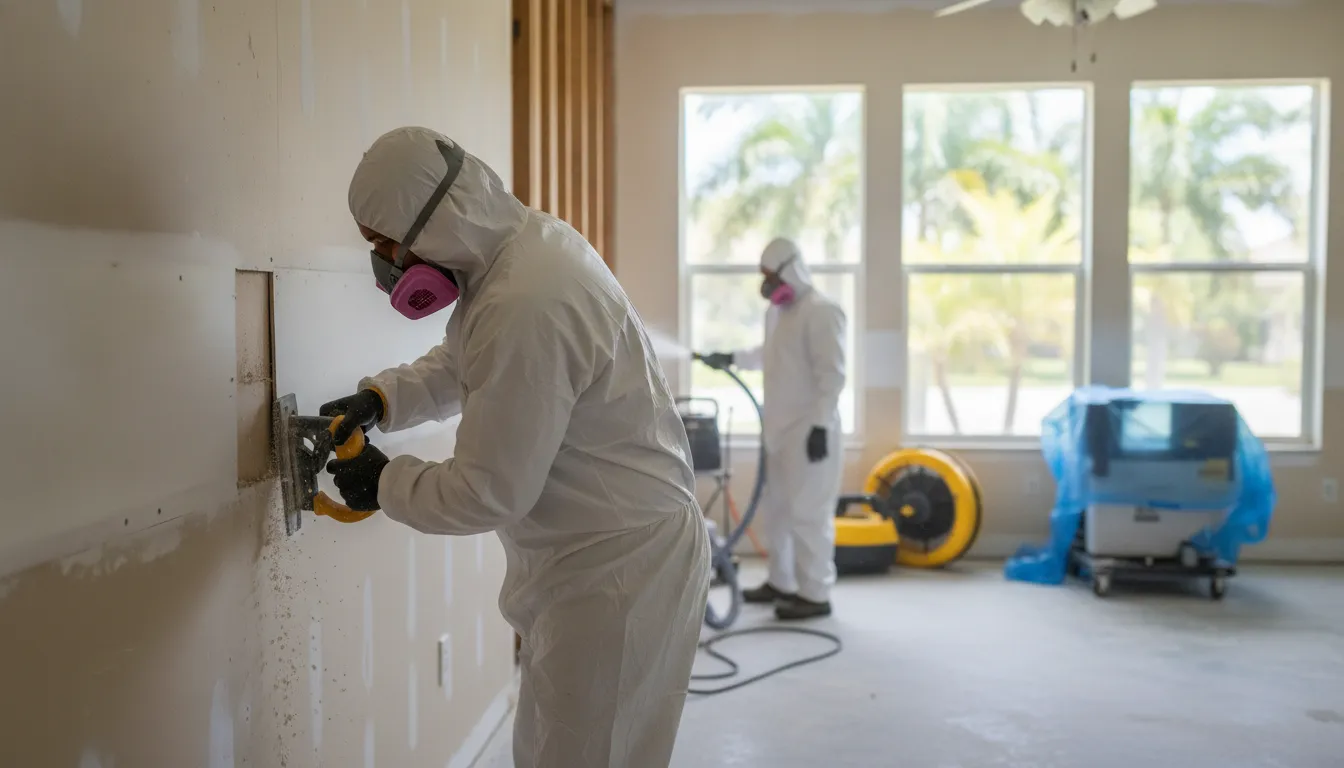
The iMold Way organizes the work as Assess, Contain, Extract, Remediate, and Restore. During Assess, the team identifies the source, affected areas, and materials that may require removal or repair. Thermal cameras and moisture meters can help evaluate visible and hidden moisture during a free visual inspection. Contain helps separate affected areas when conditions require it. Extract addresses water removal, followed by drying and moisture verification. Remediate focuses on removing or treating affected materials and addressing mold-related conditions. Restore brings the property back to a usable condition through cleaning, repairs, and reconstruction as needed.
For water-related losses, readers can review the company’s water damage restoration services to understand how extraction, drying, and related repairs fit together. A project may stop after drying if materials remain sound. Another may require removal, contents cleaning, drywall or flooring replacement, and more extensive reconstruction. A qualified contractor should explain that boundary before work begins rather than promise a predetermined result.
What to expect from a coordinated plan
Ask for a written estimate and a clear line-item breakdown of mitigation, remediation, cleaning, and reconstruction. Progress photos and moisture readings can show what was found, what has been completed. And why the next phase is recommended. iMold also documents work with Xactimate-based insurance materials and coordinates with carriers. But insurance coordination is not a guarantee that every item will be covered.
Independent testing may also be appropriate for mold work, including pre-remediation baseline testing and post-remediation clearance verification. The goal is a documented transition from damaged conditions to a restored property, with the scope adjusted to what the assessment actually shows.
What Questions Should You Ask Before Hiring Restoration Contractors?
When comparing restoration contractors, ask questions that reveal how the company will assess the property, document the work, and communicate from the first visit through final restoration. A clear answer should include the next step, the evidence you will receive, and who is responsible for coordinating it.
Are you properly licensed, insured, and certified for this work?
Ask for current licensing and insurance information, along with certifications relevant to the loss. In Florida, verify the contractor’s credentials independently. For mold work, ask whether the team includes a State Certified Mold Remediator. A company that is licensed, bonded, insured, and transparent about its qualifications should be comfortable showing you how to verify them.
What damage is included in the proposed scope?
Request a written explanation of affected rooms, materials, contents, and structural areas. The scope should distinguish emergency mitigation, water extraction, drying, mold remediation, cleaning, repairs, and reconstruction. This helps prevent important work from being assumed rather than documented.
How will you verify that moisture has been removed?
Ask what equipment and measurements will be used. Moisture meters, thermal cameras, documented readings, and progress photographs provide more useful evidence than a visual check alone. For a water loss, ask whether the plan includes professional structural drying and how completion will be confirmed.
What documentation will I receive for my insurance claim?
Find out whether the contractor provides written estimates, line-item breakdowns, photographs, moisture readings, and Xactimate documentation when appropriate. Carrier coordination can make the process easier, but no contractor can guarantee what an insurance policy will cover. Ask for covered and non-covered work to be explained separately.
Will you use subcontractors, and who supervises them?
Ask which parts of the project the company performs directly and whether outside trades may be involved. You should know who supervises the work, who handles questions, and who remains accountable for quality, safety, and scheduling if multiple crews participate.
How will you communicate during the project?
Confirm your primary contact, update frequency, after-hours process, and the way changes will be approved. Commercial property managers should also ask how occupants, tenants, staff, and building operations will be considered while work is underway.
What timeline should I expect, and what could change it?
A responsible contractor should explain the sequence and identify variables such as hidden moisture, material availability, testing, or permitting. Be cautious of an exact completion promise before the damage has been properly assessed. Ask when you will receive the next update instead.
How will you confirm final clearance or complete reconstruction?
For mold remediation, ask whether independent pre-remediation and post-remediation testing is available, and what happens if clearance is not achieved. If rebuilding is needed, confirm whether the same team can coordinate reconstruction or provide a clear handoff. The final scope, documentation, and remaining responsibilities should be written down before the project closes.
Schedule a free visual mold inspection and estimate with iMold.
Frequently Asked Questions
What does a restoration contractor do?
A restoration contractor assesses property damage, controls the source, removes affected materials, dries or cleans the space, documents the work, and restores the property. Depending on the project, services may include water damage restoration, mold remediation, contents cleaning, and reconstruction.
How do I choose a qualified restoration contractor?
Verify that the company is licensed, bonded, and insured, then ask about relevant certifications, emergency availability, written estimates, documentation, and insurance coordination. Confirm that the proposed scope explains what happens from the initial assessment through final restoration, and look for clear communication throughout the project.
Can one contractor handle both cleanup and rebuilding?
Yes. Some restoration contractors coordinate the full project, including mitigation, remediation, specialty cleaning, and reconstruction. Using one service model can simplify communication and documentation, but ask where each phase begins and ends so the scope and responsibilities are clear.
Are restoration contractors available for emergencies?
Many established restoration contractors offer 24/7 emergency availability for active water intrusion, storm damage, and other urgent property concerns. When damage is ongoing, contact a qualified provider promptly, follow immediate safety guidance, and ask what assessment and stabilization steps will happen first.
Can I get a free inspection or estimate for suspected mold?
Some providers offer a no-cost visual mold inspection and estimate. The assessment may use moisture meters and thermal cameras to identify affected areas. Ask whether testing is recommended and whether the estimate will include a written scope, documentation, and any needed insurance coordination.
Get started with a qualified restoration team
When property damage needs careful assessment and a clear plan, iMold Cleaning and Restoration can help you understand the next steps. The team is available 24/7 for restoration emergencies, and free visual mold inspections and estimates are available when you are comparing options. Call iMold at 877-771-1699 to request emergency service or schedule a free estimate for your Southwest Florida property.