When water enters a home or business, the visible puddle is only the beginning. Moisture can move behind walls, under flooring, and into materials that look dry, so the safest first response is to protect people. Avoid unsafe areas, document what you can without disturbing hazards, and arrange a professional assessment.
Get 24/7 emergency restoration help
Property restoration companies help return damaged homes and businesses to a safe, usable condition after water intrusion, mold, storms, or related losses. Depending on the assessment, the work may include moisture detection, extraction, drying, containment, remediation, cleaning, repairs, reconstruction, and documentation for insurance discussions. Not every provider offers the same scope, so confirm the qualifications and services you need.
For Southwest Florida property owners, the right choice combines clear communication with practical local knowledge. Understanding what the restoration process includes makes it easier to act calmly, ask useful questions, and recognize the difference between immediate mitigation and the repairs that follow.
What do property restoration companies do?
Property restoration companies help return homes and businesses to a safe, functional condition after water intrusion, mold growth, storms, fire, or other property damage. Their role can begin with documenting the affected areas and controlling the source, then continue through cleaning, drying, material removal, repairs, and reconstruction. The exact scope varies by company, so property owners should confirm which services are handled in-house and which are referred to other contractors.
For water damage, the work may include locating visible and hidden moisture, extracting standing water. Drying structural materials, cleaning affected contents, and checking whether materials are ready for repair. A company may also coordinate specialty cleaning and reconstruction when drywall, flooring, cabinetry. Or other building components need attention. iMold serves both residential and commercial properties throughout Southwest Florida and has operated for 28 years. Its water damage restoration service is part of a broader recovery process for homes, businesses, and property managers.
Mitigation, remediation, and restoration are different steps
These terms are related, but they are not interchangeable. Mitigation focuses on limiting ongoing damage, such as stopping the spread of water, extracting moisture, and setting up drying equipment. Remediation addresses a specific contaminant or condition, such as mold, through containment, removal, cleaning, and verification. Restoration is the broader effort to return the property to usable condition, including repairs, refinishing, and reconstruction after the source of damage has been addressed.
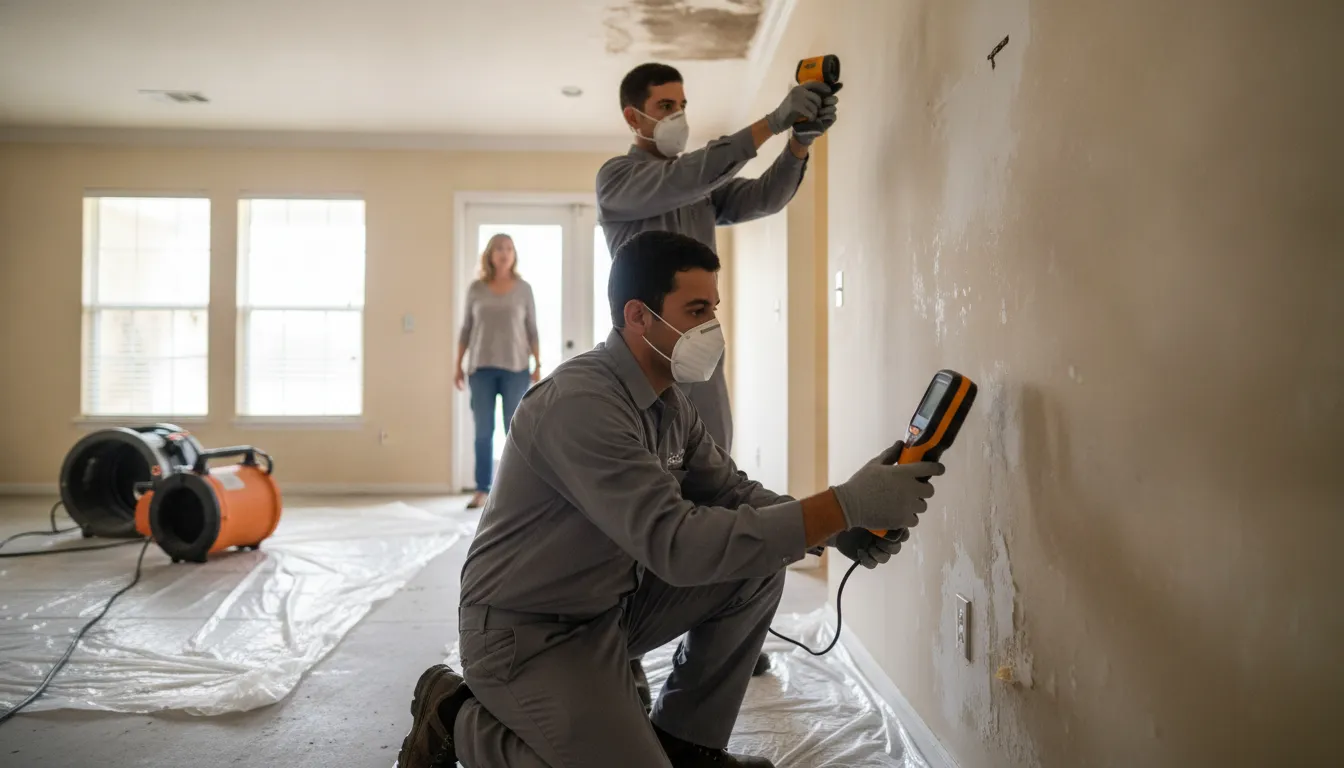
A qualified team should explain why each step is recommended rather than treating every loss the same way. Assessment may include photographs, moisture readings, thermal imaging, and moisture meters to identify affected areas that are not obvious during a visual inspection. The resulting documentation helps define the work, communicate with the property owner, and support insurance discussions without guaranteeing coverage or claim approval.
A coordinated process from assessment through rebuilding
iMold describes its approach in five stages: Assess, Contain, Extract, Remediate, and Restore. The team first evaluates the property and identifies the source and extent of damage. It then establishes controlled work areas, removes water or affected materials as appropriate, completes remediation and cleaning, and restores the building through repairs or reconstruction. This structure helps connect emergency mitigation with the final repair instead of leaving the owner to coordinate unrelated specialists.
For mold concerns, iMold also offers no-cost visual mold inspections and estimates. For a commercial property, the plan may need to account for occupants, equipment, inventory, and business continuity. For a home, it may focus on protecting living areas and personal contents. In both settings, the goal is a documented, practical path from damage assessment to a clean, usable property.
What should you do before calling a restoration company?
The minutes before professional help arrives should focus on safety, preservation, and useful information. Avoid turning an emergency into a larger problem by entering unstable areas or attempting cleanup that requires specialized equipment. These steps can help a restoration team understand what happened and begin with better information.
- Protect people first. If anyone is injured, trapped, or facing an immediate threat from fire, electrical hazards. Contaminated water, structural instability, or another dangerous condition, leave the area and contact emergency services. Keep children, visitors, customers, and pets away from affected spaces.
- Avoid unsafe areas. Do not walk through standing water when electricity may be present, enter visibly damaged rooms. Disturb suspected mold, or move through areas with sagging ceilings, damaged floors, strong odors, or other warning signs. If you cannot safely reach a shutoff or inspect the damage, wait for trained assistance.
- Stop the source only if it is safe. You may be able to turn off a leaking appliance or accessible water supply without entering a hazardous area. Do not attempt electrical, gas, plumbing, or structural repairs beyond your training. If the source cannot be stopped safely, move away and tell the restoration company what you observed.
- Document visible conditions from a safe location. Take photographs or video without touching damaged materials. Capture the source, affected rooms, standing water, damaged belongings, and any visible staining. Note when the issue began, whether it is getting worse, and what actions have already been taken. Do not delay urgent professional help to create a complete record.
- Protect contents without disturbing hazards. Move small, unaffected items away from a safe perimeter if doing so does not require entering the damaged area. Avoid wiping mold, pulling up flooring, throwing away materials, or relocating heavy or contaminated contents before they can be assessed. Those actions can spread damage or remove information needed for the scope of work.
- Preserve useful information. Gather insurance details, maintenance records, appliance information, lease or property-management contacts, and photographs from before the incident if they are readily available. Write down the likely cause and any emergency services or contractors already contacted. Do not assume an insurer will approve a claim, but early documentation can support clear communication.
- Call for a professional assessment. Contact a qualified restoration provider when the property needs evaluation, drying, mold assessment, cleaning, or rebuilding. The EPA advises drying water-damaged areas and items within 24 to 48 hours when possible to help prevent mold growth. Read the EPA guide to mold, moisture, and your home for additional context, then arrange an assessment rather than attempting DIY remediation.
When choosing among property restoration companies, describe the conditions honestly and ask what the initial assessment includes. A careful professional should explain immediate risks, document moisture or damage, and distinguish emergency mitigation from later remediation and reconstruction.
How do restoration companies handle water and mold damage?
A professional restoration workflow begins with understanding what happened, how far moisture traveled, and whether the property is safe to enter. The right scope depends on the assessment. Not every contractor provides the same combination of water mitigation, mold remediation, cleaning, repairs, and reconstruction, so ask what the company will inspect and document before work begins.
Assessment and moisture documentation
Technicians typically begin by identifying the source of the water, reviewing affected rooms, and documenting visible conditions with photographs. Moisture meters and thermal imaging can help locate damp materials or hidden water impact behind walls, beneath flooring, or in other areas that do not appear wet. This information supports a practical drying plan and gives the property owner a clearer record of the work.
For water intrusion, the assessment may include water damage restoration planning and a closer moisture detection and leak assessment. Drying should address the affected structure, not just the water visible on the surface. The EPA identifies moisture control as the key to mold control and recommends drying water-damaged areas and items within 24 to 48 hours when possible. Conditions, materials, and access can affect what is practical, so a professional should establish the appropriate sequence.
Extraction, drying, and controlled removal
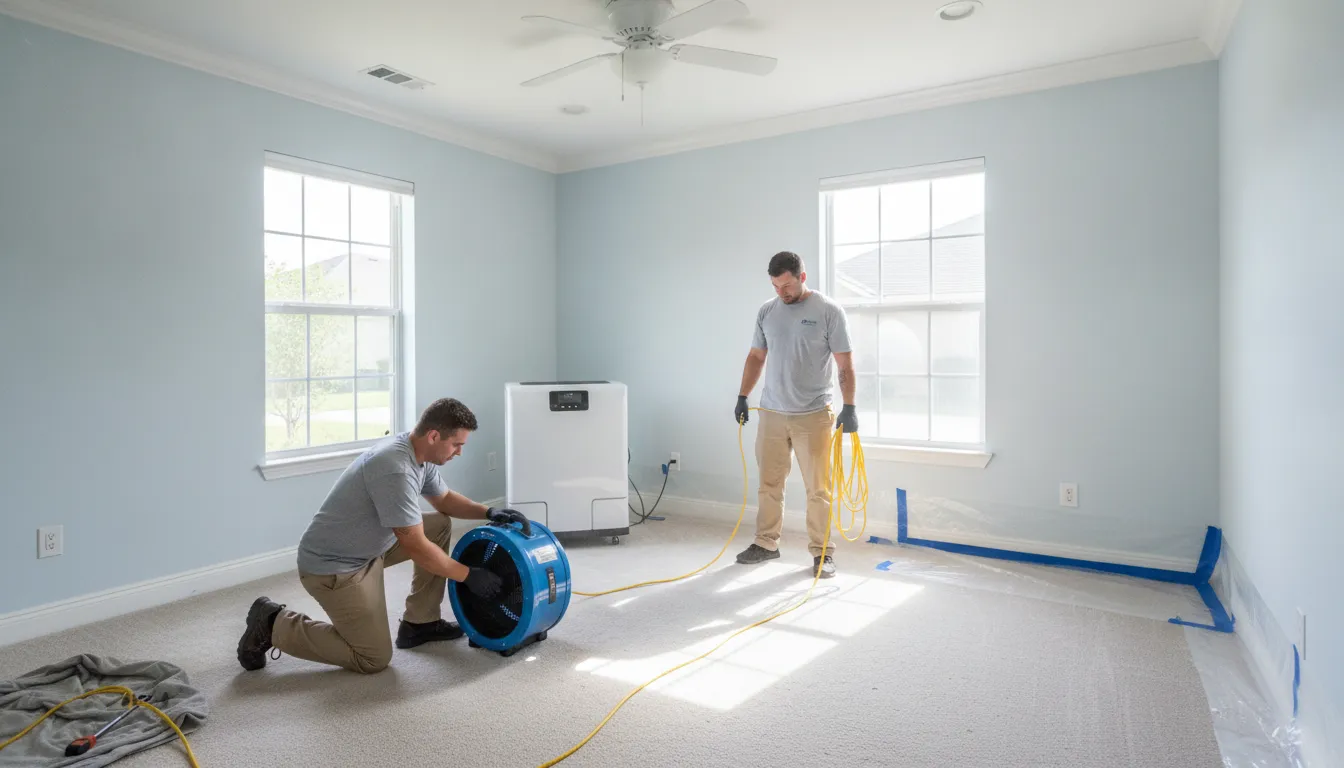
Depending on the findings, the crew may extract standing water, position commercial drying equipment, and monitor moisture readings as materials dry. Affected drywall, insulation, flooring, or contents may require cleaning, removal, or replacement. These decisions should be based on the material, the type of water involved, and the documented condition of the property rather than guesswork.
Containment and mold remediation
If mold is present or suspected, the workflow can expand to source correction, containment, filtration, removal of affected materials, and detailed cleaning. A qualified team should control the work area to limit disturbance and avoid spreading contamination through the property. The mold remediation and free visual inspection process should be explained before work starts, including what will be removed, what can be cleaned, and how the moisture problem will be addressed. The CDC notes that mold cleanup can involve health and injury risks, which is one reason hazardous or extensive cleanup should not be improvised.
Verification, repairs, and restoration
Where appropriate, independent testing or other verification can provide added transparency after remediation. The final phase may include repairs to drywall, flooring, cabinetry, paint, or other building components, followed by reconstruction when necessary. Ask for the completed documentation, remaining recommendations, and clear explanation of what has been restored. A coordinated company can help connect emergency mitigation to repairs, while insurance documentation and estimating support may be handled separately from the carrier’s coverage decision.
Learn about professional water damage restoration
How can you compare property restoration companies?
When several property restoration companies are available, compare the way each one manages the work, not just how quickly someone can provide a quote. A qualified provider should be able to explain the immediate stabilization plan, document conditions. Identify hidden moisture, and describe how the property will be returned to a safe, usable condition. The following checkpoints help homeowners, businesses, and property managers make a practical comparison.
| What to verify | Why it matters | Questions to ask |
|---|---|---|
| Licensing and insurance | Confirms the provider is properly authorized and carries appropriate protection for the work. | Can you provide current license and insurance information? |
| Relevant certifications | Shows that the team has training suited to water damage, mold, cleaning, or reconstruction. | Which certifications and state credentials apply to this project? |
| Written scope | Defines the planned work, affected areas, exclusions, and next stages before work expands. | Will I receive a written scope and estimate? |
| Moisture documentation | Photographs, readings, and other records help distinguish visible damage from moisture concealed in materials. | How will you locate, document, and verify moisture? |
| Communication | Regular updates reduce confusion while the property is being dried, cleaned, repaired, or rebuilt. | Who is my project contact, and how are updates delivered? |
| Insurance coordination | Organized documentation can make it easier to share project information with a carrier, without promising claim approval. | Can you coordinate documentation and work with my insurance carrier? |
| Reconstruction capability | A provider able to manage repairs after mitigation may reduce handoffs between separate companies. | Can your team complete or manage the rebuilding phase? |
Credentials should be easy to verify. For example, iMold publicly identifies its licenses and certifications, including State Certified General Contractor (CGC1540205) and State Certified Mold Remediator (MRSR2170). It also reports IICRC training across restoration disciplines. Ask providers to explain which qualifications belong to the company and which apply to the technicians assigned to your property.
Documentation is equally important. A thorough assessment may include photographs, moisture readings, thermal imaging, and moisture-meter readings. If insurance is involved, ask how the company organizes records and estimates. iMold provides insurance coordination and uses Xactimate, but the carrier still determines coverage under the policy.
Finally, look for a clear path from mitigation to reconstruction. Water extraction or mold remediation may solve the immediate problem, but damaged drywall, flooring, cabinetry, or other materials can still require skilled repair. The strongest comparison is the one that leaves you confident about who is responsible at every stage.
Why does local experience matter in Southwest Florida?
Property damage in Southwest Florida often calls for more than a basic cleanup. Humidity can make lingering moisture harder to identify. Heavy storms can also affect roofs, walls, flooring, contents, and building systems at the same time. Homes, businesses, and managed properties may have different access, occupancy, and documentation needs. A restoration team familiar with the area can evaluate those conditions in context. It can build a practical plan around the property, not just the visible damage.
iMold is based in Fort Myers and has operated locally for 28 years. The company serves residential and commercial properties throughout Lee, Collier, Charlotte, Sarasota, Manatee, Hendry, DeSoto, and Hardee counties. That regional focus matters to property managers coordinating vendors across multiple buildings. It also matters to business owners trying to limit disruption and homeowners who need clear guidance during a stressful event.
Our team offers water damage restoration and related services through more than 35 certified professionals. Emergency availability is 24/7.
Local experience also supports better communication with the people involved in a claim. Restoration work may require photographs, moisture readings, a written scope, and organized records of what was found and completed. iMold coordinates insurance documentation and uses Xactimate for estimating. This does not promise that a carrier will approve every claim. Clear records help owners, property managers, adjusters, and restoration professionals work from the same information.
For a property owner, the goal is not simply to find one of the nearest property restoration companies. It is to find a qualified team that understands local building conditions, can respond any time of day, and can support the project from assessment through restoration and, when needed, reconstruction.
What happens after the first call?
After you contact a restoration professional, the next step should be a clear intake conversation. The team gathers basic details about the property, the source of the damage, affected rooms, visible hazards, and whether anyone is still inside. If there is an immediate life-safety concern, follow emergency instructions first and avoid entering unsafe areas. For urgent property damage, iMold offers 24/7 emergency restoration help for homes and businesses across Southwest Florida.
Assessment and documentation come first
A qualified crew should assess conditions before recommending a repair plan. That may include photographs, moisture readings, thermal imaging, and moisture meters to identify both visible and hidden impact. The assessment helps define the affected areas, separate items that may be restorable from those requiring removal, and create a documented scope of work. If mold is suspected, the appropriate inspection and testing approach depends on the property and observed conditions. iMold also offers no-cost visual mold inspections and estimates.
Mitigation controls the immediate damage
Mitigation focuses on stabilizing the property. Depending on the assessment, technicians may extract standing water, place drying equipment, monitor moisture levels, use containment, apply HEPA filtration, or remove affected materials. The goal is not simply to make a room look dry. Professionals need to evaluate building materials and concealed spaces so repairs are based on documented conditions. Mold remediation, when needed, should address the moisture source and affected materials rather than relying on surface cleaning alone.
Insurance, repairs, and final verification
Restoration companies may communicate with your insurance carrier, organize photographs and project records, and prepare estimates in an industry-standard platform such as Xactimate. Insurance coordination can make documentation easier, but coverage and claim approval remain decisions for the carrier and policyholder. Ask for regular updates and a written scope as the work progresses.
Once mitigation or remediation is complete, the project may move into repairs and reconstruction. A company with in-house or coordinated rebuilding capability can carry the work from damaged-material removal through finished repairs. Learn more about reconstruction and rebuilding. Final verification should confirm that moisture conditions are acceptable, completed work matches the agreed scope, and the property is ready for normal use. iMold can also assist with insurance coordination throughout the restoration process.
Request 24/7 emergency restoration help
Frequently Asked Questions
What do property restoration companies do?
They assess damage, contain affected areas, remove standing water or damaged materials when appropriate, dry and clean the property, address mold, and coordinate restoration or reconstruction. The exact scope depends on the cause, materials affected, and condition of the property. Ask for a written scope that explains what will be done and how completion will be verified.
What is the difference between restoration and remediation?
Remediation addresses the source and impact of a specific hazard, such as excess moisture or mold, through containment, removal, cleaning, and verification. Restoration returns the property to a usable condition through repairs, replacement, and reconstruction. A qualified provider should explain where mitigation, remediation, and rebuilding begin and end.
What should I do before a restoration professional arrives?
Prioritize safety, stay out of areas with possible structural, electrical, gas, or contamination hazards, and contact emergency services for an immediate life-safety threat. If it is safe, stop the source of water, document conditions with photos or video, and notify your insurer. FEMA recommends documenting damage before moving or discarding affected property. FEMA claim guidance provides additional documentation details.
How do I choose a qualified restoration company?
Verify licensing, insurance, relevant certifications, experience with your type of damage, written estimates, moisture documentation, and communication practices. Also confirm whether the company handles only mitigation or can coordinate repairs and reconstruction. Ask how it documents progress and works with your insurance carrier, without assuming that a claim will be approved or fully covered.
Get started with qualified restoration help
When property damage affects your home or business, a professional assessment can help clarify the safest next steps and the work needed to restore the space.
Contact iMold for 24/7 emergency restoration help.