Fire damage restoration southwest Florida begins with safety, stabilization, and a documented plan. After firefighters leave, smoke, soot, odor, and water from suppression efforts can affect rooms and belongings that flames never reached. iMold provides 24/7 emergency service for Southwest Florida property owners. Its specialty restoration services guide places fire recovery within a broader plan for cleaning, contents care, and rebuilding.
What Should You Do Immediately After a Fire?
The first priority is to stay out of the property until the fire department or another qualified authority says it is safe. Fire can weaken floors, stairs, roofs, walls, and other structural components. Heat and smoke can also damage electrical systems, gas lines, and utilities. If anyone is injured, smoke remains heavy, or rekindling is possible, contact emergency services and follow their instructions.
Keep children, pets, and people with respiratory or heart conditions away from affected areas. Do not touch damaged wiring, outlets, appliances, gas lines, or utility equipment. Firefighting water may reach electrical components and concealed spaces, so qualified personnel should determine when utilities can be restored.
Limit exposure to ash and residue
After officials permit limited access, avoid sweeping or disturbing ash in a way that sends particles into the air. Wear protective clothing, gloves, eye protection, and respiratory protection appropriate for the conditions. The US EPA guidance on protecting yourself from ash recommends limiting contact and taking precautions around fire-related residue.
Do not begin structural cleanup, remove materials, or operate ventilation equipment without understanding the risks. From a safe location, photograph visible conditions and keep receipts, claim information, and other records. Notify the insurance carrier promptly. A restoration assessment can document damage without asking occupants to work in an unsafe environment.
Southwest Florida properties can face added exposure when rain enters through a damaged roof, window, or wall opening. Ask officials and your insurer which temporary protection measures are approved. Do not climb onto a damaged roof or move heavy debris. If water is standing near outlets, appliances, or electrical panels, stay clear and report it to the appropriate professional.
Keep a simple event log as conditions change. Record when access was approved, who inspected the property, what areas were photographed, and which emergency actions were authorized. Separate receipts and belongings from ordinary household records. This documentation helps the restoration team compare the initial condition with later findings and gives the carrier a clearer account of mitigation work.
Owners of businesses, rental properties, and multifamily buildings should protect occupants and workers from unauthorized entry. Communicate a clear access rule, secure openings when approved, and identify a safe place for essential records. A restoration professional can help organize the response, but safety officials and the property owner remain responsible for access decisions.
How Does Fire Damage Restoration in Southwest Florida Work?
Fire damage restoration in Southwest Florida addresses more than burned material. Heat can damage building components, smoke can travel through openings and ventilation paths, soot can bond to surfaces, and suppression water can create a second layer of damage. A complete scope connects emergency response, smoke cleaning, contents care, drying, and reconstruction.
Assessment and stabilization
After entry is cleared, technicians document fire-affected rooms, smoke movement, soot deposits, water intrusion, contents, odors, and areas that need temporary protection. They identify immediate priorities and separate unsafe or affected zones from areas that may be preserved. Photographs, notes, and moisture readings create a working record for the owner, carrier, adjuster, and restoration team.
Smoke, soot, and odor treatment
Smoke residue behaves differently depending on the material that burned, ventilation, exposure time, and surface type. Technicians evaluate drywall, insulation, wood, cabinets, flooring, upholstery, electronics, clothing, and other belongings before choosing a cleaning, deodorization, removal, or replacement method. Odor treatment should address the source rather than cover it with fragrance.
Water removal and drying
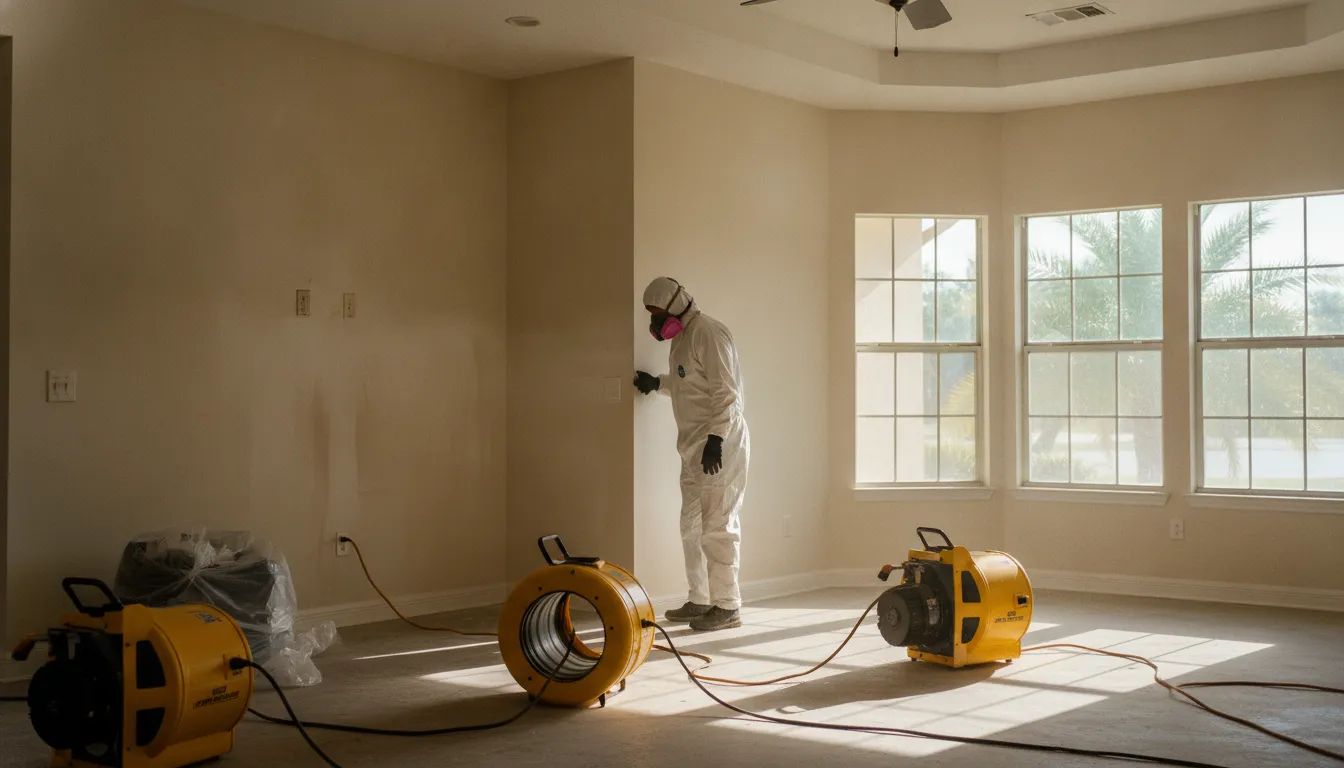
Firefighting water, sprinkler discharge, and weather exposure can affect flooring, walls, contents, and concealed spaces. When moisture is present, restoration may include extraction, professional drying equipment, moisture monitoring, and removal of materials that cannot be safely dried. Smoke cleanup and drying often overlap, so the work sequence should match the property’s condition.
iMold organizes complex restoration needs through the iMold Way: Assess, Contain, Extract, Remediate, and Restore. This sequence keeps emergency work, cleaning, documentation, and reconstruction connected from the first response through the final repair.
What Is the Fire Damage Restoration Timeline?
There is no responsible one-size-fits-all completion date. Timing depends on safety clearance, the extent of fire and smoke damage, moisture levels, contents decisions, insurance requirements, inspections, material availability, and reconstruction scope. These five stages show what a Southwest Florida property owner can generally expect.
- Assess: The team evaluates the structure, smoke, soot, water, contents, odors, and immediate hazards. A written scope, photographs, and moisture readings establish conditions before work begins. iMold can prepare documentation with Xactimate and coordinate directly with insurance carriers.
- Contain: The team separates work zones and protects unaffected areas. Depending on the property, containment may include barriers, controlled airflow, surface protection, and secure handling of belongings.
- Extract: If suppression water or sprinkler discharge affected the building, technicians remove standing water, set drying equipment, monitor moisture, and identify materials that cannot be preserved.
- Remediate: Technicians clean appropriate surfaces, address soot and smoke residue, evaluate contents, and treat odor sources. Materials affected by heat, contamination, water, or structural damage may require removal.
- Restore: Once cleaning and drying are complete, repairs and reconstruction can begin. This stage may include replacing damaged materials, restoring finishes, returning salvageable contents, and reviewing remaining scope items with the owner and carrier.
Early assessment does not mean rushing unsafe work. It means setting priorities quickly, documenting conditions, and taking appropriate steps to limit additional damage while the owner works with officials and the insurer.
Which Fire-Damaged Items Can Be Cleaned or Replaced?
Smoke and soot cleaning begins by identifying where residue traveled and how deeply it affected each surface. Technicians consider the fire source, the materials that burned, ventilation, exposure time, firefighting water, and the condition of the building and its contents. A surface that looks lightly affected may still hold odor or residue in seams, cavities, or porous materials.
Glass, metal, finished surfaces, cabinets, flooring, drywall, insulation, upholstery, electronics, clothing, and personal belongings each need a different evaluation. Contents may be inventoried, packed out, cleaned, deodorized, stored, or reviewed for replacement. A careful contents process creates documentation that can support the insurance conversation and helps avoid discarding salvageable belongings too early.
Why ventilation matters
Smoke may move through return-air pathways, filters, ductwork, wall cavities, and other concealed areas. The HVAC system should therefore be included in the property assessment. Cleaning or component replacement may be appropriate when the system circulated smoke, but the decision should follow the documented condition and scope.
Professional evaluation can limit unnecessary replacement. It also prevents a blanket assumption that every item can be saved. iMold’s contents remediation service helps identify practical options while maintaining a clear record for the owner and carrier.
Does Homeowners Insurance Cover Fire Damage Restoration?
A homeowners or commercial property policy may cover some fire-related losses, but coverage depends on policy language, cause of loss, exclusions, deductibles, and documentation. No restoration company can guarantee approval or a specific reimbursement amount. Contact the carrier or agent, ask which emergency actions are authorized, and keep the claim number with your records.
Document the loss safely
When access is approved, take wide photographs of each affected room and closer images of visible damage. If entry is not safe, do not risk injury to collect evidence. Keep copies of photographs, inventories, receipts, estimates, emails, and conversations with the carrier or adjuster. Do not discard damaged belongings unless they are dangerous or the insurer directs you to do so.
Ask whether the policy addresses structural repairs, smoke and soot cleaning, water damage from firefighting, damaged contents, temporary accommodations, and emergency mitigation. These categories may have different requirements. Prompt communication helps the owner understand what the carrier needs before work progresses.
Coordinate the documented scope
iMold works directly with carriers and uses Xactimate for restoration documentation. The company’s insurance coordination resources explain how a clearer scope can support the claim conversation. This does not decide coverage or replace the policyholder’s communication with the insurer.
How Can You Compare Local Fire Restoration Providers?
After a fire, compare providers by capabilities and documentation rather than by a rushed promise about the final result.
| Capability | Why it matters |
|---|---|
| 24/7 local response | Early assessment helps establish safe priorities and limit additional damage. |
| Smoke, soot, and contents expertise | Different materials need different cleaning, deodorization, or replacement decisions. |
| Insurance documentation | Clear photographs, scope notes, and estimates support an organized claim conversation. |
| Repair and reconstruction coordination | One team can reduce handoffs when cleaning and building work are both needed. |
Look for a restoration provider that can assess smoke and soot, evaluate contents, coordinate drying when needed, document conditions, and guide repairs or reconstruction. Ask who will manage the scope, how belongings will be handled, and how the team will communicate changes.
iMold is based in Fort Myers and serves homeowners and businesses throughout Southwest Florida. The company has operated locally for 28 years, maintains a team of more than 35 certified professionals, and provides 24/7 emergency response. It is licensed, bonded, and insured, with IICRC credentials and Florida licenses supporting restoration and contracting work.
The requested specialty restoration services guide provides additional context on how fire recovery fits alongside other property restoration needs. It also explains how iMold connects emergency response, restoration, and reconstruction when a property needs several types of work.
For urgent situations, use iMold’s 24/7 emergency response page to review the next step. A no-cost visual inspection and estimate can help define the restoration scope without promising an insurance outcome or fixed completion date.
Frequently Asked Questions
Is it safe to enter my property after a fire?
Do not enter until the fire department or another qualified authority says it is safe. Fire can weaken structural components, and smoke, soot, ash, water, and damaged utilities may create additional hazards. If limited access is approved, follow the instructions provided and avoid disturbing materials unnecessarily.
Can smoke odor be removed after a fire?
Smoke odor can often be reduced or removed, but the correct method depends on the materials, residue, ventilation, and extent of penetration. Effective restoration addresses residue and odor sources instead of masking them with fragrance. Some contents and porous materials may require specialized cleaning or replacement.
Does insurance cover fire damage restoration?
Coverage depends on the policy, cause of loss, exclusions, deductible, and claim documentation. iMold can coordinate with carriers and prepare an Xactimate-based scope, but only the insurer can determine coverage and payment under the policy.
How long does fire damage restoration take?
There is no universal timeline. Duration depends on safety clearance, fire and smoke damage, moisture, contents, material availability, inspections, insurance requirements, and reconstruction scope. iMold begins with an assessment and updates the plan as conditions are documented.
Where does iMold provide fire damage restoration?
iMold is based in Fort Myers and serves homeowners and businesses across Southwest Florida. The company offers 24/7 emergency response and a 30-minute response commitment in the primary service area. A no-cost visual inspection and estimate can help define the next steps.
Ready to Take the Next Step?
Fire damage can affect the structure, contents, air pathways, and areas reached by firefighting water. A professional assessment can clarify what needs immediate attention and what can be cleaned, dried, restored, or rebuilt. iMold provides 24/7 emergency service and insurance coordination for Southwest Florida property owners. No-cost visual inspections and estimates help define the next steps.
Call iMold at (239) 460-5890 for 24/7 fire damage restoration help.